
Emergency Air Duct Cleaning Near Me: What San Mateo Homeowners Should Do First
If you’ve found something wrong inside your ductwork – rodent evidence, water where water shouldn’t be, smoke residue after a fire – the first move is not to call a cleaner. It’s to switch the system off at the thermostat. Most people do the opposite: they crank the fan to “air it out,” which spreads contamination into every room fast. Turn it off, note what you saw, then read on. If you’d rather hand it to a specialist right away, call (866) 894-2153. We answer 24/7.
What counts as a real duct emergency in San Mateo?
A real duct emergency is contamination that’s actively spreading or poses a health risk: rodent intrusion, sewage or water that has entered the system, or smoke residue after a fire. Routine dust buildup is not an emergency, no matter how long it’s been. The line matters because it changes what you do in the next ten minutes.
Three situations qualify for immediate action in San Mateo homes:
- Rodent intrusion. Droppings, nesting material, or a dead animal in a register or return. This carries a genuine health concern, and running the fan aerosolizes particles you don’t want to breathe.
- Water or sewage intrusion. A backed-up drain, a roof leak, or a wet slab that has soaked insulation inside the ducts. Wet ductwork grows problems within days.
- Post-fire smoke contamination. Even after the fire is out, smoke residue coats the inside of ducts and re-circulates every time the system runs.
What’s not urgent: a musty smell you’ve noticed for months, visible dust on the register covers, or a filter that’s overdue. Those deserve attention but can go on a normal schedule. The first-response steps below are what separate a contained problem from a whole-house one in San Mateo.
The first-response checklist: what to do before anyone arrives
Your job before a technician arrives is to stop the spread and document what you found. Here’s the sequence, matched to what you’re dealing with.
If you suspect rodents
- Turn the HVAC off at the thermostat. Set it to off, not fan-only. Fan-only still moves air through the ducts.
- Don’t disturb droppings or nesting material. Rodent droppings can carry hantavirus, and in San Mateo County the risk is real enough that public health guidance says to avoid dry-sweeping or vacuuming rodent waste, which sends particles airborne.
- Seal the register covers with tape or plastic in the affected rooms if you can do it safely without contact.
- Note where you saw evidence – which room, which register, whether you found a chewed entry point at an exterior wall or attic vent.
If you have water or sewage intrusion
- Turn the system off and keep it off. Wet ductwork plus airflow equals mold spread.
- Stop the water source if you can – shut the supply valve or call a plumber for the plumbing side.
- Photograph everything wet before it dries. Moisture mapping is a mandatory step before any cleaning here, and photos help.
If it’s post-fire smoke
- Keep the system off until you have clear re-entry timing and the ducts are assessed.
- Seal registers and door gaps in rooms that took the most smoke.
- Watch local air quality readings before reoccupying. On a bad air day in San Mateo, opening windows to “clear the smell” can make indoor air worse.
Why running the HVAC to “air it out” is the most damaging mistake
Running the fan after contamination is the single worst thing you can do, and it’s also the most common. People want the smell gone, so they crank the system. What actually happens is the blower pulls contaminated air from the return, pushes it through every branch of the ductwork, and delivers it into every room fed by that system.
Here’s a concrete picture. A single dead rodent in a return plenum is small – a few ounces. But the blower moves hundreds of cubic feet per minute. Over one heating cycle, the particulates from that animal can coat forty linear feet of ductwork with a fine layer of contaminated dust. What was a localized problem in one return is now a whole-system cleaning. That’s not a scare tactic; it’s how airflow works.
This is why our first instruction on any contamination call is the same: system off. Our technicians have up to 10 years of experience, and the pattern is consistent – the jobs that stay contained are the ones where the homeowner turned it off before calling. The jobs that turn into full-system cleaning usually involve a fan that ran for a day or two first.
What “emergency” service actually means, operationally
Not every step needs to happen today. Understanding which parts are genuinely urgent helps you avoid paying for a rushed visit that could have been scheduled calmly.
Same-day priorities:
- Containment – sealing registers and stopping the system so contamination doesn’t spread further.
- Inspection – identifying exactly what’s in the ducts and where it entered. This drives every other decision.
Can wait 48-72 hours without added risk:
- The full cleaning itself, once the system is off and contained.
- Structural duct repair, unless a compromised duct is actively leaking into a living space.
- Filtration upgrades – that’s a conversation to have after the ducts are clean.
We answer 24/7, and we run fast dispatch from 7am to 7pm, Sunday through Friday. If you call outside dispatch hours, we book you into the next opening. Closed Saturday. What we won’t do is tell you every situation is a same-day job – sometimes the honest answer is “turn it off, keep it off, and we’ll be there tomorrow morning.”
Why containment equipment matters, and why a general HVAC company shouldn’t attempt this
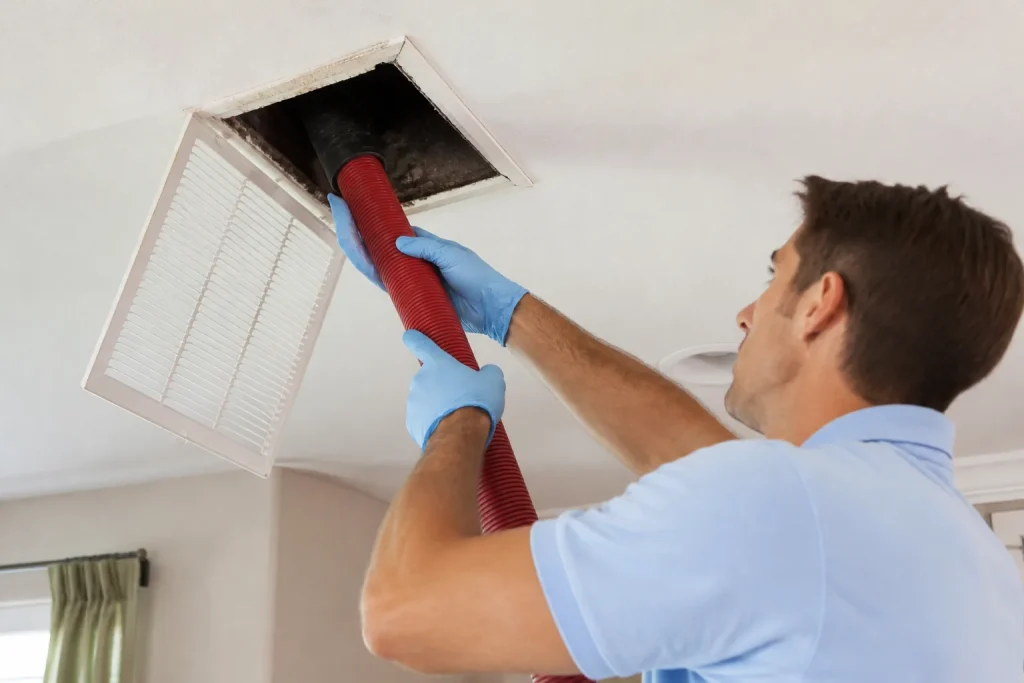
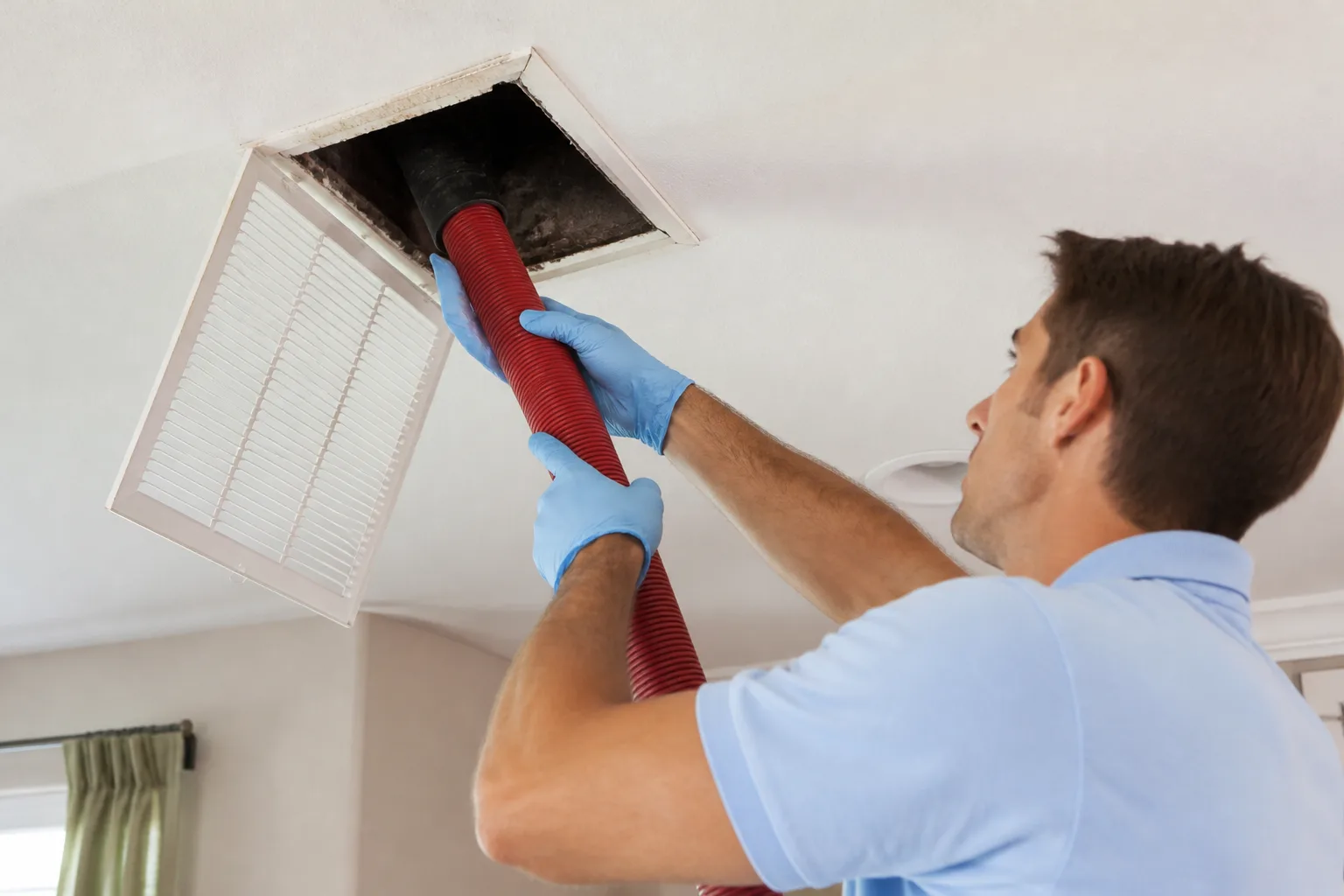
Post-contamination cleaning is not the same job as routine dust removal. It requires negative-air containment – equipment that pulls air out of the duct system under controlled pressure and filters it, so dislodged debris is captured rather than blown back into the house. Abatement Technologies makes equipment designed for exactly these contaminated-environment scenarios, the same standard used in professional mold and contaminant remediation work. Without it, a cleaner who opens up a contaminated duct and runs a vacuum is potentially redistributing the problem.
This is the gap we see most often. A general HVAC company that offers duct cleaning as an add-on typically shows up with a portable shop-vac rig and no negative-air capability. On a routine dusty system, that may be adequate. On a rodent or sewage contamination job, it isn’t. The right equipment for the job – a Nikro HEPA-filtered negative-air setup, for instance – captures what’s dislodged instead of moving it into the room.
For routine cleaning, Rotobrush rotary brush systems are an industry benchmark for mechanical duct cleaning, and that’s what we run for standard jobs. For contaminated systems, containment comes first and cleaning follows. That’s why we offer air duct cleaning and duct repair as separate services – if the inspection finds damaged or leaking ductwork, we can fix it rather than hand you off to someone else.
When to call a pro, and what to have ready
Call a specialist when you’ve found rodent evidence, water intrusion, or smoke contamination inside the system, or when the smell doesn’t clear after you’ve turned the system off and left it off. Don’t call for routine dust – that can be scheduled on a normal timeline, which is friendlier to your calendar and your budget.
Before the technician arrives, document these four things. They’ll speed the diagnosis and protect you if an insurance claim is involved:
- Photos of every register – the covers, the grilles, what’s visible inside if you can see without reaching in.
- The HVAC filter – photograph it in place, then pull it and photograph the condition. Don’t replace it before the technician sees it.
- Any visible intrusion point – chewed seals, gaps at exterior walls, attic penetrations, water staining.
- A short written note of when you noticed it, what you did (turned off the system?), and anything you moved.
That packet takes fifteen minutes and often saves a return visit. It’s also the difference between a clean insurance conversation and a messy one.
Related services in San Mateo
If the problem is lint buildup or a clogged vent rather than duct contamination, dryer vent cleaning addresses a documented fire-safety risk and pairs naturally with a duct visit. If you’re starting from scratch and just want a baseline assessment, start at Duct Cleaning San Mateo for a free estimate.
The Bottom Line
Turn the system off first. That’s the whole thesis. Document what you found, contain what you can, and then call a specialist who carries the equipment for contaminated systems – not a generalist with a shop vac. Genuine emergencies (rodent intrusion, water or sewage in the ducts, post-fire smoke) need containment and inspection same-day; the full cleaning can usually wait 48-72 hours once the system is off. Routine dust isn’t an emergency, and any company that tells you it is should raise a flag.
If you’re in San Mateo and need help, Duct Cleaning San Mateo offers free estimates – call (866) 894-2153. We answer 24/7. Fast dispatch from 7am to 7pm, Sunday through Friday. Closed Saturday.
Frequently Asked Questions
There’s no fixed “emergency” price, because these jobs vary enormously – a single contaminated return is a different scope than whole-house smoke remediation. Pricing is per job, set by a written estimate after inspection, and estimates are free. Call (866) 894-2153 for an exact quote.
No. Running the fan after contamination spreads it through every branch of the system and into every room it serves. Turn the system off at the thermostat and leave it off until a technician inspects it. Call (866) 894-2153 to get on the schedule.
Ask for before-and-after photos of your own ducts. Any reputable specialist can provide them. If a company can’t document the work, that’s your answer. Call (866) 894-2153 and we’ll walk you through what documentation you’ll receive.
Yes, when it’s disturbed. Dry-sweeping or vacuuming rodent droppings sends particles airborne, which is why public health guidance in San Mateo County says to avoid it. Leave the material alone, seal the registers, and let a specialist handle removal and cleaning. Call (866) 894-2153 for a first-response visit.
Written by the team at Duct Cleaning San Mateo.
Need Air Duct Cleaning Help?
Call Duct Cleaning San Mateo - licensed & insured, with free written estimates in San Mateo.
(866) 894-2153