
Last updated November 14, 2026
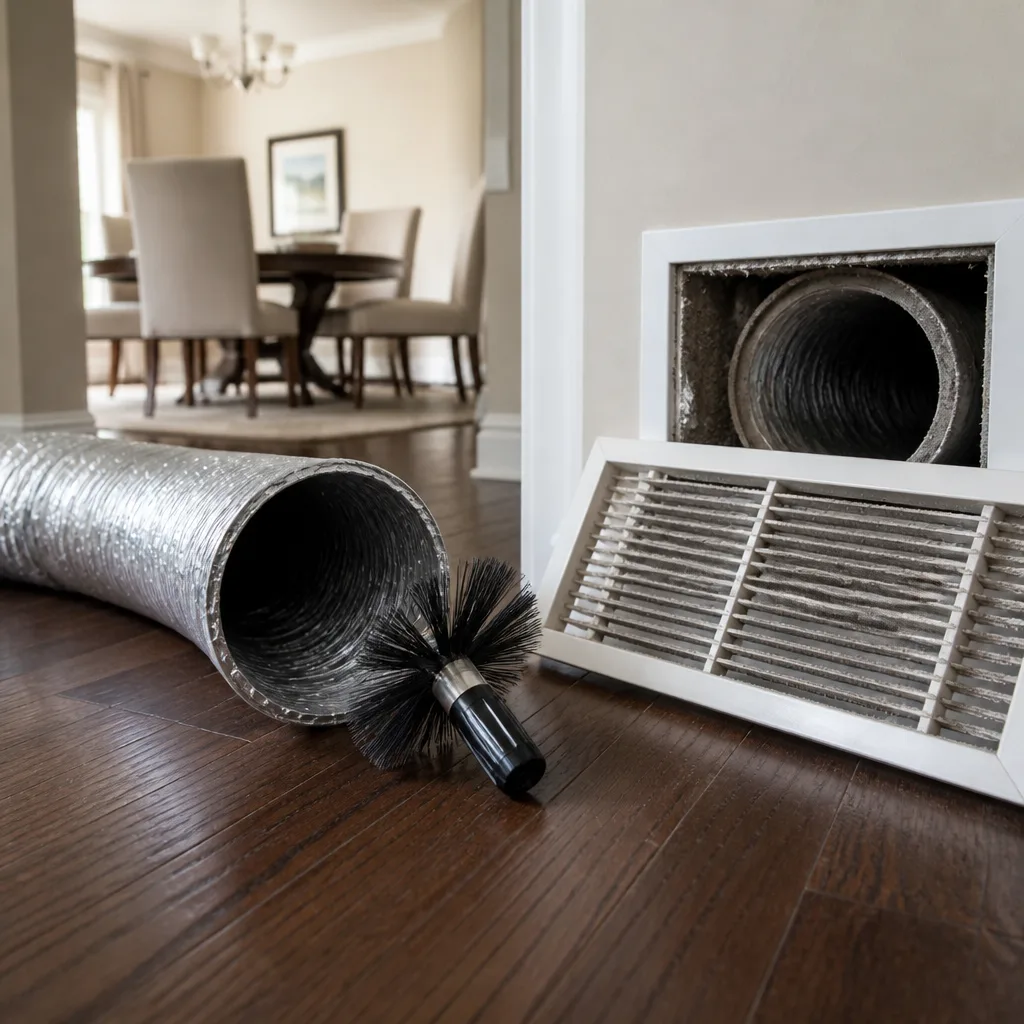 Whole-home duct cleaning
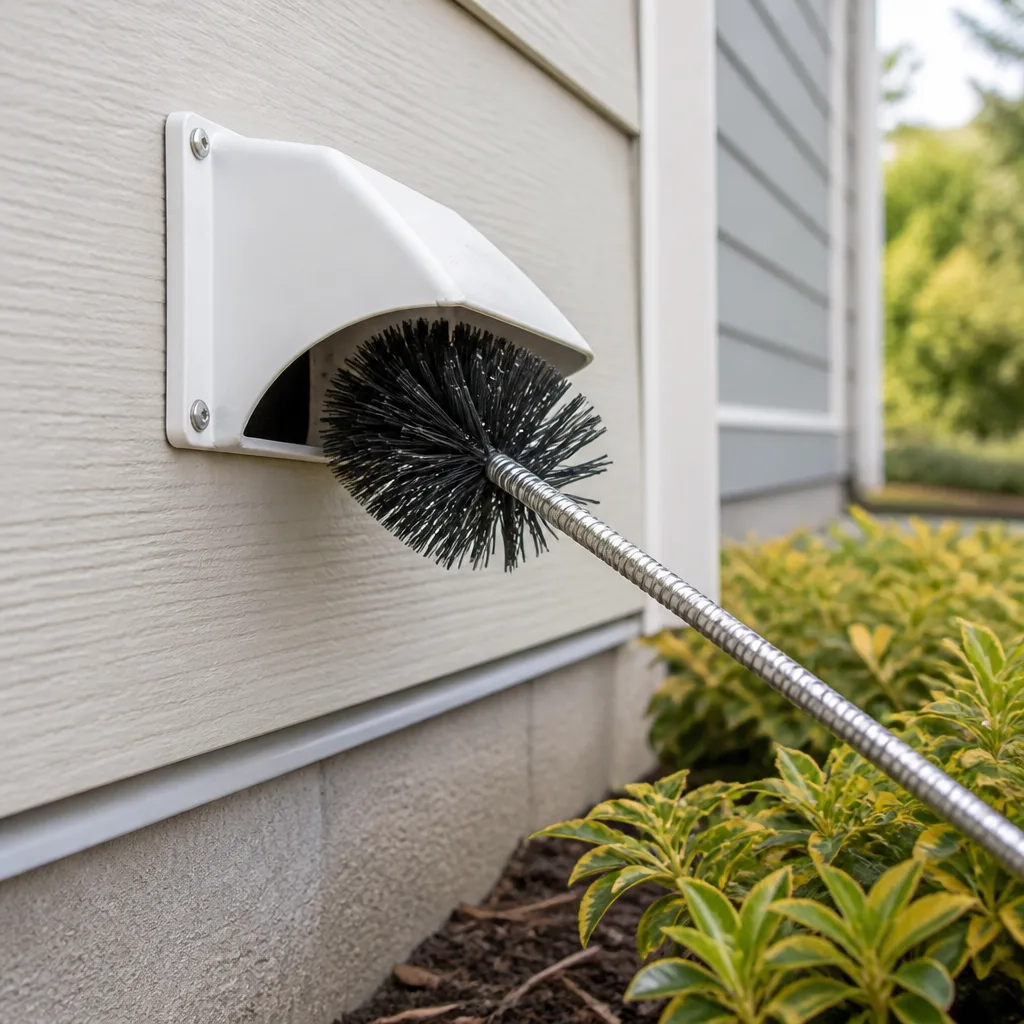 Dryer vent cleaning
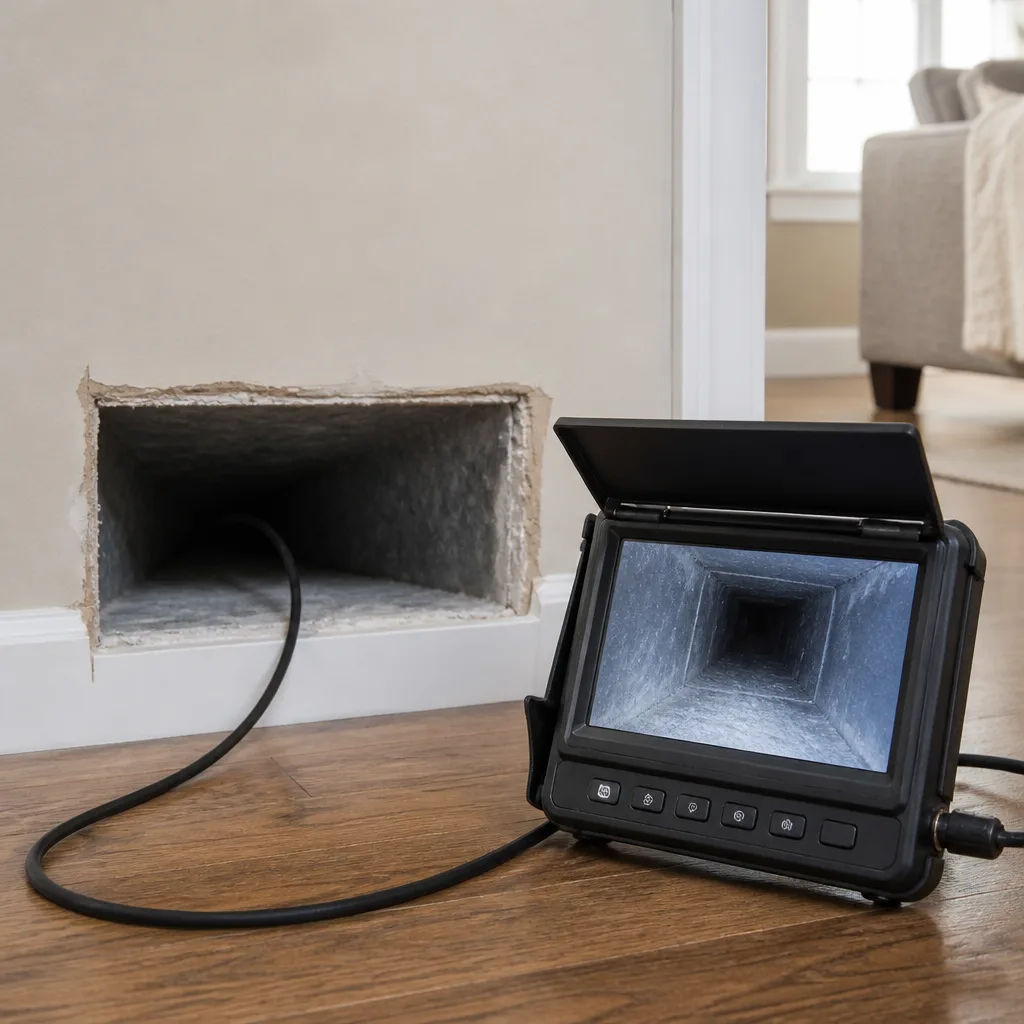 Camera inspection
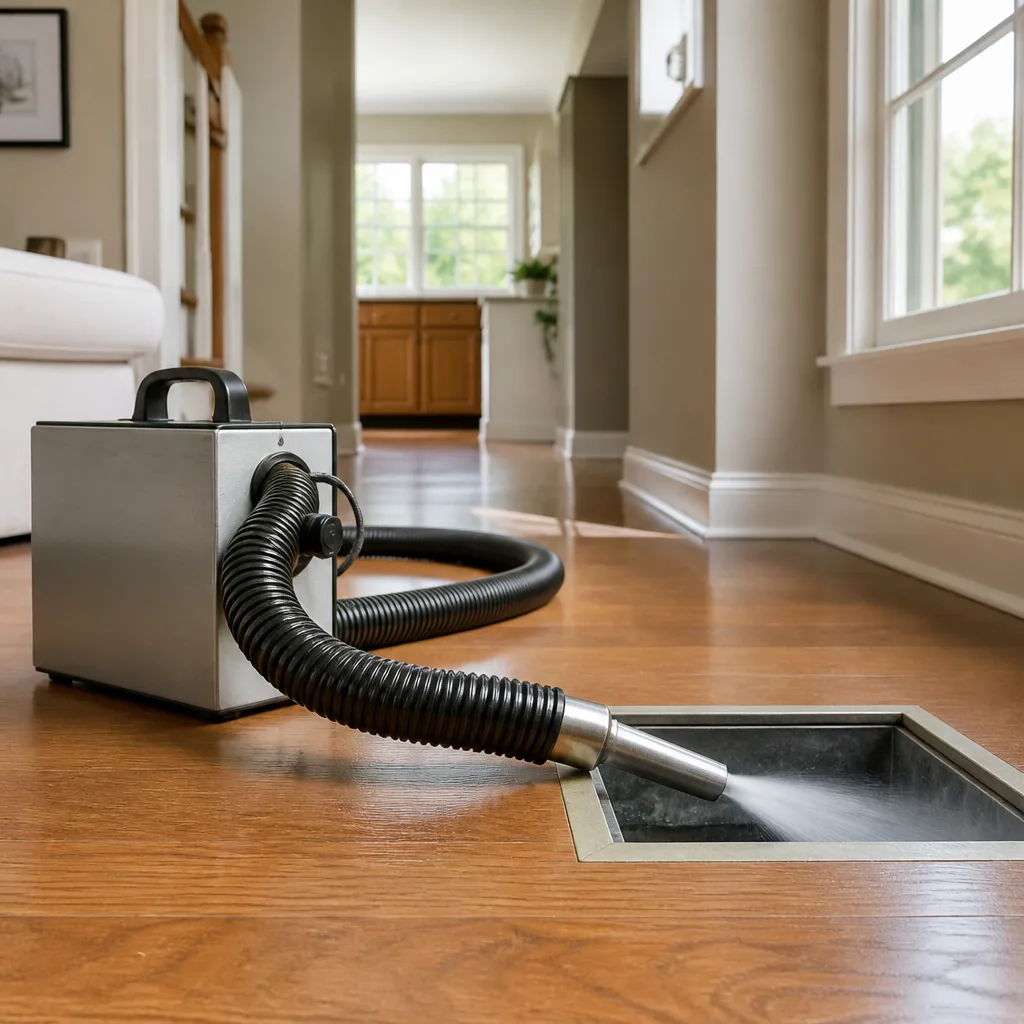 Sanitizing & deodorizing
Whole-system duct and dryer vent check with before-and-after photos - you see exactly what came out of your vents
That "$99 whole-house special" is a bait ad - the real number appears once they are in your hallway, or the "clean" is a shop-vac at the register. We photograph the inside of your ducts before and after instead.
Choosing the Right Air Duct Cleaning Brand: A Buyer’s Guide for San Mateo
Most homeowners pick a duct cleaning company by comparing prices. That’s the wrong first move, because the price you’re quoted rarely reflects the equipment that will show up at your door. A crew with a shop vac and a rotary brush attachment and a crew with a truck-mounted negative-pressure unit can advertise the same service and charge similar rates, yet do entirely different work inside your walls. The difference is the hardware, and the hardware determines whether your ducts come out clean or just get stirred up. This guide breaks down the three dominant professional systems in the trade, what each one actually handles, and how to ask the right questions before you book. We’ll keep it specific to San Mateo homes and the duct conditions common around here.
Quick Answer
The right air duct cleaning brand for your San Mateo home depends on what your ductwork is made of, not on which logo is biggest. Rotobrush rotary systems handle accessible sheet-metal ductwork well, Nikro negative-pressure source extraction works across a broader range of duct materials, and Abatement Technologies HEPA containment is built for contaminated or compromised systems that need remediation-grade control. A trustworthy contractor will match the equipment to your ducts and can explain why.
Styles & brands we work with
- Whole-home duct cleaning
- Dryer vent cleaning
- Camera inspection
- Sanitizing & deodorizing
Table of Contents
- What the Equipment a Contractor Brings Reveals About Their Business
- Rotobrush: Contact Cleaning for Rigid Sheet Metal
- Nikro: Negative-Pressure Source Removal
- Abatement Technologies: HEPA Containment and Remediation
- How the Three Systems Compare
- Questions That Reveal Whether They Know Their Equipment
- Why Store-Bought Duct Cleaning Kits Aren’t Scaled-Down Pro Systems
- How to Verify Equipment Claims Before Anyone Arrives
What the Equipment a Contractor Brings Reveals About Their Business
A duct cleaning van tells you more about a company than its website does. What’s loaded inside explains how they think about the job, because equipment is expensive and a business only buys what it plans to use on most of its calls. If all you see is a shop vac and a brush kit, that’s a volume-pricing operation selling speed. If you see a portable negative-air unit, HEPA filtration, and a camera scope, you’re looking at a diagnostics-first business that inspects before it cleans.
The gap here isn’t small. True source-removal cleaning means sealing the system, putting it under negative pressure, then agitating debris loose so it travels toward a HEPA filter instead of blowing back into your living room. That requires a specific piece of equipment. A shop vac can suck dust out of a floor register, but it can’t hold a whole duct system under negative pressure, and it has no HEPA stage. When a shop vac runs, the fine particulate that matters most for air quality gets pushed out the exhaust and settles right back into the room.
In San Mateo, the housing stock makes this more relevant than it sounds. Many homes here sit close to a busy stretch of El Camino Real or along the 101 corridor, and outside dust and exhaust particulate find their way into return ducts over time. That fine debris is exactly what a shop vac recirculates and exactly what a negative-pressure system captures. So when a company quotes you a very low number, the equipment behind that number usually explains it.
The flip side matters too. A specialist who also handles air duct cleaning as a defined service, not an add-on, will typically own more than one system because different homes need different methods. San Mateo’s mix of older bungalows off Peninsula Avenue and newer infill construction off Hillsdale creates a range of duct layouts. A company equipped for only one duct type is quietly hoping your house is the one they know best. If duct repair is on the table too, our dedicated duct cleaning San Mateo service page covers what we bring to each job.
Rotobrush: Contact Cleaning for Rigid Sheet Metal
Rotobrush makes the most recognizable rotary duct-cleaning system in North America, and its flagship BrushBeast line is what most people picture when they imagine professional duct cleaning. The system feeds a rotating brush on a flexible shaft through duct runs, so the brush physically contacts the interior walls and scrubs debris loose. A high-powered vacuum running alongside pulls that debris toward a collection unit. It’s genuine contact cleaning, not a light dusting.
Here’s the part buyers rarely hear: Rotobrush is designed for accessible sheet-metal ductwork. On rigid galvanized steel with smooth walls, the rotary brush does exactly what it’s supposed to. On deteriorating flex duct, though, the interior liner can be fragile, and aggressive brushing can accelerate liner breakdown rather than clean it. A contractor who runs a rotary brush through aging flex duct without checking its condition first isn’t cleaning your system so much as shredding its walls. Good operators inspect duct material and condition before they choose a brush.
That distinction matters across San Mateo. A lot of the older homes around Hayward Park and Baywood have retrofit duct runs that mix rigid sheet metal with segments of flex duct added during a past remodel or furnace changeout. A contractor who knows the equipment will switch methods run by run. Someone who doesn’t will run the brush everywhere and call it done.
- Best for: rigid galvanized steel trunk and branch lines, main supply runs, accessible ductwork with smooth walls.
- Weaker for: aging flex duct with a failing liner, heavily contaminated systems needing containment, ductwork that’s hard to reach.
- What it tells you: the company has invested in contact cleaning, which is a real step above vacuuming registers, though it’s one tool rather than the whole toolkit.
Rotobrush systems come in different configurations and brush diameters. The operator selects brush size based on duct measurement, and getting that wrong either leaves the walls unscoured or puts too much pressure on the duct. That’s the kind of detail that separates a trained operator from someone who bought the machine and watched a video.
Nikro: Negative-Pressure Source Removal
Nikro builds negative-air and HEPA-filtration equipment used in professional duct cleaning and restoration work, and it’s the system that best represents the source-removal method. The principle is straightforward: put the entire duct system under negative pressure, agitate debris loose from the interior, and route everything through a HEPA filter so it’s captured rather than redistributed. Because the pressure holds the whole system in a vacuum state, dislodged debris flows toward the collection unit instead of leaking out of gaps and seams into your living space.
Negative-pressure source removal is more duct-compatible than contact brushing. It works on sheet metal, flex duct, and ductboard, because it relies on pressure and filtration rather than a brush scrubbing the walls. If your San Mateo home has a mix of duct materials, or if the ductwork is older and delicate, this is often the safer approach. The HEPA filter stage is the other key piece. True HEPA capture traps fine particulate that would otherwise cycle back through the house.
The trade-off: aggressive mechanical cleaning on hard-to-reach runs needs a brush or an agitation tool, and negative pressure alone won’t always loosen caked-on buildup. In practice, the strongest jobs combine the two, negative pressure holding containment while a mechanical tool agitates debris inside. A contractor who carries only a Nikro portable unit is a diagnostics-first operation, but you’ll want to ask how they handle stubborn buildup on rigid lines.
For San Mateo homes worried about allergy triggers, the negative-pressure method is often the more relevant system. When we look at a home near Central Park with a family of allergy sufferers, the goal isn’t just removing visible debris. It’s capturing the fine particulate matters for air quality. That’s a HEPA containment job, and it’s why we treat the equipment question as the first question rather than the last.
Abatement Technologies: HEPA Containment and Remediation
Abatement Technologies equipment is built for the jobs where cleaning isn’t the whole story. This is containment-grade HEPA gear used in professional mold and contaminant remediation, and it exists because some duct systems don’t just hold dust. They hold microbial growth, water-damaged debris, or deteriorated material that has to be contained at the source rather than simply vacuumed. When a contractor brings Abatement equipment to a residential job, it signals they can handle contaminated or compromised duct systems, not just routine buildup.
San Mateo has a genuinely mild climate, so the extreme duct conditions you’d find in a freezing-winter market aren’t the everyday concern here. But mild doesn’t mean dry. Homes in the older parts of the city, especially those with crawl spaces and foundations that hold moisture, can develop duct conditions that reward true containment equipment. If inspection reveals water staining, a compromised liner, or visible growth inside a duct, that job moves from cleaning to controlled removal. A contractor without containment capability has to either walk away or proceed without proper controls, and neither is what you want.
This is also where duct repair enters the picture. Cleaning equipment is built to clean, not to fix. If a technician finds a crushed or leaking duct run, the value of the visit depends on what happens next. A cleaning-only company has to hand you off, often to a general HVAC contractor who may not be set up for duct repair either. A specialist who handles dryer vent cleaning and structural duct repair alongside cleaning can complete the picture. That’s the gap most cleaning-only brands leave behind, and it’s the one worth asking about directly.
Air-quality brands are the natural companion here. Familiarity with Honeywell and Aprilaire filtration and humidity systems lets a contractor make an informed recommendation after cleaning, whether that means a media filter upgrade or humidity control for a home that runs too damp. We work with those systems, and the sequence matters: clean first, then address the source with filtration. Recommending a filter before the ducts are clean just leaves the filter doing the work the cleaning should have done.
How the Three Systems Compare
No single system handles every duct condition. That’s the central point of this guide. The three dominant professional systems were designed for different job types, and a contractor who carries only one is telling you something about the range of work they can actually perform. Here’s a functional comparison.
- Rotobrush (rotary contact cleaning): a rotating brush physically scrubs duct walls. Best for rigid sheet metal with smooth, accessible runs. Weaker on aging flex duct with a fragile liner and on heavily contaminated systems. Effective where walls need direct mechanical scouring.
- Nikro (negative-pressure source removal): the whole system is held under negative pressure with HEPA filtration capturing debris. Works across a broader range of duct materials including sheet metal, flex duct, and ductboard. Best for homes with mixed duct types or delicate ductwork.
- Abatement Technologies (HEPA containment): containment-grade equipment for contaminated, water-damaged, or compromised systems. Best when inspection reveals microbial growth or liner failure. Built for remediation-level control, not routine dust.
In practice, the highest-quality jobs blend these. Negative pressure holds containment while mechanical agitation loosens debris. Containment equipment steps in when inspection finds a compromised run. A specialist with all three can match the method to the condition. A generalist with one piece of gear has one approach, and every home gets it.
This is why equipment brand matters as an evaluation tool, not just a marketing detail. Ask a San Mateo contractor which systems they carry and, more importantly, which duct conditions each one handles best. If the answer maps to the comparison above, you’re talking to someone who knows their equipment. If the answer is “we have the latest professional gear that handles everything,” you’re talking to a salesperson.
Questions That Reveal Whether They Know Their Equipment
Owning a machine and knowing how to operate it are different things, and you can tell the difference with a few specific questions. These aren’t gotcha questions. They’re the kind a trained specialist answers without pausing, and the kind a generalist with a rented unit fumbles.
- “How do you choose brush diameter for my ductwork?” A trained operator measures the duct and selects a brush based on that measurement. If the answer is vague, they’re not matching the tool to the duct.
- “What negative pressure do you run the system at, and how do you measure it?” A source-removal contractor who knows their equipment can describe how they verify the system is under negative pressure before cleaning starts. Watch for whether they measure at all.
- “How often do you change your HEPA filters, and when did you last service the unit?” HEPA filters load up and lose efficiency. A serious operator tracks filter intervals, and this question surfaces whether filtration is a real part of their workflow or a checkbox.
- “How do you inspect duct material before choosing a method?” A camera scope is the answer. If they run a rotary brush through every duct without checking condition first, they can damage flex duct liner.
- “What do you do if you find a crushed or leaking duct run?” If the answer is “we hand you off to an HVAC company,” that’s cleaning-only. A specialist handles the repair or tells you who will, with a real plan.
Ask these before you book, not on the day of service. A contractor who can answer them clearly is worth considering. If the person on the phone can’t describe their own equipment, the technician who shows up probably won’t either. For San Mateo homeowners, you can also ask how the approach changes for the duct layout typical of older bungalows versus newer construction. That tells you whether they size every job the same way.
Why Store-Bought Duct Cleaning Kits Aren’t Scaled-Down Pro Systems
The duct cleaning kits sold at home improvement stores are not the professional systems above in miniature. They’re not a consumer version of Rotobrush or Nikro. They’re a fundamentally different tool with a fundamentally different capability, and understanding why matters for your buying decision.
- No true negative pressure. A consumer kit can’t hold an entire duct system under negative pressure, so debris dislodged by a brush a foot away can settle right back into the duct or leak out of gaps into the room.
- No HEPA capture. Without a HEPA filtration stage, fine particulate that a negative-pressure system would trap instead gets pushed around and redistributed into your living space.
- No conditioning of the duct material. Consumer kits have no inspection step and no way to verify duct condition before sending a brush through a fragile liner.
- No containment for contamination. If ductwork is water-damaged or the liner is failing, a kit has nothing to protect the rest of the house with.
The core gap is source removal. Real duct cleaning captures debris at the source and moves it into collection, out of the system and out of the home. A consumer kit moves debris around inside the duct system, which can make an already-dusty system feel worse right after. That’s the difference a homeowner notices, and it’s why professional equipment exists in the first place.
How to Verify Equipment Claims Before Anyone Arrives
Most duct cleaning companies claim professional-grade equipment. Verifying it takes a little homework before the appointment, and it’s worth doing because claims are easy to make.
- Ask which specific systems they operate. A company that names Rotobrush, Nikro, or Abatement Technologies by model can usually describe how each is used. A company that says “professional-grade equipment” without naming anything is telling you less than it seems.
- Request documentation when it’s offered. Legitimate contractors can point to manufacturer certification or training for the systems they run. Ask what certifications they hold for the specific equipment they’ll bring to your home.
- Ask what they carry on the vehicle. A legitimate Rotobrush or Nikro certified contractor arrives with the system, the agitation tools, the HEPA filter setup, and an inspection camera. If the answer is “a big vacuum,” you’ve learned what you need to know.
- Ask how the work is documented. Before-and-after photos of your own ducts are the most direct proof the work was done. Ask if photos are part of the job.
- Confirm the pricing structure. A flat price per system agreed before work starts protects you from a quote that grows once the technician is on-site. Ask how the price is set and whether there are add-ons.
Our technicians have up to 10 years of experience, and we’re comfortable answering every one of these questions on the phone before anyone comes out. We carry Rotobrush rotary systems, Nikro HEPA-filtered negative-air equipment, and Abatement Technologies containment gear, and we’re happy to explain how each is chosen for a given San Mateo job. Service area coverage runs through San Mateo, and inquiries from across the city are welcome.
Common Mistakes to Avoid
- Choosing on price alone. A very low quote is usually a signal about the equipment, not a bargain. Ask what will actually show up at your door before comparing numbers.
- Hiring a generalist who treats duct cleaning as an add-on. A company that mainly does HVAC and offers duct cleaning on the side is unlikely to own more than one professional system. You want a specialist whose every job is duct or vent work.
- Not asking about flex duct condition. If your San Mateo home has flex duct segments, ask how the contractor inspects them before choosing a method. Rotary brushing a failing liner can make things worse.
- Skipping the repair question. Cleaning-only companies can’t address crushed or leaking ducts; they hand you off to someone else. Ask upfront whether repair is part of what they do.
- Accepting vague equipment claims. “Professional-grade” without named brands and models tells you nothing. Ask which systems they operate and how each is used.
- Forgetting the dryer vent. Many homeowners book duct cleaning and ignore the dryer vent, which is a documented fire-safety risk worth clearing in the same visit. A specialist handles both.
- Not asking about documentation. Before-and-after photos of your own ducts are the clearest proof the work happened. A company that doesn’t offer them is a company that can’t prove it cleaned anything.
See the difference
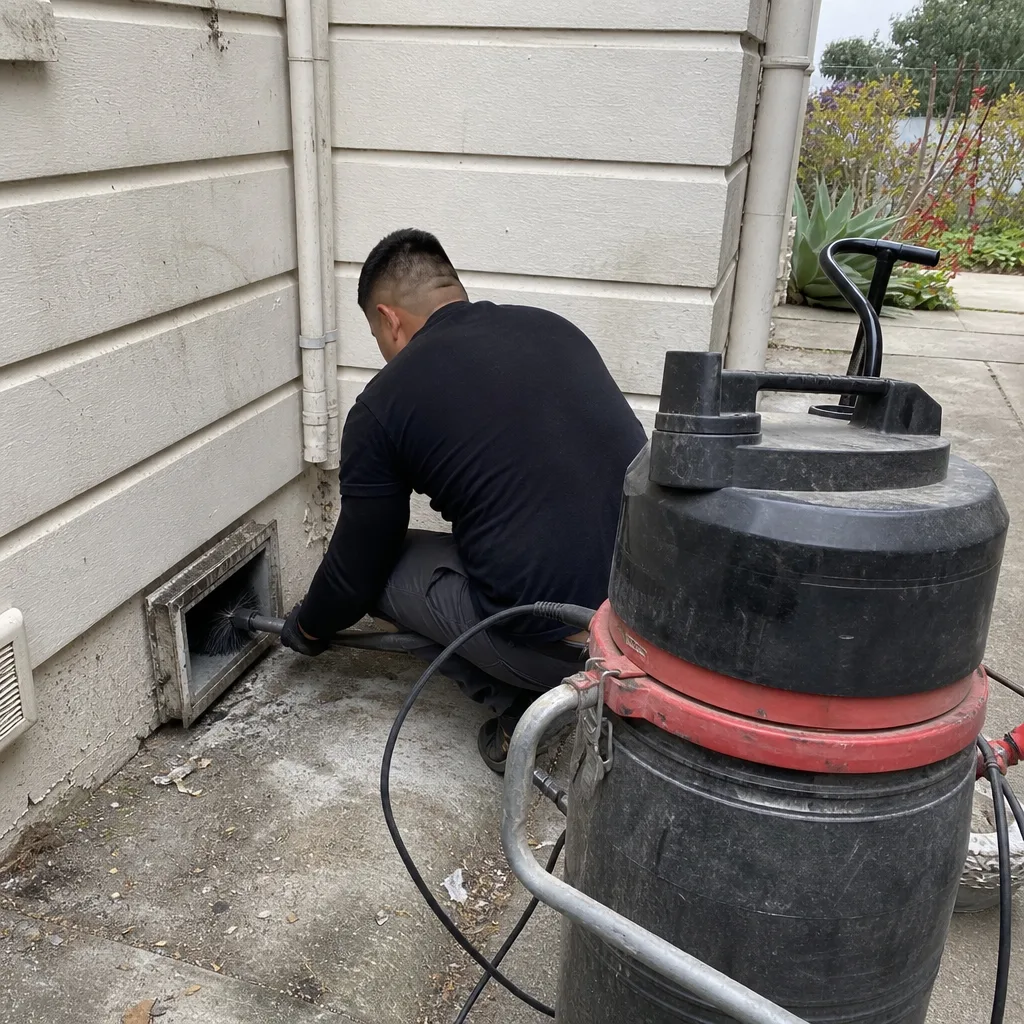 Before
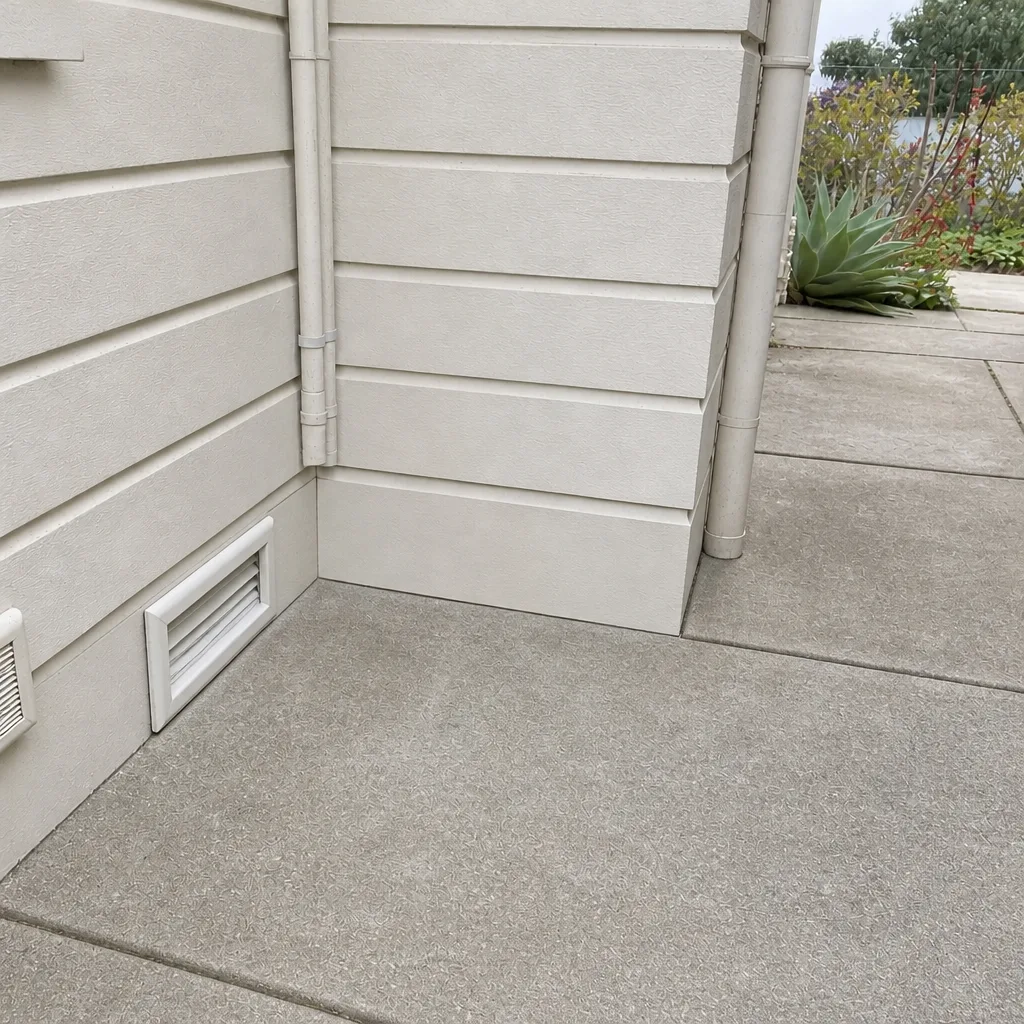 After
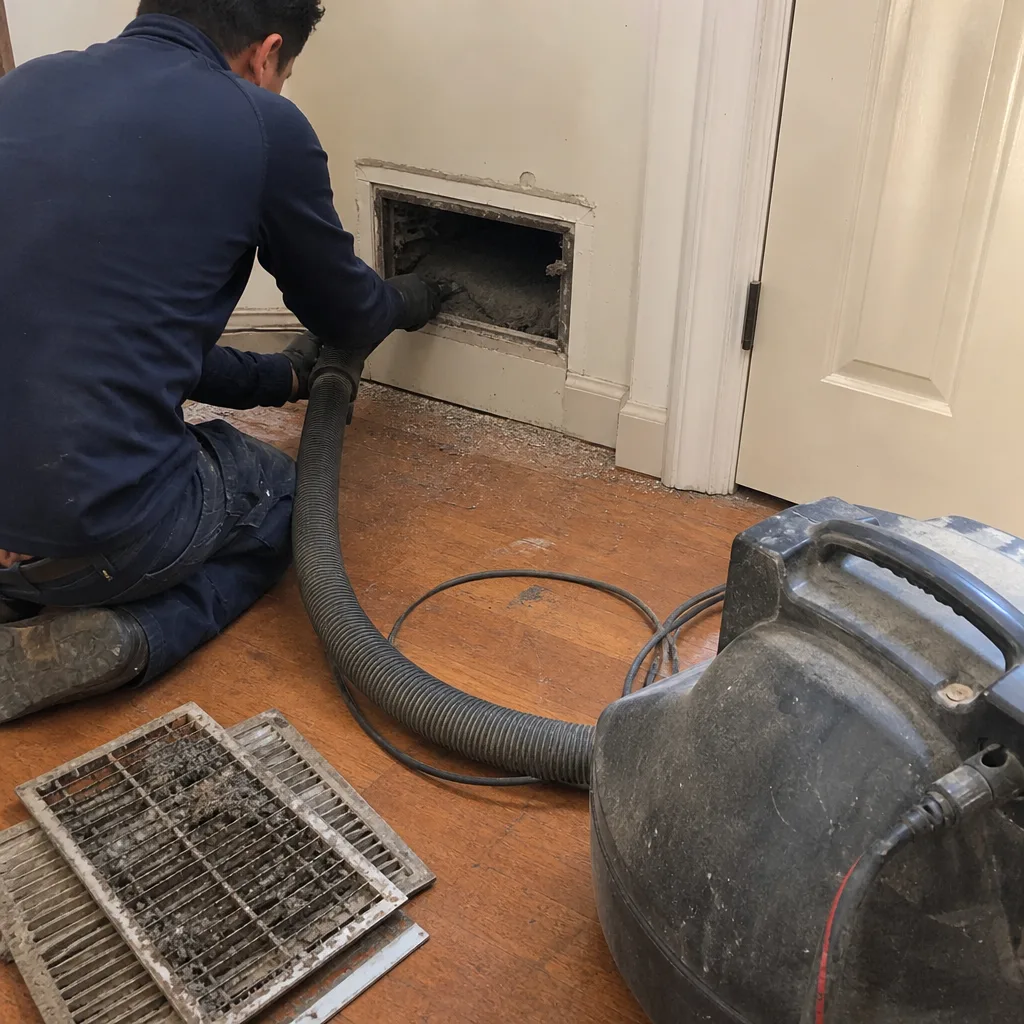 Before
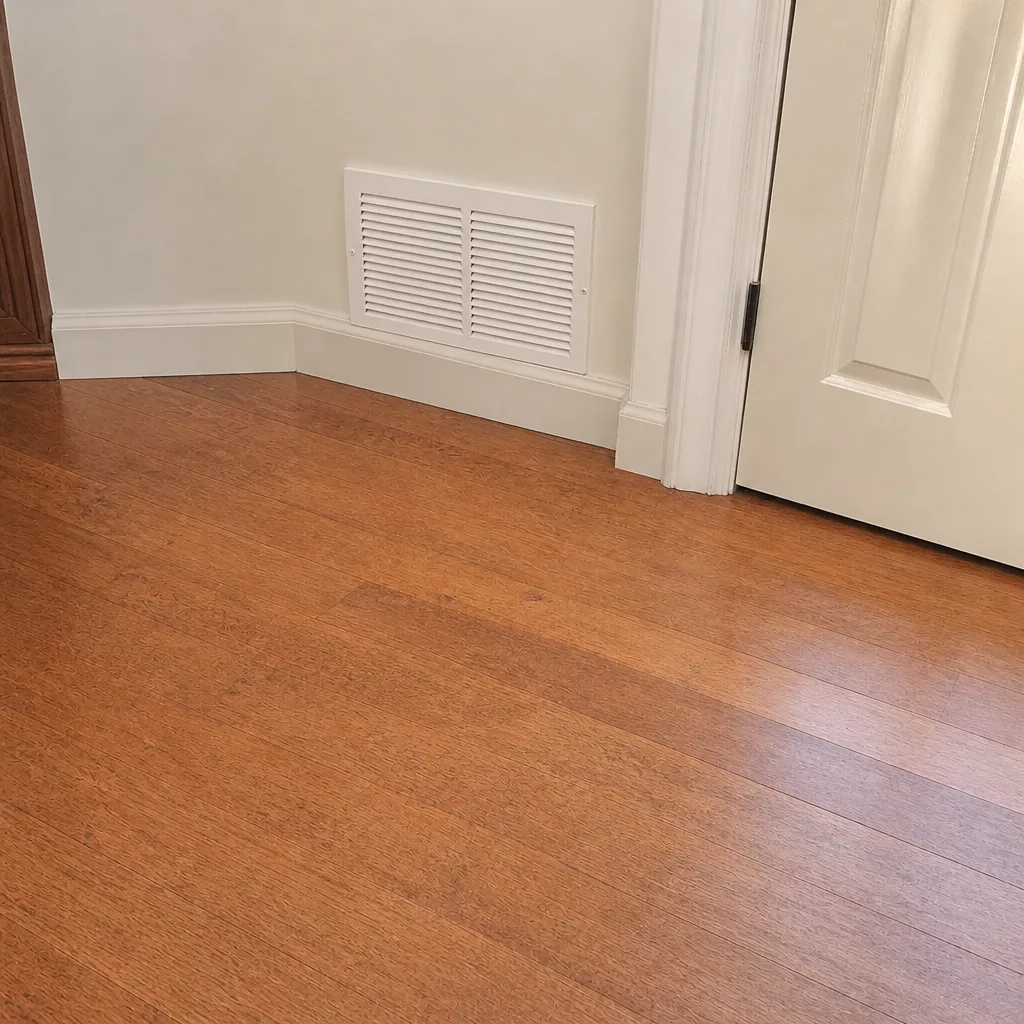 After
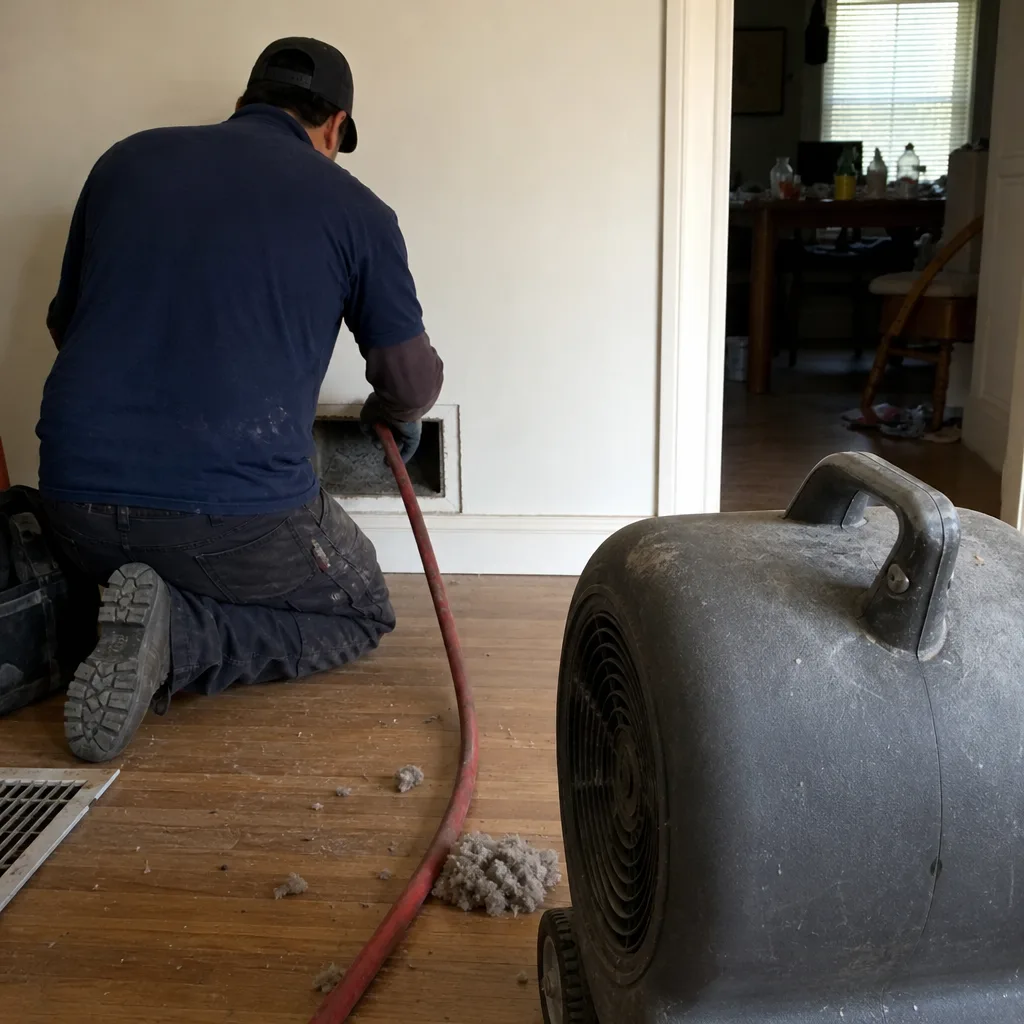 Before
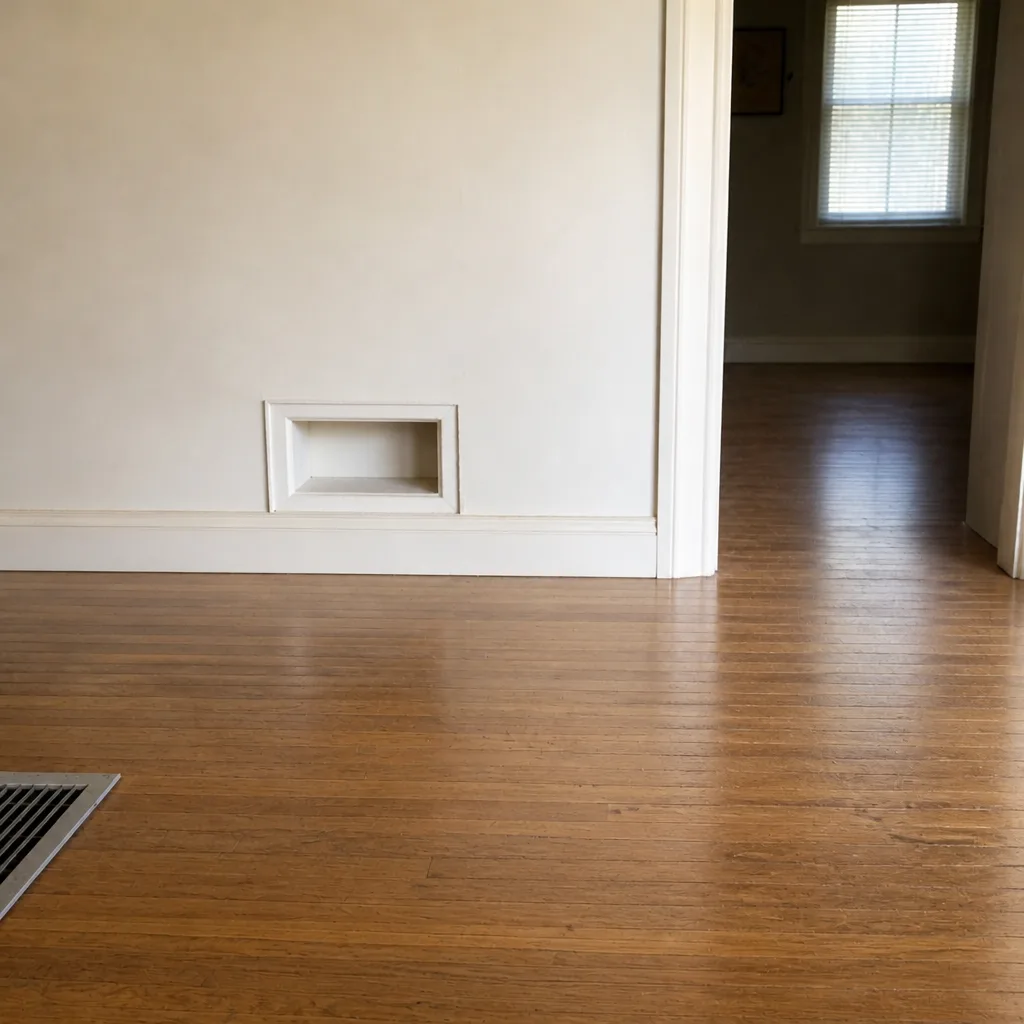 After
When to Call a Professional
Some duct conditions clearly call for professional equipment rather than a consumer kit or a wait-and-see approach. Persistent dust settling on surfaces right after you clean, allergy symptoms that flare inside the house and ease outside of it, or noticeably weak airflow from your registers are all signs worth an inspection. If a filter replacement doesn’t fix the airflow, the ductwork itself may be the problem. A dryer that takes noticeably longer to dry a load, or a vent with visible lint buildup, is a safety matter worth addressing promptly. And if you’ve never had the ducts inspected in a home you bought, a professional inspection with a camera scope gives you a baseline.
Duct Cleaning San Mateo offers free estimates in San Mateo. Call (866) 894-2153. We answer 24/7. Fast dispatch from 7am to 7pm, Sunday through Friday.
Frequently Asked Questions
The best system depends on your duct material and condition, not on which brand ranks highest generally. Rigid sheet metal with accessible runs responds well to Rotobrush rotary contact cleaning, mixed or delicate ductwork suits Nikro negative-pressure source removal, and contaminated or compromised systems need Abatement Technologies containment. Ask any contractor to match the method to your ducts. Call (866) 894-2153 for an exact quote; estimates are free.
Duct cleaning here is priced as a whole-system job by written estimate, not by the vent, and a fair quote reflects the equipment and the condition of the system. Whole-system ranges vary with duct size and contamination, and the written estimate sets the final price before work starts. Be wary of a low teaser price that grows once the technician is on-site. Call (866) 894-2153 for an exact quote; estimates are free.
Cheap quotes usually reflect cheaper equipment: a shop vac and a brush attachment instead of a negative-pressure system with HEPA capture. A shop vac can’t hold a duct system under negative pressure, so fine particulate gets redistributed into the room rather than captured. Ask what equipment will actually be on-site before comparing prices. Call (866) 894-2153 for an exact quote; estimates are free.
Ask for before-and-after photos of your own ducts, not stock images. A contractor who inspects with a camera scope and documents the result can show you what changed inside the system. That’s the most direct proof, and it’s a fair thing to expect from anyone you hire. Flat pricing per system agreed before work starts is the other protection worth insisting on. Call (866) 894-2153 for an exact quote; estimates are free.
There’s no single rule, and honest contractors won’t pretend there is. Homes near busy roads or with pets usually accumulate dust faster, and a visible coating on the inside of a supply register is a reasonable signal to inspect. If you’ve never had the ducts inspected in a home you’ve bought, start there. Call (866) 894-2153 for an exact quote; estimates are free.
Cleaning alone can’t, but a specialist who offers repair as a standalone service can address crushed or leaking runs instead of handing you off. That’s the gap most cleaning-only companies leave open. Ask upfront whether repair is in scope before you book. Call (866) 894-2153 for an exact quote; estimates are free.
The Bottom Line
Equipment brand in duct cleaning is a diagnostic, not a marketing line. Rotobrush handles rigid sheet metal well, Nikro negative pressure works across more duct types, and Abatement Technologies steps in for contaminated systems that need containment. A specialist who carries all three can match the method to your San Mateo home, and a generalist with one tool will apply it to everything. Ask specific questions about brush diameter, negative pressure, HEPA filters, and repair capability before you book. The answers tell you more than any website ever will.
Call Duct Cleaning San Mateo at (866) 894-2153 for a free estimate. We answer 24/7. Fast dispatch from 7am to 7pm, Sunday through Friday. Every job is a flat price per system agreed before work starts, with before-and-after photos of your own ducts.
Written by the team at Duct Cleaning San Mateo.