
Last updated November 14, 2026
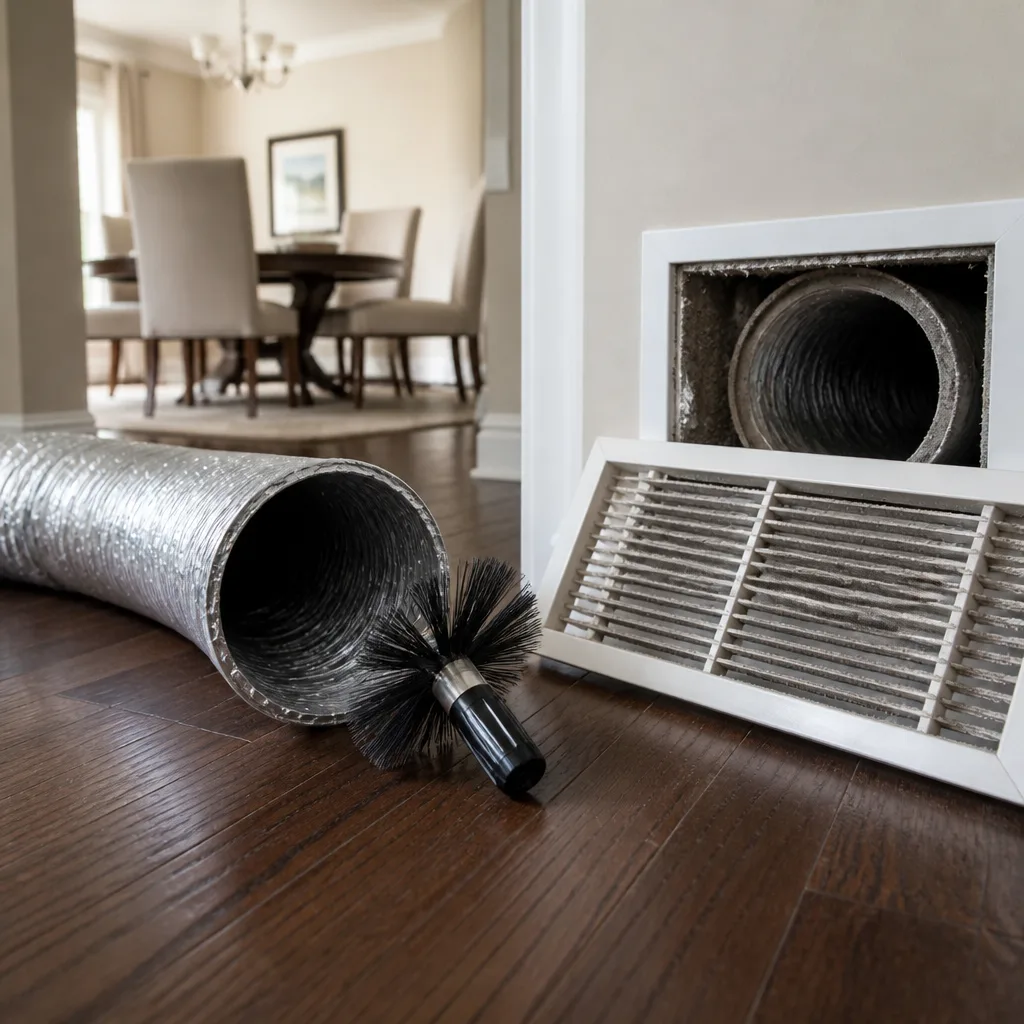 Whole-home duct cleaning
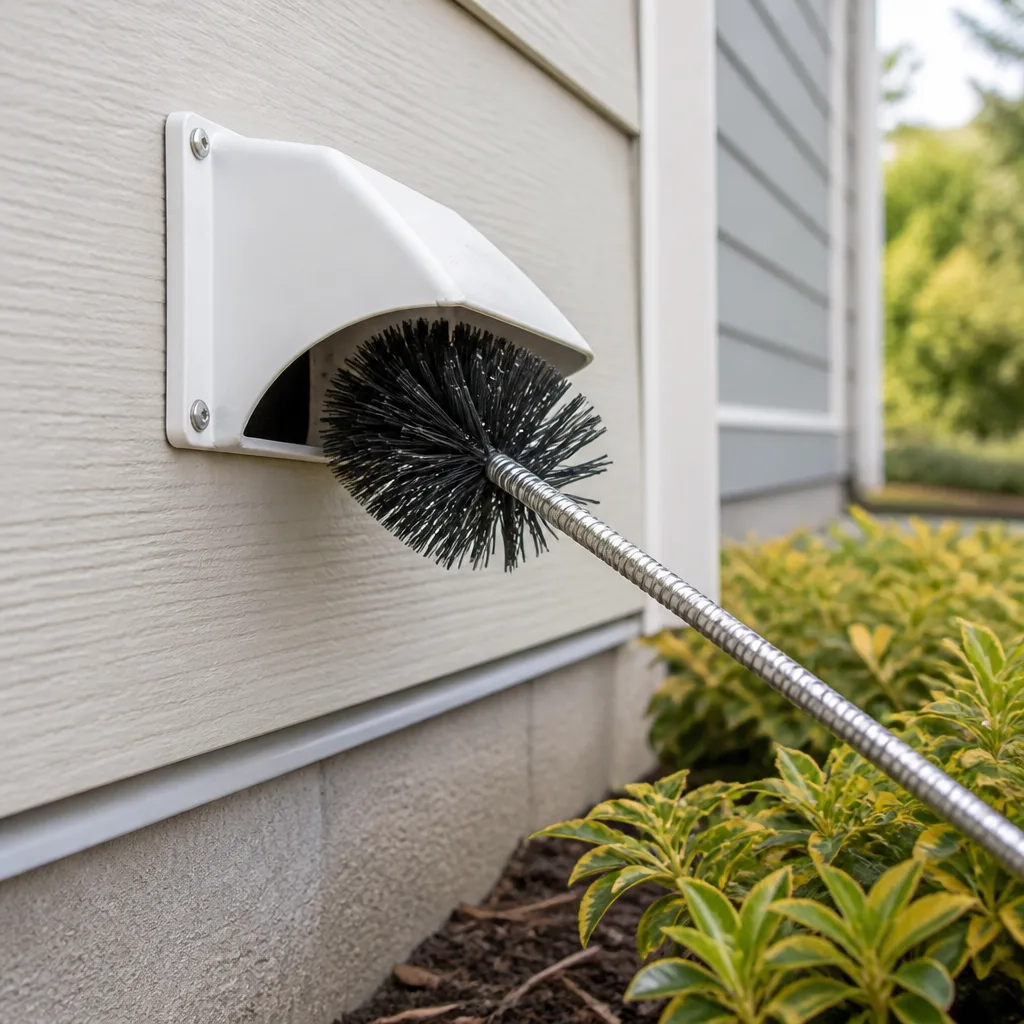 Dryer vent cleaning
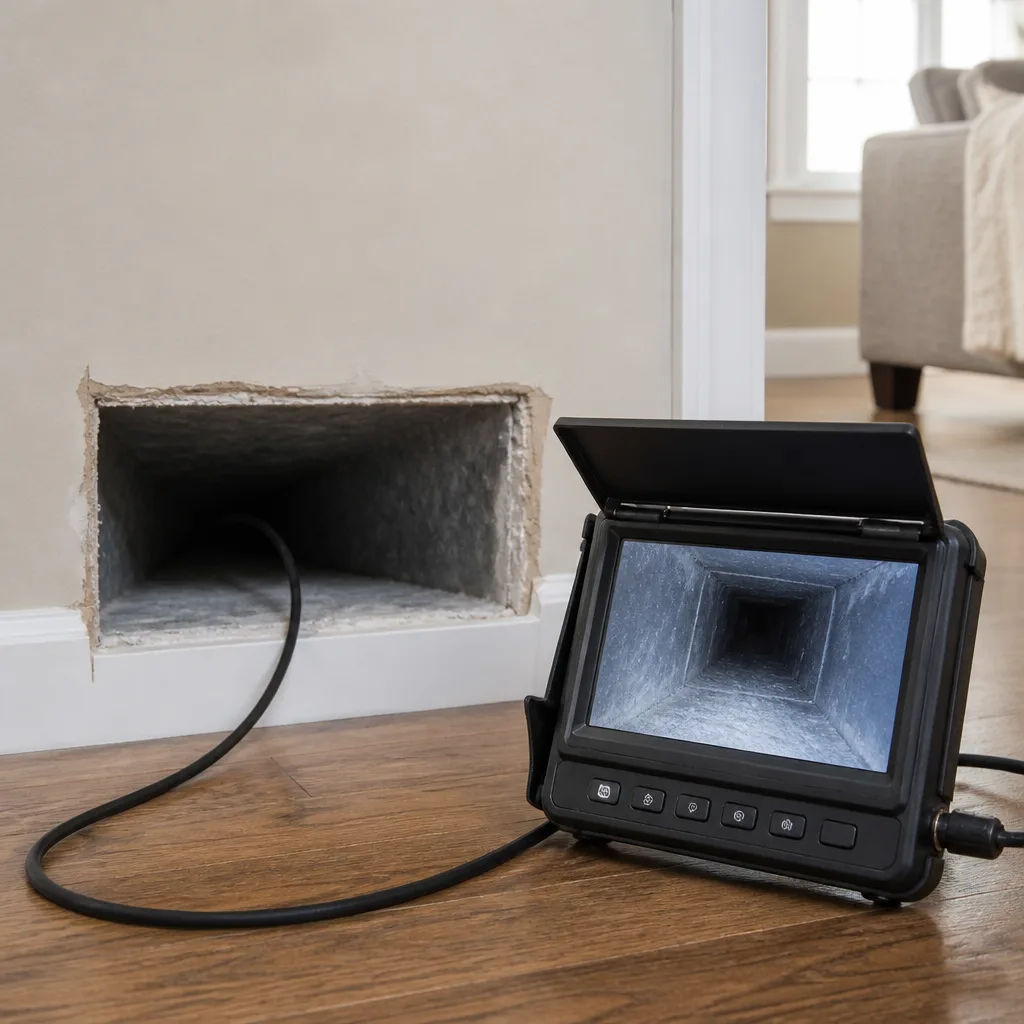 Camera inspection
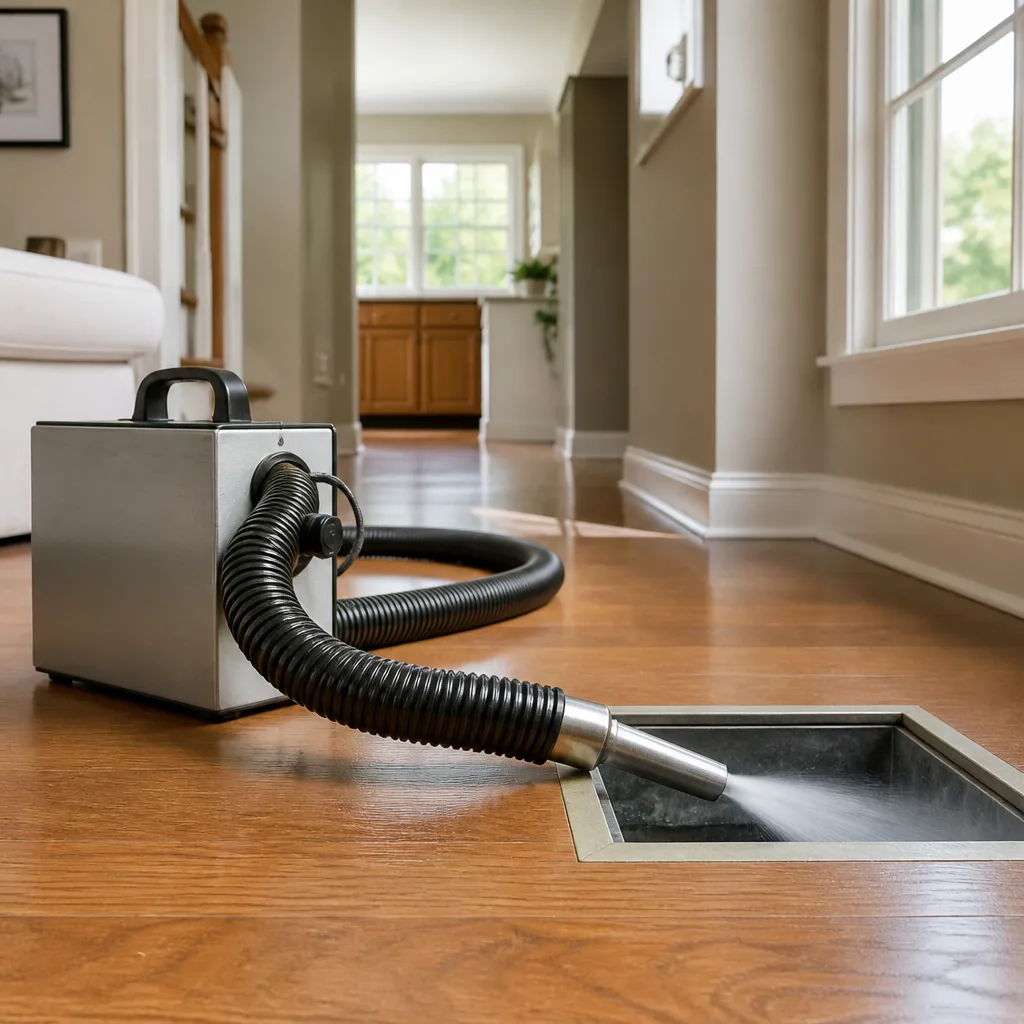 Sanitizing & deodorizing
Whole-system duct and dryer vent check with before-and-after photos - you see exactly what came out of your vents
That "$99 whole-house special" is a bait ad - the real number appears once they are in your hallway, or the "clean" is a shop-vac at the register. We photograph the inside of your ducts before and after instead.
The Complete Guide to Air Duct Cleaning in San Mateo
Most duct cleaning advice you’ll find online assumes a house with forced-air heat running half the year, windows shut against a hard freeze, and ductwork installed to a single national standard. San Mateo doesn’t work that way. Our marine layer keeps relative humidity above 80% on more than 100 days per year, and that moisture doesn’t stay in the air – it settles on the inside surfaces of your ducts, where dust becomes something closer to a food source for mold and bacteria. The result is that a cleaning schedule borrowed from a guide written for Phoenix or Minneapolis can be wrong for a house in Baywood or Beresford. This guide covers what actually happens inside San Mateo ductwork, which cleaning method suits which duct material, and how to verify a job was done properly rather than taking anyone’s word for it.
Quick Answer
Air duct cleaning in San Mateo matters more than in most Bay Area cities because the fog belt keeps duct interiors damp enough to support microbial growth, not just dust. A proper cleaning uses source-removal equipment – a HEPA-filtered negative-air machine such as Nikro working alongside a rotary brush system like Rotobrush – and it should be verified with static pressure readings and a camera inspection, not just photographs. Homes with sheet-metal trunk lines from mid-century construction and later flex-duct additions usually need both methods applied to different sections of the same system.
Styles & brands we work with
- Whole-home duct cleaning
- Dryer vent cleaning
- Camera inspection
- Sanitizing & deodorizing
Table of Contents
- Why San Mateo’s Climate Changes the Duct Cleaning Equation
- Negative-Pressure Removal vs. Contact Cleaning: What Each Method Does
- Matching the Method to San Mateo Duct Materials
- What Baywood, Beresford, and Sugarhill Homes Present
- What a Technician Should Document Before, During, and After
- How to Verify the Work Was Actually Done
- What Air Duct Cleaning Costs in San Mateo
- How Often Ducts Really Need Cleaning Here
Why San Mateo’s Climate Changes the Duct Cleaning Equation
The national schedules most cleaning companies quote are built for climates with a dry heating season and a humid cooling season, and they assume moisture in ductwork is a summer problem that dries out by fall. San Mateo inverts that. Our fog belt keeps relative humidity above 80% on more than 100 days per year, which means duct interiors can stay damp through months when a Midwest house would be bone dry. Damp dust isn’t the same problem as dry dust. It clings, it cakes onto galvanized surfaces, and it feeds the molds and bacteria that produce the musty smell some homeowners notice when the system first kicks on.
Compare that to inland Bay Area cities like San Jose or Walnut Creek, where summer heat drives humidity down and duct dust stays loose and friable. In those markets a shop-vac rig with a brush attachment can make a visible difference because the debris is dry and mobile. In San Mateo, the same equipment tends to smear damp buildup against the duct wall rather than remove it. That’s the practical reason contractor-grade equipment matters here specifically: you need the mechanical aggression of a rotary brush to break the caked layer loose, and you need HEPA negative-air containment running at the same time to pull the dislodged material out of the system before it resettles downstream.
The humidity also affects how quickly ducts get dirty again after cleaning. A house that would go five years between cleanings in a dry climate may need attention sooner in San Mateo, particularly if the ducts run through an unconditioned crawlspace or garage where the marine layer does its work undisturbed. We account for that when we recommend a schedule, rather than defaulting to a national number.
Negative-Pressure Removal vs. Contact Cleaning: What Each Method Does
Duct cleaning isn’t a single technique, and the two main approaches do different jobs. Understanding the difference is the fastest way to tell a real specialist from a generalist with a vacuum hose.
Negative-pressure source removal (Nikro HEPA systems)
A HEPA-filtered negative-air machine connects to the duct system and pulls the entire duct run into negative pressure relative to the rooms it serves. Any debris that gets dislodged – by brushing, by air agitation, by the tools a technician uses – travels toward the vacuum rather than into your living space. The HEPA filtration captures particles down to a microscopic scale rather than blowing them back into the return. This is the same containment principle used in professional mold and contaminant remediation, which is why we run Abatement Technologies equipment on compromised systems where the concern isn’t just dust but microbial contamination.
What negative pressure alone does not do is break bonded debris off the duct wall. Airflow through a duct at normal speed doesn’t scrub a caked layer of damp dust off galvanized steel.
Contact cleaning (Rotobrush rotary brush systems)
A rotary brush system feeds a spinning brush head through the duct run on a flexible whip. The brush physically contacts the duct wall and scours debris loose – the industry benchmark for thorough mechanical cleaning, and the reason Rotobrush is the system we build our cleaning around. Contact cleaning is what removes the material that’s adhered rather than just floating. It works on both sheet-metal and flex duct, with different brush heads and speeds for each, and it needs to be run in coordination with negative pressure so the material it frees up is captured rather than redistributed.
Running one method without the other is the most common shortcut in this trade. Brush without containment and you push loosened debris through the house. Vacuum without brushing and you pull the loose dust while leaving the caked layer exactly where it was.
Matching the Method to San Mateo Duct Materials
San Mateo homes present a mix of duct types that’s fairly specific to the Peninsula: original sheet-metal trunk lines from mid-century construction, with flex duct added during later renovations and HVAC upgrades. The two materials hold debris differently and require different tooling.
- Sheet-metal trunk lines: Galvanized steel is non-porous, so debris sits on the surface rather than soaking in. But the seams, joints, and the transition fittings where trunk lines branch to individual runs are where debris accumulates most. Damp buildup in San Mateo can bond to these surfaces, so they benefit most from rotary brush contact.
- Flex duct: The inner liner is a corrugated plastic film over a wire helix. The corrugations trap debris, and the plastic surface is far easier to damage than sheet metal. Contact cleaning here requires a softer brush head and control of the whip so the tool follows the duct rather than tearing the liner.
- Fiberglass duct board: Found in some additions and remodel work. The interior surface is porous and easily damaged. Cleaning requires gentler tools and a judgment call about whether the material is intact enough to clean or whether it’s a candidate for air duct cleaning plus repair.
The practical consequence is that a mixed system – sheet metal in the trunk, flex in the branches – needs a technician who can switch tools mid-job and knows which run gets which method. A single-tool crew will use one approach on everything, and either the sheet metal gets under-cleaned or the flex duct gets damaged.
This is also where repair capability matters. When contact cleaning reveals a crushed flex run, separated trunk joint, or torn liner, a cleaning-only company has no path forward. We offer duct repair as a standalone service, so the same visit can identify the problem and close it rather than leaving you to find someone else.
What Baywood, Beresford, and Sugarhill Homes Present
San Mateo’s neighborhoods carry different duct profiles depending on when they were built and what’s been done to them since. In our experience, the housing stock in Baywood, Beresford, and Sugarhill is dominated by mid-century tract construction, which means sheet-metal trunk lines running through attic or crawlspace with individual branch runs to each room. That trunk-line layout holds debris in a specific way: the long horizontal runs collect material along the bottom of the duct, where airflow is slowest, and the vertical drops to floor registers collect at the elbows.
Those homes have often been renovated, and the renovation work usually added flex duct to extend runs or serve new rooms. The transition fitting between original sheet metal and added flex is where you find the most stubborn buildup, because it’s a geometry change that slows airflow and a material change that traps debris differently on each side.
Homes closer to the bayside flats and those at slightly higher elevation in the hills tend to see different accumulation patterns too, mostly because of how much time the ducts spend at temperature extremes versus staying damp. A duct run in an insulated attic and a duct run in a vented crawlspace see completely different humidity profiles even in the same house. That’s why a cleaning that treats every run identically is a wasted visit – the run that needs the most attention is usually the one nobody checks first.
If you’re in one of these neighborhoods and haven’t had the ducts looked at, it’s worth knowing what a technician finds there specifically. You can read more about our work throughout San Mateo and what we typically encounter.
What a Technician Should Document Before, During, and After
“Before and after photos” is the phrase every competitor uses, and it’s close to meaningless without knowing what’s being photographed. Here’s what a proper documented cleaning looks like.
- Before work begins: Photographs of each register opening looking into the duct, a photo of the air handler and filter, and a baseline static pressure reading across the system. The static pressure number is the objective baseline – it tells you how hard the system is working to move air before anything is touched.
- During the job: Confirmation that negative pressure was established before any brushing began, and photographs of the containment setup connected to the system. If the crew can’t show you containment in place, the cleaning isn’t happening the way it should be.
- After contact cleaning: Photographs of the same register openings in the same orientation as the “before” shots, so the comparison actually shows a difference. A wide-angle shot of a clean-looking plenum proves nothing.
- Camera inspection: Video or still images from inside the trunk line and at least one branch run, taken with an inspection camera after cleaning. This is what confirms the far end of the run was reached, not just the section a brush could access from the nearest register.
- Post-cleaning static pressure: A repeat reading at the same test point, compared to baseline. A drop in static pressure means the system is moving air more easily than before.
The camera inspection and static pressure readings are the two things a cleaning-only crew often skips, because they require equipment and training beyond the cleaning tools. We treat them as part of the job, not an add-on.
How to Verify the Work Was Actually Done
You don’t have to take anyone’s word for it. Two measurements do most of the work.
Static pressure readings. A technician measures static pressure at the supply and return plenums before and after cleaning. A meaningful reduction in total external static pressure tells you the ductwork is less restrictive than it was. If the “after” number is identical to the “before” number, either the ducts weren’t very dirty or the cleaning didn’t accomplish much – and the technician should be able to tell you which.
Camera inspection. A duct inspection camera fed through a register or through an access port lets you see the inside of the duct with your own eyes, on a screen, in real time. Ask to watch. A cleaning that reached the far end of the run will show a visibly different surface than it started with. A cleaning that only serviced the first few feet will show clean near the register and unchanged further in.
A third thing worth verifying is the equipment itself. Rotobrush, Nikro, and Abatement Technologies systems are recognizable, and a technician should be able to tell you which method was used on which run and why. If the answer is vague, the work probably was too. This is the difference between a genuine specialist and a generalist who added duct cleaning to a service list; it’s also the reason we focus on duct and vent work exclusively rather than treating it as an upsell.
What Air Duct Cleaning Costs in San Mateo
Duct cleaning in San Mateo is priced per system, not per vent. That’s a deliberate industry distinction you’ll want to understand before you call anyone, because per-vent pricing is where bait-and-switch offers come from: a low advertised number that turns into a far larger invoice once the technician counts how many registers your house actually has.
- Standard whole-system cleaning: We quote one flat price for the entire system after seeing the layout, agreed in writing before any work starts.
- Dryer vent cleaning: Priced as a separate service; see our dryer vent cleaning page for details.
- Air duct repair: Priced per job after the damaged section is identified, whether during a cleaning visit or a separate inspection.
We don’t publish a coupon number, and we don’t quote a per-vent rate over the phone before seeing the system. The honest reason is that a ranch house with a simple trunk-and-branch layout and a two-story home with multiple zones and long attic runs are genuinely different jobs, and a phone quote that doesn’t reflect that is a quote designed to be revised once the crew is on site. What we do commit to: one flat price per system agreed before work starts, no per-vent pricing, and before-and-after documentation of your own ducts – including the camera inspection – so you can see what you paid for. Estimates are free.
How Often Ducts Really Need Cleaning Here
The national “every three to five years” recommendation assumes a dry climate and a clean household. San Mateo’s humidity pushes that shorter for homes in the fog belt, and dust accumulation speeds up if you have pets, run the system with a cheap filter, or have any renovation dust in the home’s history.
- Baseline: Have the system inspected and documented once, so you have a real picture of condition. Most San Mateo homes we see that haven’t been cleaned in recent memory need a full cleaning on the first visit.
- After that first cleaning: A realistic interval here is closer to three years than five for homes in damper locations and longer for well-sealed, well-filtered homes at higher elevation.
- Triggers for cleaning sooner: Visible dust at registers shortly after a cleaning, a musty smell when the system starts, a spike in allergy symptoms indoors, or any renovation that opened walls.
- Dryer vent: Independent of the air duct schedule, and worth checking at least yearly; lint buildup in a dryer vent is a fire risk, not a comfort issue.
Filtration upgrades also shift the schedule. A better filter captures more before it reaches the ducts; if you’re considering one, Honeywell and Aprilaire systems are the ones we’re most familiar with, and Guardsman for protective coatings on cleaned surfaces where the duct material calls for it. Getting the filtration right reduces how often you need us back.
Common Mistakes to Avoid
- Hiring on price alone. A quote that’s dramatically lower than the rest usually reflects a shop-vac rig and no containment, which in San Mateo’s humid ductwork means the caked layer stays put. The visible result is a cleaned register and an unchanged trunk line.
- Accepting per-vent pricing. Per-vent pricing is designed to let the technician discover more vents than you expected. Ask for a whole-system flat price before work starts.
- Skipping the camera inspection. Photos of a clean-looking register opening don’t confirm the far end of the run was reached. Ask to see the camera footage, not just the gallery shot.
- Letting one method run on every duct. A rotary brush on a torn flex liner makes the problem worse. San Mateo’s mixed duct systems need the crew to differentiate.
- Ignoring the dryer vent. It’s a separate system with its own risk profile. Lint accumulation is a documented fire cause, and it’s not addressed by air duct cleaning.
- Treating repair as someone else’s problem. If a cleaning reveals a crushed run or separated joint, a cleaning-only company leaves you with the diagnosis and no solution. Confirm upfront whether the crew can repair what they find.
- Cleaning once and assuming you’re set for five years. In a fog-belt house, that interval is usually too long. Reassess after the first documented cleaning based on how fast the system re-accumulates here.
See the difference
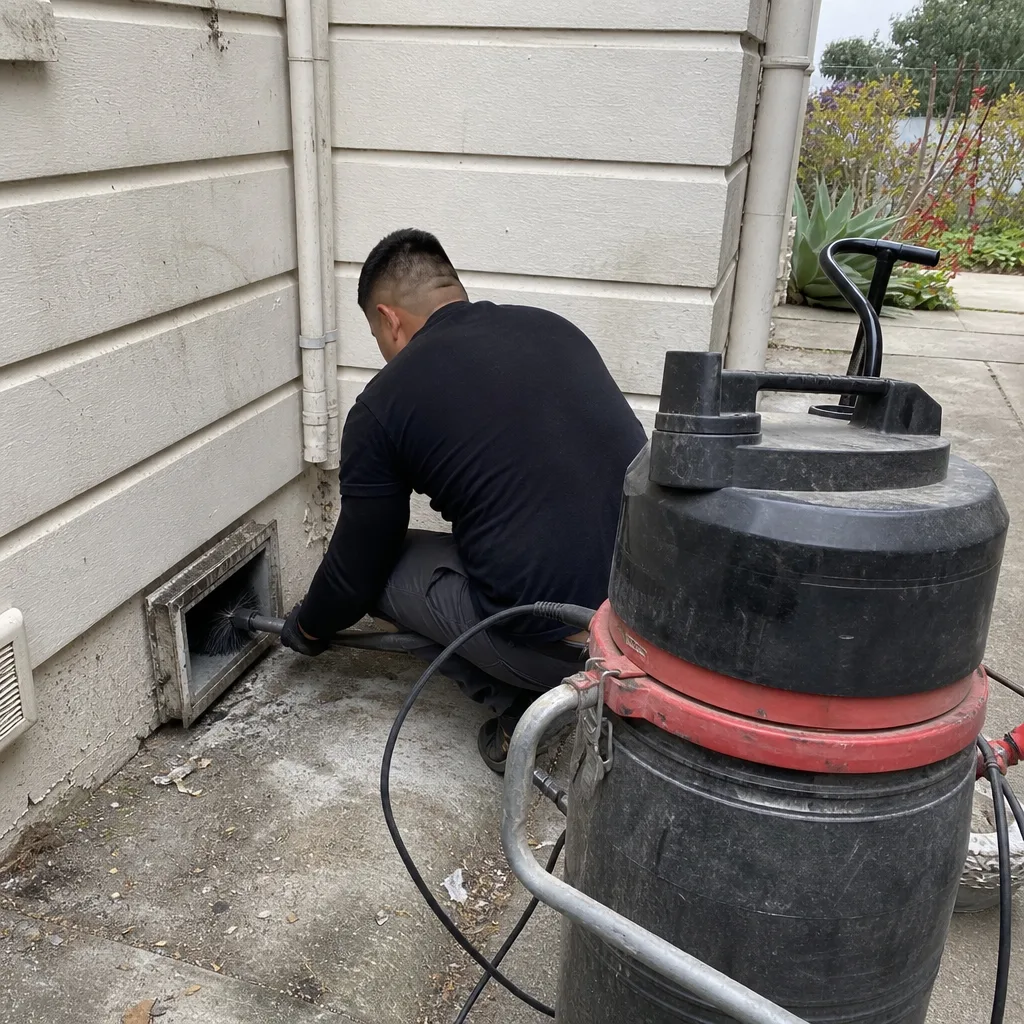 Before
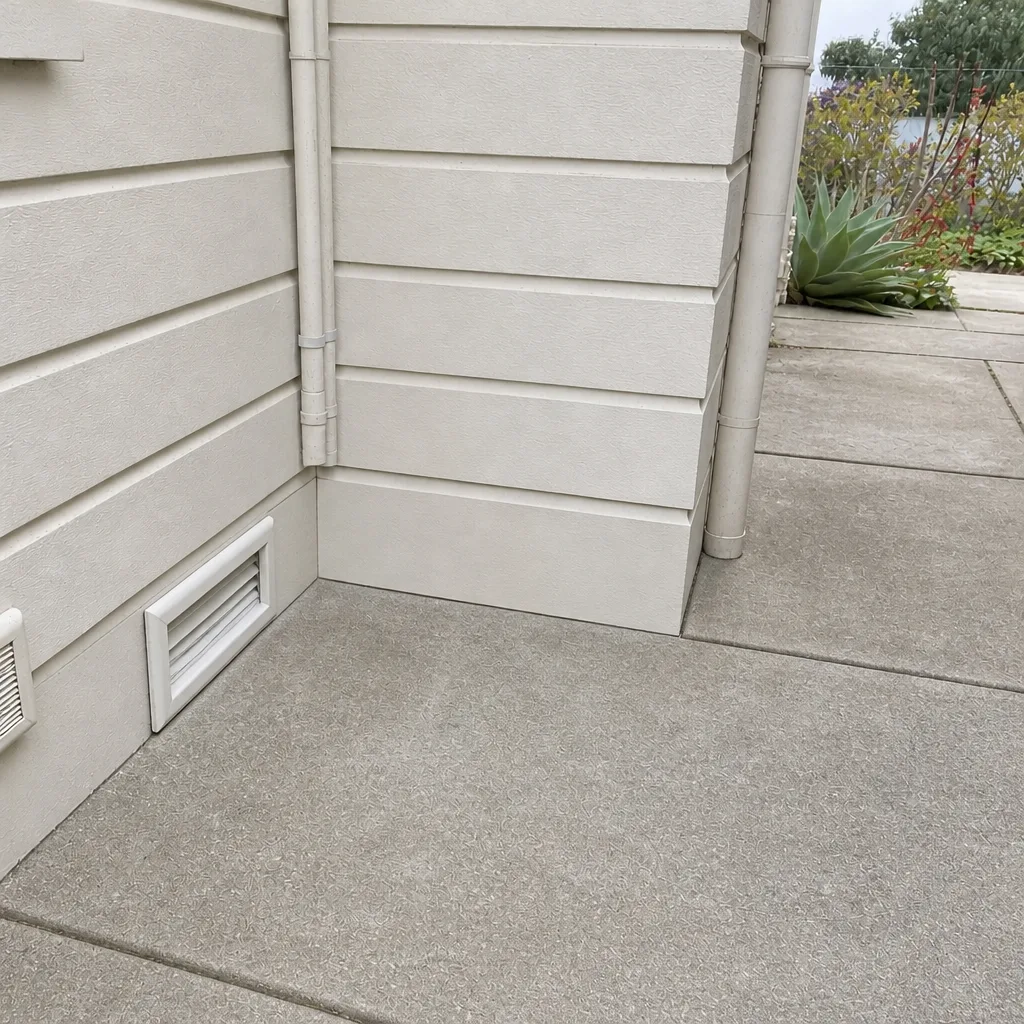 After
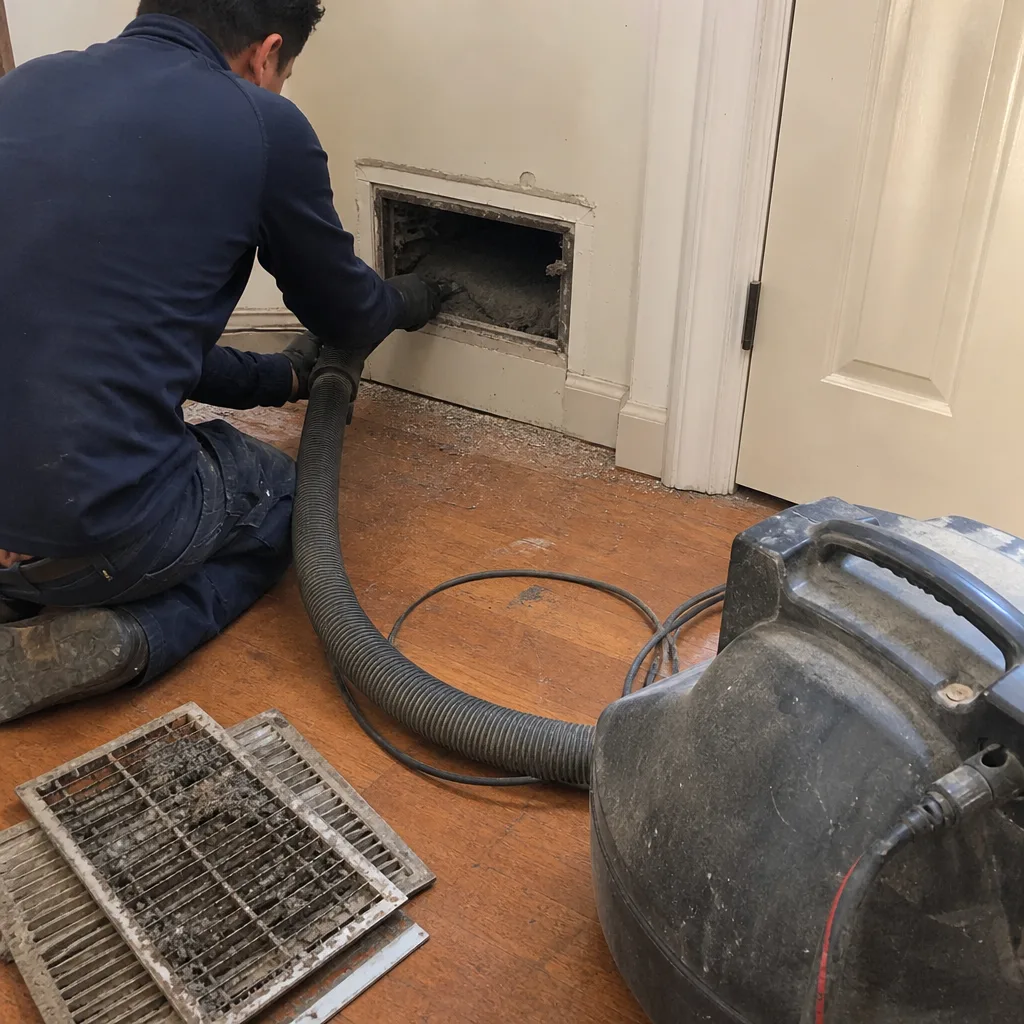 Before
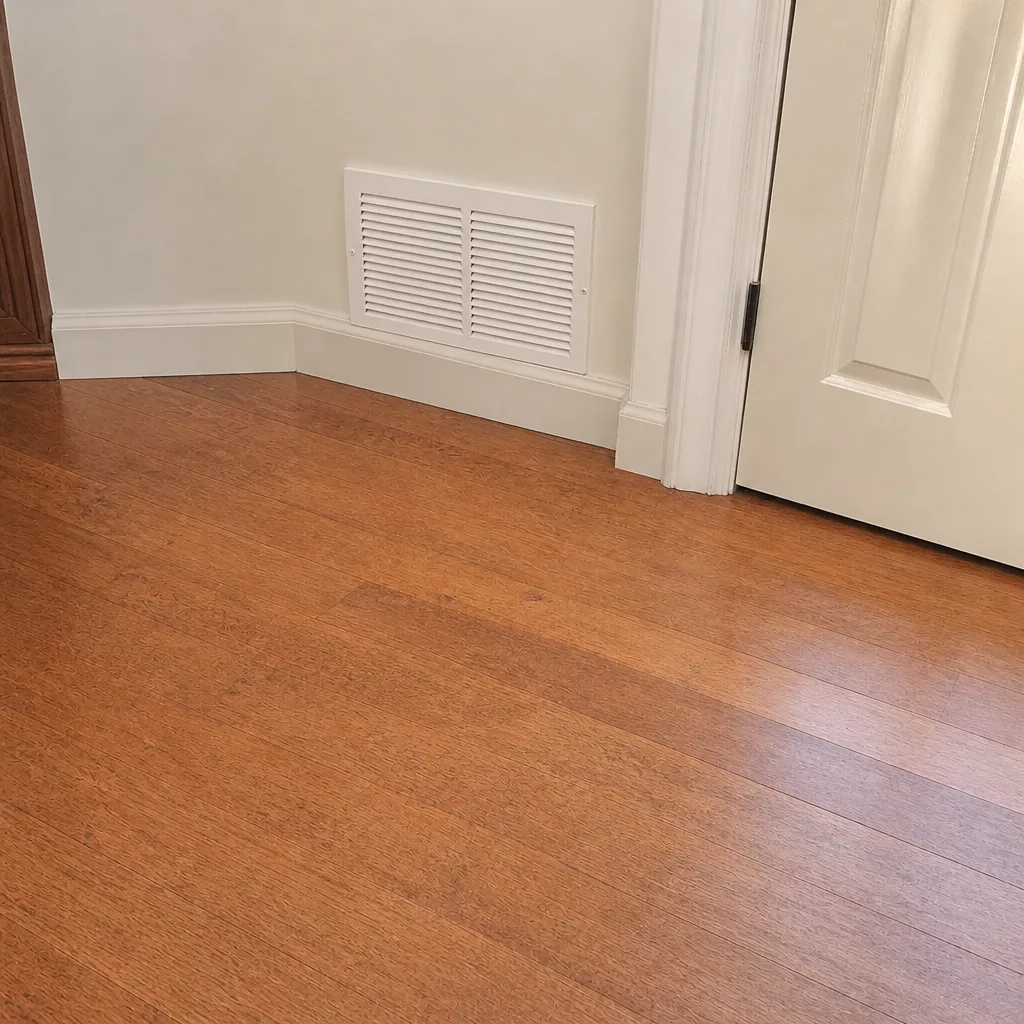 After
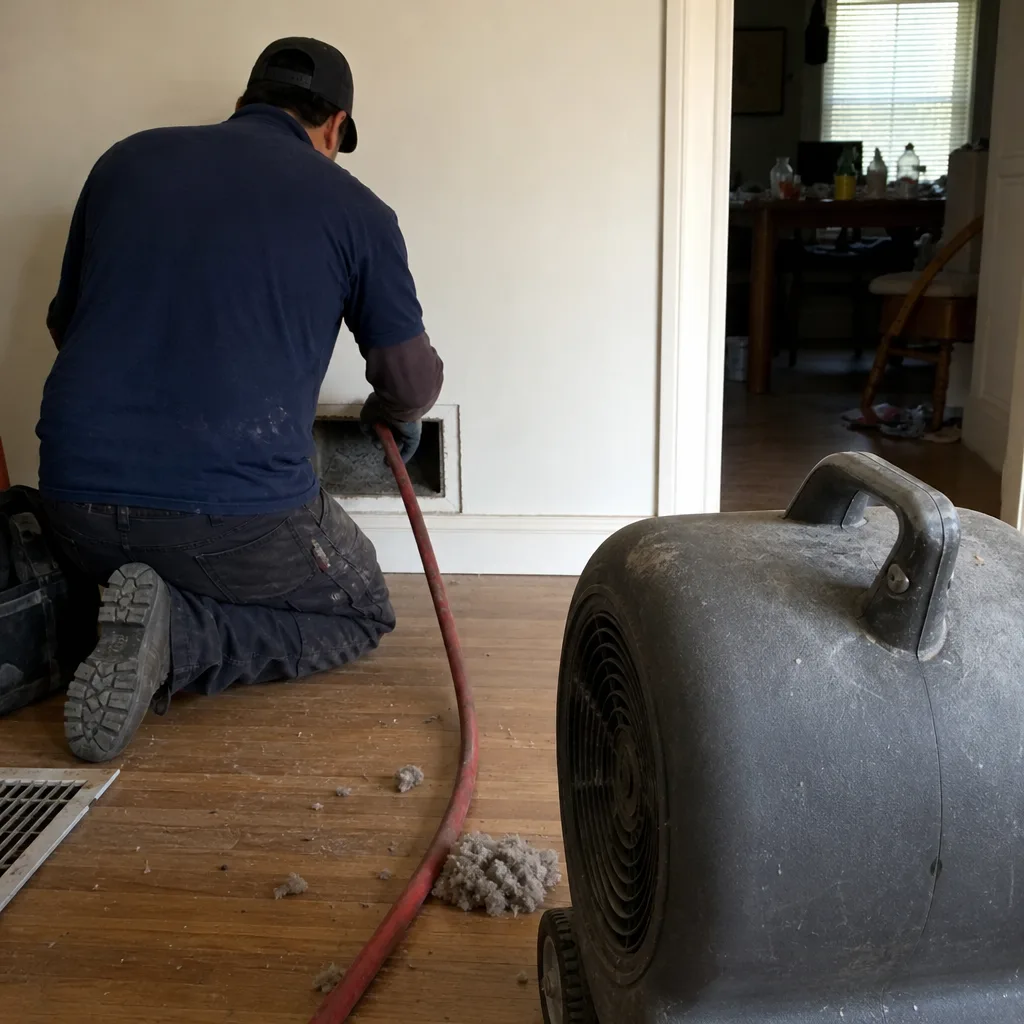 Before
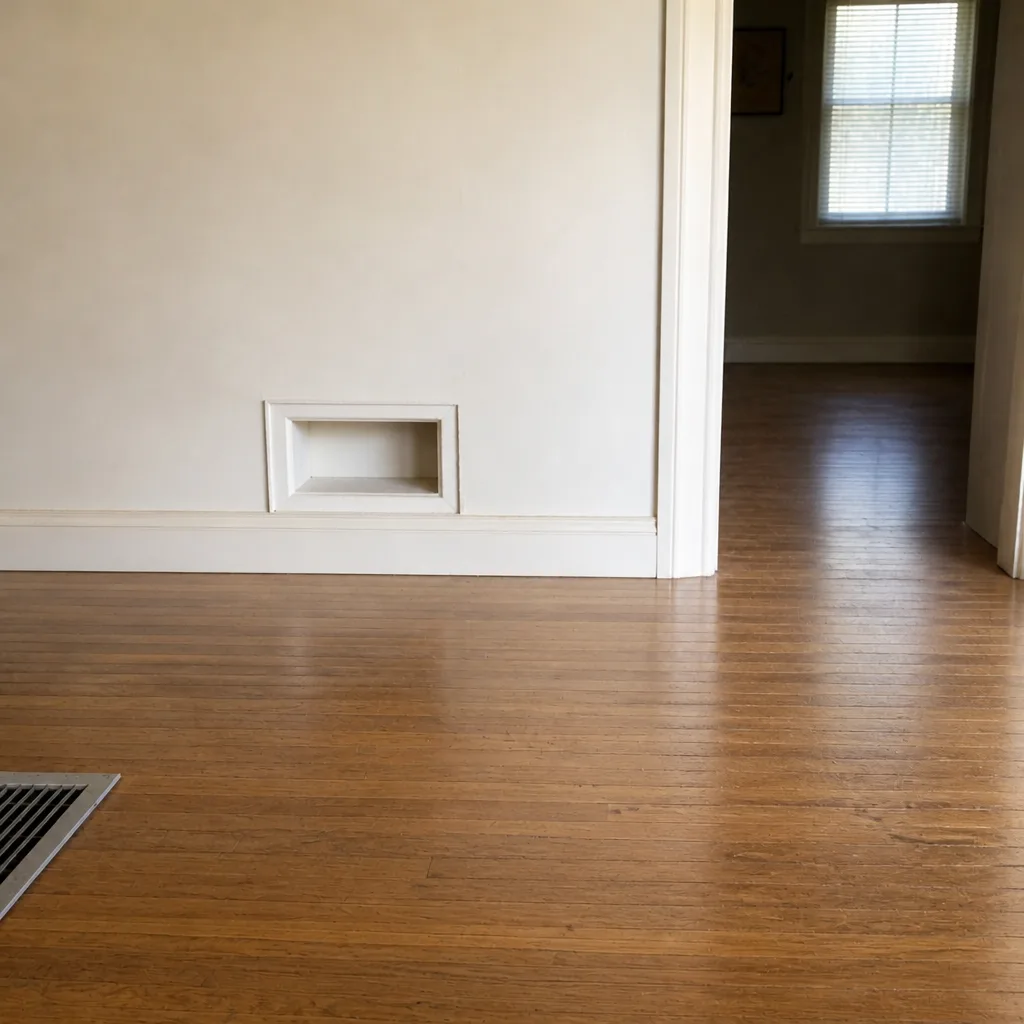 After
When to Call a Professional
Some duct conditions are safe to monitor and some need a trained technician. Visible mold growth inside a register, a persistent musty smell whenever the system starts, or debris falling out of a supply register all warrant a professional look. So does any ductwork that’s been exposed to water intrusion, pest activity, or a renovation that opened walls, and any flex duct you can see is crushed or torn. If a dryer is taking longer than it used to, that’s a dryer vent issue, not an air duct one, but it’s still worth having checked. Above all, don’t open up ductwork or attempt to clean a system yourself – the containment that keeps dislodged debris out of your living space is the whole point of professional equipment, and doing it without that containment makes the indoor air worse, not better. Duct Cleaning San Mateo offers free estimates in San Mateo – call (866) 894-2153. We answer 24/7. Fast dispatch from 7am to 7pm, Sunday through Friday.
Frequently Asked Questions
We price per system, not per vent, and the written estimate sets the final price after we’ve seen the layout. Because San Mateo homes vary widely in duct configuration, a flat number quoted over the phone wouldn’t hold up. Call (866) 894-2153 for a free estimate – we’ll look at the system and give you one flat price agreed before any work starts.
Cheaper quotes usually reflect cheaper equipment: a portable shop-vac rig rather than a HEPA negative-air system, and often no rotary brush at all. On San Mateo’s damp ductwork, that combination often means less gets removed than the invoice suggests. Ask any company which cleaning method they’ll use on which duct material before you book. Call us for an honest comparison – (866) 894-2153, estimates free.
Ask for static pressure readings before and after, camera inspection footage from inside the trunk and a branch run, and before-and-after photos of the same register opening in the same orientation. Any crew using professional equipment can provide all three. Call (866) 894-2153 to schedule a documented cleaning.
Shorter than the national three-to-five-year figure for most homes in the fog belt, closer to every three years after the first cleaning, and longer for well-sealed homes with good filtration. We recommend a documented baseline first, then set the schedule from how fast your system re-accumulates. Call (866) 894-2153 for a free estimate and we’ll walk through your specific setup.
Yes – humidity above 80% on more than 100 days a year keeps duct interiors damp long enough to support microbial growth, not just dust accumulation. Inland Bay Area cities stay dry enough that dust remains friable; here it bonds to duct walls and needs contact cleaning to remove. Call (866) 894-2153 to discuss what your system likely needs.
Yes – duct repair is a core service, not a referral. When we find a crushed flex run, torn liner, or separated trunk joint during cleaning, we can quote the repair alongside, so you’re not left searching for a second company. Call (866) 894-2153 for a free estimate.
The Bottom Line
San Mateo ductwork poses a different problem than the one most cleaning guides describe. The fog belt keeps ducts damp enough to bond dust to the duct wall, mid-century construction leaves mixed sheet-metal and flex systems that need different methods on different runs, and the only way to know the work was done is documentation – static pressure readings and camera footage, not a photo of a clean register. If you take two things from this guide: insist on per-system pricing agreed before work starts, and insist on seeing the inside of the ducts yourself. Duct Cleaning San Mateo uses Rotobrush rotary cleaning and Nikro HEPA containment, carries Abatement Technologies equipment for compromised systems, and offers duct repair when cleaning turns up damage. Our technicians have up to 10 years of experience. We answer 24/7. Fast dispatch from 7am to 7pm, Sunday through Friday. Call (866) 894-2153 for a free estimate.
Written by the team at Duct Cleaning San Mateo.