
Last updated November 14, 2026
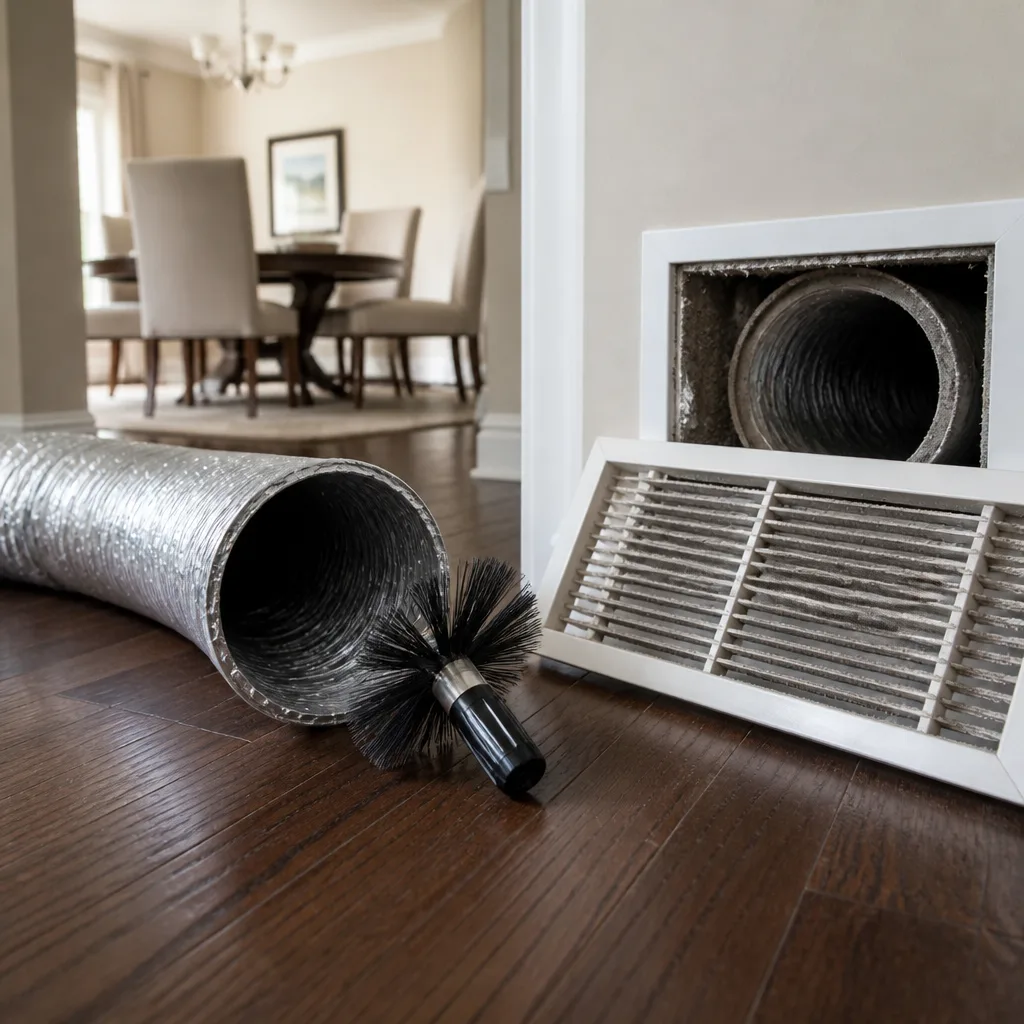 Whole-home duct cleaning
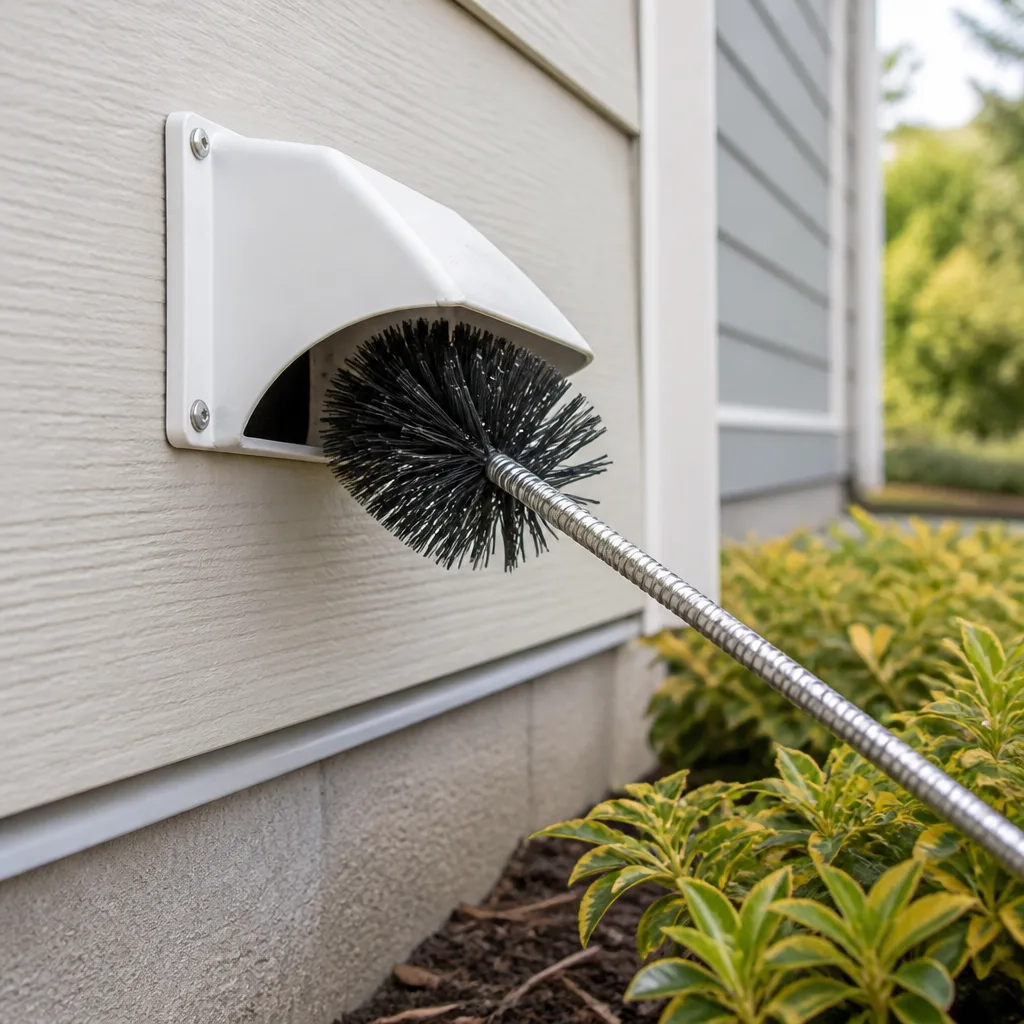 Dryer vent cleaning
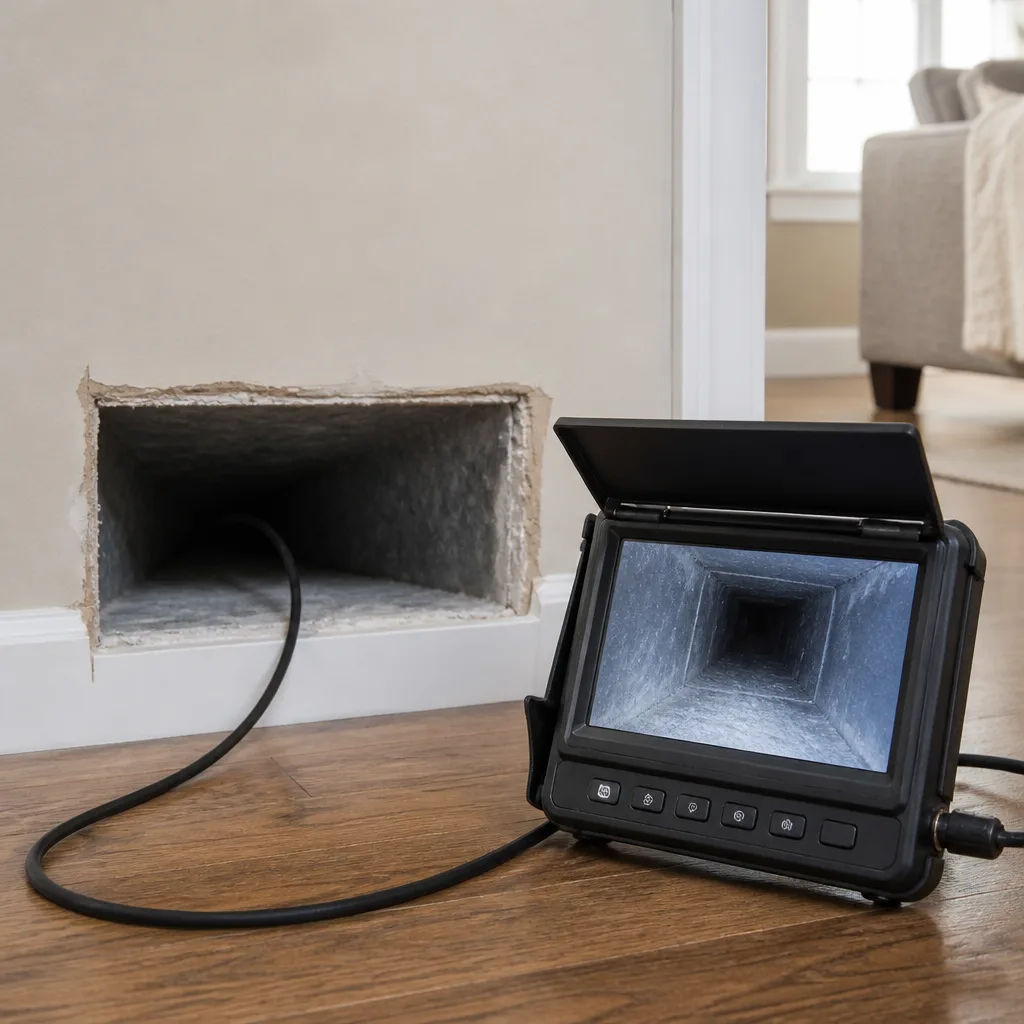 Camera inspection
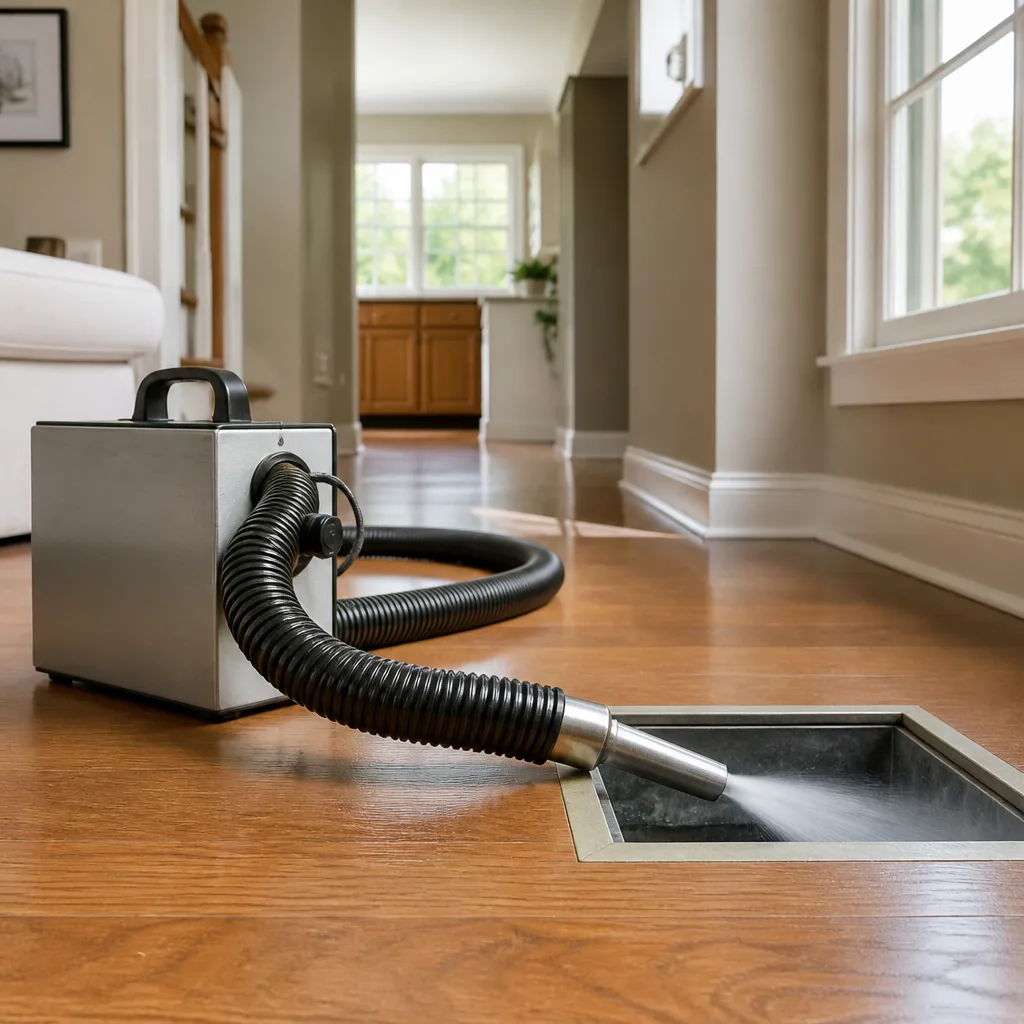 Sanitizing & deodorizing
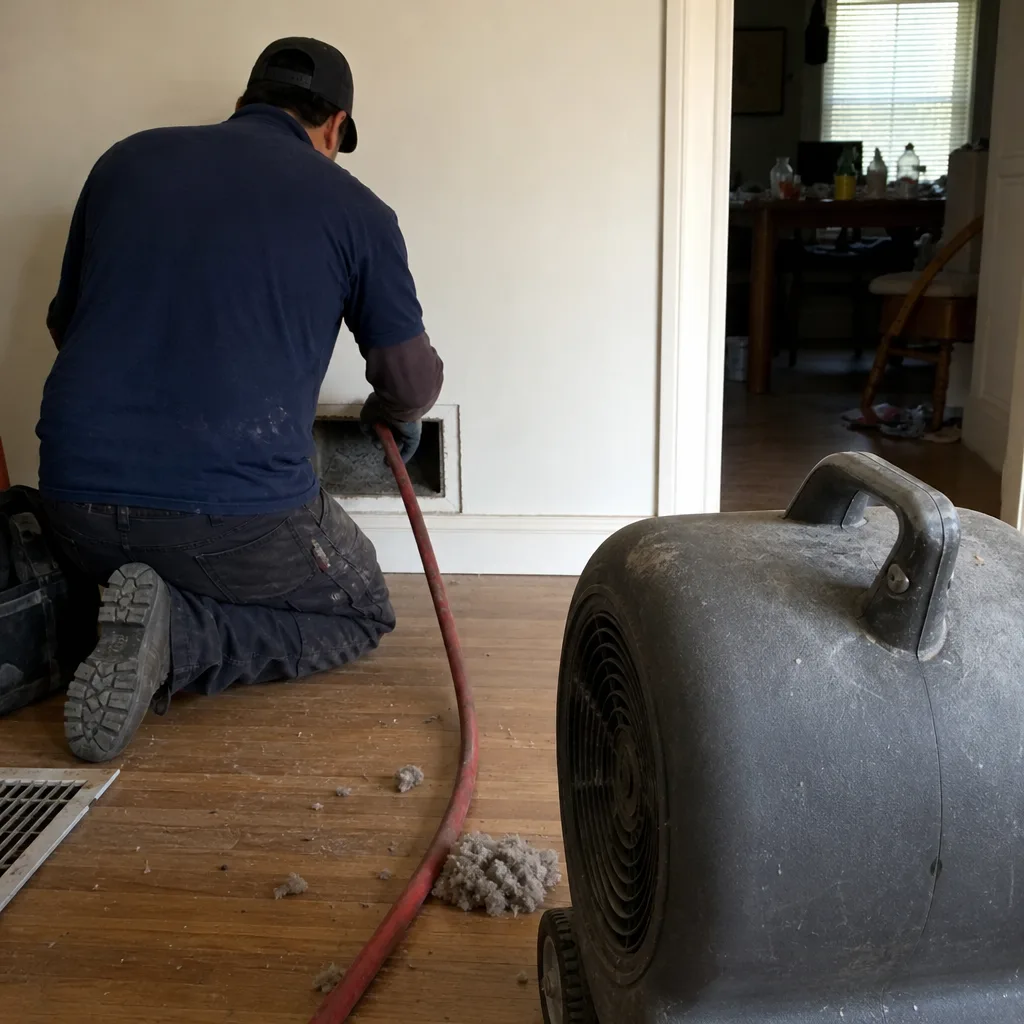
Whole-system duct and dryer vent check with before-and-after photos - you see exactly what came out of your vents
That "$99 whole-house special" is a bait ad - the real number appears once they are in your hallway, or the "clean" is a shop-vac at the register. We photograph the inside of your ducts before and after instead.
Seasonal Air Duct Cleaning Care for San Mateo: Year-Round Homeowner’s Guide
Most duct cleaning advice is built for places with real winters. San Mateo isn’t one of them. Heating systems here run for maybe six to eight weeks of actual use, then sit quiet through long stretches of mild weather. That idle time matters more than most homeowners realize. Dust, pollen, and fine particulate settle inside supply runs and return plenums for months. When the furnace finally kicks on, that settled layer lifts and moves straight into your living room. This guide walks you through four distinct air-quality phases in San Mateo and what each one asks of your ductwork, so you stop following the generic spring-and-fall advice and start working with how this climate actually behaves.
Quick Answer
Air duct cleaning in San Mateo works best when it’s timed to four local phases rather than the usual spring and fall reminders: a pre-heating check in November through February before dust off-gasses through the system, a humidity inspection after the rainy season in March through May, a wildfire smoke protocol through the dry months of June to September, and a professional cleaning in October before heating season starts. October is the most cost-effective window because demand is lower and the system hasn’t yet cycled contaminated debris.
Styles & brands we work with
- Whole-home duct cleaning
- Dryer vent cleaning
- Camera inspection
- Sanitizing & deodorizing
Table of Contents
- Why San Mateo Ducts Follow Phases, Not Seasons
- Phase 1 (November to February): The First Heat Cycle Is the Highest-Risk Period
- Phase 2 (March to May): Post-Rainy-Season Humidity Inspection
- Phase 3 (June to September): Wildfire Smoke Season Protocol
- Phase 4 (October): The Pre-Heating Window That Saves You the Most
- Pairing Seasonal Duct Checks With Dryer Vent Cleaning
- What Professional Equipment Actually Changes
- Common Mistakes to Avoid
- When to Call a Professional
Why San Mateo Ducts Follow Phases, Not Seasons
San Mateo sits in a stretch of the Peninsula where the temperature swing between January and July is narrower than almost anywhere else in the country. That stability is comfortable to live in, but it creates a specific problem for ductwork: your HVAC system is idle far more than it’s active. Idle ductwork doesn’t clean itself. Airflow is what keeps fine dust moving toward the filter; once airflow stops, that dust drops out of suspension and settles on duct walls, turning vanes, and the return plenum floor.
When you finally run the heater in November or December, the first cycle lifts a season’s worth of settled particulate and pushes it into every room. That’s the off-gassing event most homeowners never connect to the dust they see on furniture the week the heat comes on.
The generic advice to “clean your ducts every three to five years” doesn’t account for this. In San Mateo, the more useful question is: what’s happening in the ductwork at this point in the year, and does it need attention now? That’s what the four phases below are built around. Each one targets a different stress: dust migration in winter, moisture intrusion in spring, smoke infiltration in summer and early fall, and pre-season preparation in October.
If you’ve never had a professional evaluation of your home’s ductwork, start with a proper air duct cleaning assessment before trying to schedule by phase. You need to know the baseline condition of your system before the calendar means anything.
Phase 1 (November to February): The First Heat Cycle Is the Highest-Risk Period
The single most important thing you can do for your ductwork in San Mateo happens before the heater runs, not after. The first heat cycle of the season is when settled dust, pollen residue, and any microbial growth that took hold during the idle months gets lifted and distributed through the house. That’s the event to prevent.
Homeowners often describe the smell the first time the heat comes on: a slightly metallic, dusty odor that fades after a few days. That’s the off-gassing of dust burning off heat exchanger surfaces and the particulate load in the supply ducts. It fades because the dust is now in the air you’re breathing, not because the system cleaned itself.
A pre-season inspection addresses this directly. The most useful tool here is a camera scope, which lets a technician look inside supply runs and returns without tearing anything open. What a scope check typically covers:
- Sediment depth and distribution in the main trunk and branch runs
- Visible microbial growth on duct liner or insulation, particularly near the air handler
- Loose joints, disconnected sections, or gaps that let unconditioned air enter the system
- Return plenum condition, which is where most settled dust concentrates
A scope inspection is a low-cost way to answer the question before you commit to a full cleaning. If the ducts are relatively clear, you can defer the full service to October and just replace the filter. If the scope shows heavy sediment or compromised liner, cleaning before the first heat cycle prevents the off-gassing event entirely. That’s the trade: an inspection now versus a whole-house dust cycle in December.
For homeowners in San Mateo neighborhoods like Baywood or Hayward Park, where many homes date to the mid-century and have original duct runs, this pre-season check tends to matter more. Older duct systems often have loose joints and deteriorated insulation that a scope can spot quickly.
Phase 2 (March to May): Post-Rainy-Season Humidity Inspection
When the rainy season ends, the ductwork enters its most vulnerable idle period. Moisture that entered through a compromised joint, a loose boot, or a return plenum during the wet months has been sitting for weeks. This phase is about catching it before it becomes microbial growth.
The inspection itself doesn’t require specialized equipment for the first pass. Homeowners can check the exterior surfaces of supply ducts in an accessible attic or crawl space and look for condensation evidence: water staining, darkened insulation, or a musty smell near the air handler. If the system has been sitting idle since February or March, checking these surfaces is worthwhile before the next cooling season begins.
- Inspect accessible supply runs. Look at exterior duct surfaces in the attic or crawl space for any moisture staining or condensation rings. Any sign of wet insulation is a red flag.
- Check the return plenum. The return plenum collects the most dust and often the most moisture in a residential system. Look for musty odor, discoloration, or visible dark patches.
- Smell the registers. A persistent musty smell from supply registers after the system has cycled for a few minutes points to moisture or microbial growth inside the ducts.
- Look at the filter housing. Rust or water staining around the filter slot suggests moisture has been migrating into the system from a compromised section.
If any of these checks show a concern, the next step is a professional inspection with a camera scope. A technician can confirm whether what you’re seeing is superficial surface moisture or actual microbial growth on duct liner, which changes the cleaning approach.
If the check uncovers damaged or disconnected ductwork, this is where repair becomes a real option. Duct Cleaning San Mateo handles duct cleaning San Mateo and repair as separate, standalone services, which matters in San Mateo because the leaky connection or deteriorated joint that’s letting moisture in usually needs to be fixed before a cleaning will stay effective. Cleaning-only companies can’t close that gap, so you’d end up re-cleaning the same ducts a year later.
Phase 3 (June to September): Wildfire Smoke Season Protocol
Wildfire smoke season is the phase San Mateo homeowners tend to think about most, and it’s also the one where a lot of homeowners do the wrong thing. The instinct is to close every window and run the HVAC system as a filtration device. That only helps if your filtration setup is actually designed for smoke-sized particulate.
Smoke particulate is smaller than the dust your standard filter catches. A basic filter with a low MERV rating lets most of it through. There are three things worth checking before and during smoke season:
- Filter rating. Upgrading to a higher MERV-rated filter catches more fine particulate, but don’t go so high that the system’s blower can’t push through it. A filter swap should always match system capacity, not simply go for the highest number available.
- Filter bypass. A filter that doesn’t seat cleanly in its housing lets air bypass the filter entirely. That means you’re paying for filtration that isn’t happening. Checking for bypass means looking at the filter frame and making sure there are no visible gaps around the edges.
- Smoke events and early cleaning. A single heavy smoke infiltration event can deposit enough fine particulate in the return plenum and filter housing to warrant an early cleaning, even if the cleaning schedule isn’t due. If your return plenum has visible ash or fine particulate after a smoke event, that’s a cleaning trigger.
Homes with a Honeywell or Aprilaire filtration system already have a better starting point for smoke season, but the system still needs to be functioning correctly and the filter still needs to be the right rating. We’ve seen San Mateo homeowners install a high-MERV filter that the blower can’t handle, which restricts airflow and creates its own efficiency problem. The fix isn’t a bigger filter; it’s the right filter for the system, plus a return plenum that isn’t packed with debris.
If you’re not sure what your system’s rated capacity is, this is where an inspection pays off. A technician can measure airflow and filter pressure drop to confirm the setup before you commit to a filter upgrade for the season.
Phase 4 (October): The Pre-Heating Window That Saves You the Most
October is the most cost-effective time to schedule a full professional cleaning in San Mateo, and the reason isn’t just scheduling or demand. It’s that the system hasn’t yet cycled contaminated debris. Cleaning in October means the ducts are cleaned before the first heat cycle lifts dust into every room. Wait until December and you’re cleaning after the fact.
There’s a second reason October works better: demand is lower. Late spring and early summer tend to be heavy booking periods for cleaning services because everyone remembers duct cleaning as a spring task. October sits in a gap between the summer smoke season and the winter heating season, which means inspections and cleanings are easier to schedule, and the system is in a stable state that makes the scope inspection accurate.
What a full October cleaning involves with professional-grade equipment:
- Pre-clean inspection. A camera scope checks the trunk, branches, and return plenum before any equipment is run. This confirms the scope of work and identifies any damage to route to repair.
- Negative-air setup. A HEPA-filtered negative-air machine like the Nikro systems we use is connected at the main trunk. The negative-air setup creates a pressure differential so dislodged debris is captured at the HEPA filter, not pushed back into the house.
- Rotary brush cleaning. A Rotobrush rotary brush system runs through the branch runs and main trunk to mechanically agitate sediment and biological growth off the duct walls. This is an industry benchmark method because the mechanical action reaches surfaces a vacuum-only setup can’t.
- Return plenum and air handler cleaning. The return plenum and accessible faces of the air handler are cleaned separately, since that’s where the bulk of settled material concentrates.
- Post-clean verification. A before-and-after camera scope on the cleaned sections confirms the work was completed as scoped. You should see the before-and-after images of your own ducts, not sample photos.
For homeowners in San Mateo neighborhoods where homes have older duct systems, like Shoreview or North Central, the October cleaning also serves as the annual opportunity to catch small problems before they become repair jobs. A loose joint spotted during a cleaning is a minor fix; the same joint with a year of moisture intrusion behind it is a bigger repair.
Pairing Seasonal Duct Cleaning With Dryer Vent Cleaning
Dryer vent cleaning shares more than an equipment van with duct cleaning. The two belong on the same maintenance schedule because both are tied to safety and both are easy to defer until the consequences show up. Lint buildup in a dryer vent is a documented residential fire risk, not just a cosmetic nuisance, and the timeline for cleaning it depends on how much laundry the household runs rather than on a city or climate.
Here’s why the pairing makes sense in San Mateo specifically. If you’re already scheduling a duct inspection for October or a pre-heating check in November, adding a dryer vent cleaning to the same visit means one scheduling call instead of two and one technician visit instead of two. The scope of work is adjacent and the equipment is already on site.
How often does a dryer vent need cleaning? There’s no single answer because it depends on household volume, but the practical signs to look for are:
- Clothes taking significantly longer to dry than they used to
- The dryer body feeling noticeably hot to the touch during a cycle
- A burning or overheated smell near the dryer
- Visible lint accumulation around the exterior vent hood
- A dryer vent run that’s longer than typical, with more bends, which traps lint faster
If any of these apply, don’t wait for the seasonal visit. Fire safety timelines are their own schedule. Otherwise, folding a dryer vent cleaning into your October or November visit keeps both systems on the same maintenance cycle without adding a separate appointment.
One more reason to pair the two: if a technician is already in the attic or crawl space checking duct surfaces for moisture and damage, checking the dryer vent routing in the same visit is straightforward. The two jobs inform each other. A damaged duct joint and an overlong dryer vent run often live in the same crawl space, and finding both in one visit is better than finding them in two.
What Professional Equipment Actually Changes
There’s a legitimate reason to ask what equipment a duct cleaning company uses before you book, and it isn’t brand loyalty. The equipment determines whether the cleaning removes debris or just redistributes it.
A portable shop-vac-style setup can create suction at the register, but it can’t generate enough negative pressure to pull debris from a full trunk and branch system. Worse, without a proper containment setup, dislodged debris can end up in the living space rather than captured. That’s the difference most homeowners never see on a quote.
Here’s what a professional setup involves:
- Rotobrush rotary brush systems. These agitate duct walls mechanically, which is what actually dislodges adhered dust and biological growth. Vacuum alone doesn’t reach surfaces a rotary brush contacts.
- Nikro HEPA-filtered negative-air equipment. The negative-air setup captures dislodged debris at a HEPA filter rather than recirculating it into the home. This is the containment side of the job.
- Abatement Technologies equipment. The same equipment class used in professional remediation work. That matters when ducts have compromised liner or visible biological growth rather than routine dust.
We also work with air-quality brands including Honeywell and Aprilaire, which lets us make informed recommendations on filtration upgrades after the cleaning, not guesses. And the Abatement Technologies equipment raises the ceiling on what the cleaning can handle: contaminated or compromised duct systems aren’t a referral out, they’re a scope of work.
This is the practical answer to why some duct cleaning quotes come in so much lower than others. A quote built on shop-vac equipment and no containment costs less because it doesn’t include the equipment, the containment setup, or the post-clean verification. The invoice at the end is where the difference shows up, or doesn’t, because the work wasn’t done to the same standard in the first place.
Common Mistakes to Avoid
- Waiting for a visible problem before scheduling a scope check. Duct debris accumulates invisibly, and by the time you smell it or see dust on furniture, the debris has already cycled through the house. A camera scope catches it earlier.
- Following spring-and-fall advice in a climate without those seasons. The generic “clean your ducts in spring and fall” schedule doesn’t fit San Mateo’s pattern, where the highest-risk period is the first heat cycle in winter and the most cost-effective cleaning window is October.
- Installing the highest-MERV filter available without checking system capacity. A filter that’s too restrictive for the blower creates an airflow problem that’s worse for efficiency than the particulate it’s catching.
- Skipping the return plenum. Some cleaning quotes only address the supply registers, because that’s what the homeowner can see. The return plenum is where the bulk of settled dust concentrates, so any quote that skips it isn’t a full cleaning.
- Ignoring moisture evidence after the rainy season. Water staining on supply duct insulation or a musty smell at the registers in March or April is the window to catch microbial growth before it spreads.
- Treating dryer vent cleaning as a separate, deferrable item. It’s a fire safety timeline. Folding it into the same seasonal visit as a duct inspection keeps it from being the task that’s always “next season.”
When to Call a Professional
Some situations call for an inspection regardless of where you are in the seasonal cycle. Call when the first heat cycle produces a persistent dusty or metallic smell that doesn’t fade after a few days. Call when supply registers emit a musty smell or when you can see visible water staining on accessible ductwork. Call when a wildfire smoke event has left visible ash or fine particulate around the return plenum or filter housing. Call when clothes are taking noticeably longer to dry than they used to, or when the dryer body feels hot during a cycle. Call when you’ve never had the ductwork scoped and aren’t sure whether it’s ever been cleaned. Duct Cleaning San Mateo offers free estimates in San Mateo – call (866) 894-2153.
Frequently Asked Questions
Most San Mateo homes do well with a full cleaning every three to five years, paired with an annual scope check in the fall. That schedule reflects the local pattern where heating runs for only a short stretch of the year and the ducts sit idle far more than they do in colder climates: the idle periods are when dust settles, so the pre-season check catches problems before the first heat cycle. Homes with pets, recent remodeling, or older duct systems may need more frequent attention. Call (866) 894-2153 for a free estimate and an inspection that fits your specific system.
Yes, and the reason is counterintuitive: mild climates mean more idle time, which is exactly when settled dust accumulates in the ductwork. San Mateo homeowners run the heater for only a short stretch of the year, so the first heat cycle of the season lifts months of settled particulate directly into living spaces. Cleaning before that first cycle prevents the event rather than reacting to it. Call (866) 894-2153 for a free estimate.
Full-system cleaning is priced per job by written estimate, not per vent, and the estimate is free. The final price depends on the size of the system, the number of branch runs, whether the return plenum needs extra work, and whether any duct repair is needed. A written estimate agreed before work starts is the standard, so you shouldn’t see a lower number on paper that becomes a bigger invoice once a technician is on site. Call (866) 894-2153 for an exact quote – estimates are free.
Lower quotes usually reflect cheaper equipment, skipped sections, or no containment setup. A quote built on a shop-vac rig without HEPA negative-air containment costs less because it doesn’t include the equipment or the containment that keeps dislodged debris out of your living space. Some quotes also skip the return plenum, which is where the bulk of settled dust is. The way to close the gap is to ask what equipment the crew uses, whether they run a camera scope before and after, and whether you’ll see before-and-after photos of your own ducts. Call (866) 894-2153 for an honest estimate on the whole system.
Insist on before-and-after photos of your own ducts, not sample photos from a portfolio. A camera scope used before the cleaning and again after should show the same sections, so you can compare. If a company won’t document the work that way, that’s the decision point, not the price. We use a pre-clean scope to confirm the scope of work and a post-clean verification so you can see for yourself what changed. Call (866) 894-2153 to schedule a free estimate.
Yes, if the cleaning is done at the right time and paired with a filter upgrade that fits the system’s airflow capacity. Fine smoke particulate settles in the return plenum and filter housing, and a return plenum that’s clean and a filter that’s correctly rated for the system will perform better during smoke events than one with a season’s worth of accumulated debris. A heavy smoke event can also warrant an early cleaning regardless of schedule. Call (866) 894-2153 for a free estimate.
The Bottom Line
San Mateo’s mild climate doesn’t mean the ductwork gets a break. It means the risk shifts: less winter heating means more idle time, and more idle time means more settled dust picked up by the first heat cycle of the season. The four-phase approach here is the practical answer: a pre-season scope check in November through February, a humidity inspection in March through May, a smoke-season filter and bypass check in June through September, and a full cleaning in October before the system starts cycling contaminated debris. Fold a dryer vent cleaning into the same visit so a fire-safety task doesn’t slip for another year. Knowing what a typical job involves, and asking what equipment and documentation a firm provides, keeps the whole process straightforward. For homeowners who want their system looked at by technicians with up to 10 years of experience using professional-grade Rotobrush, Nikro, and Abatement Technologies equipment, that’s the conversation to have before the season turns.
Call Duct Cleaning San Mateo at (866) 894-2153 for a free estimate. We answer 24/7, with fast dispatch from 7am to 7pm, Sunday through Friday. A reasonable starting point for anyone new to the area or unsure of their ductwork’s condition is a straightforward inspection of the system followed by a written estimate. If you’re still learning the neighborhood and want a broader overview of what air quality looks like across the area, our San Mateo guide is the natural next step.
Written by the team at Duct Cleaning San Mateo.
See the difference
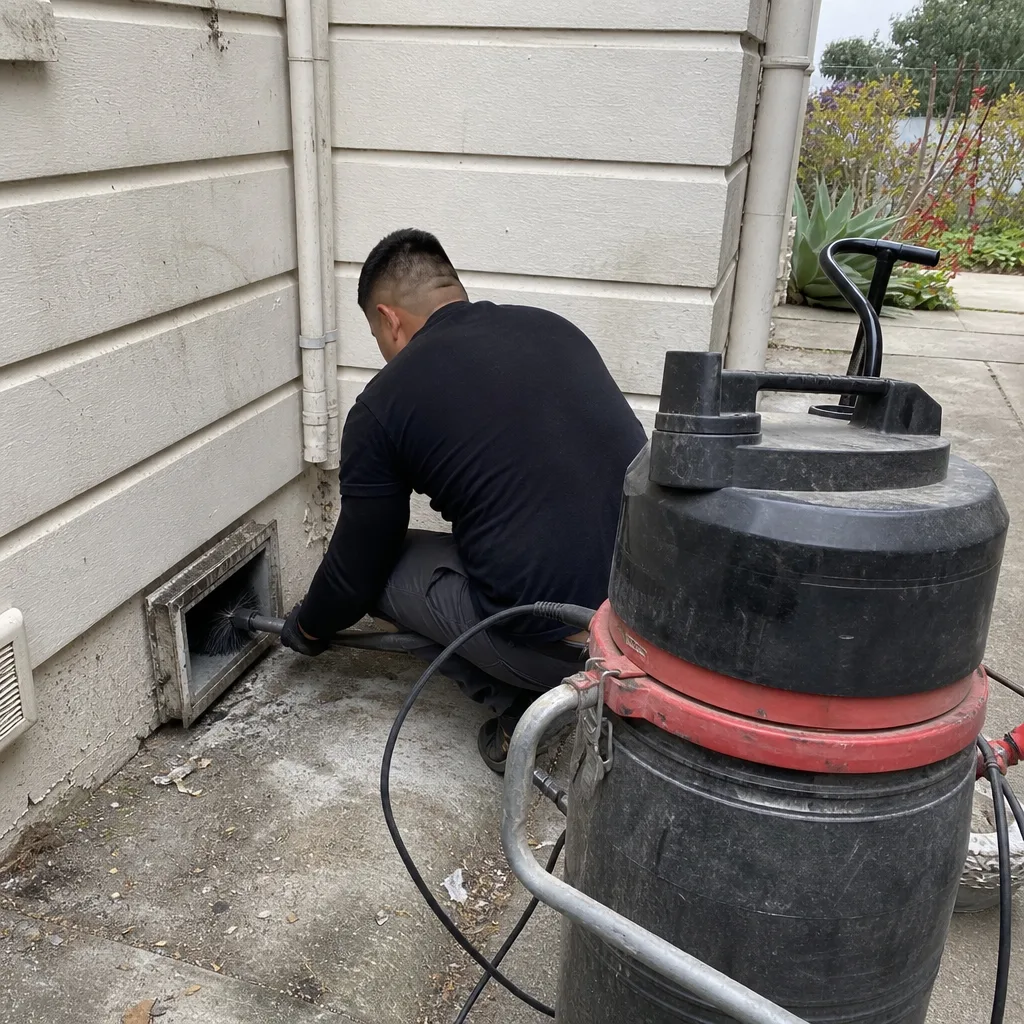 Before
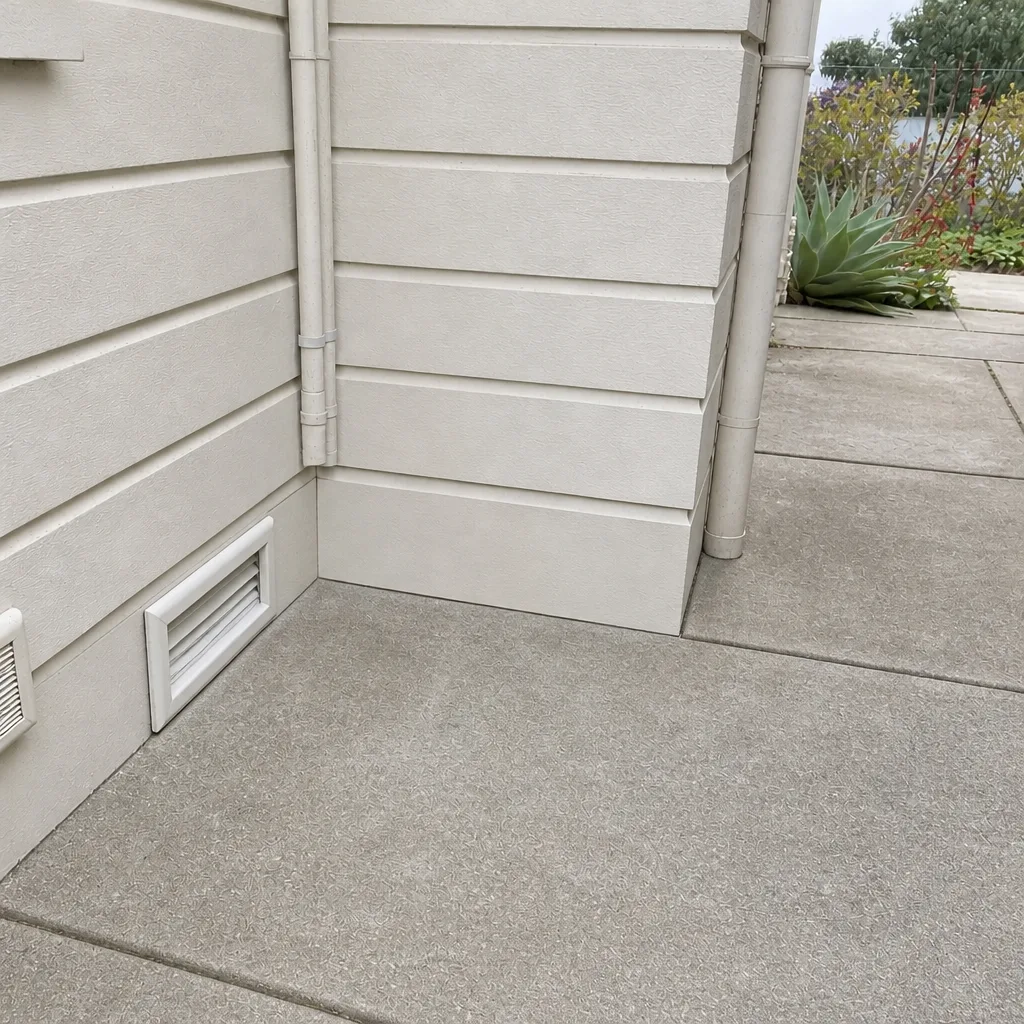 After
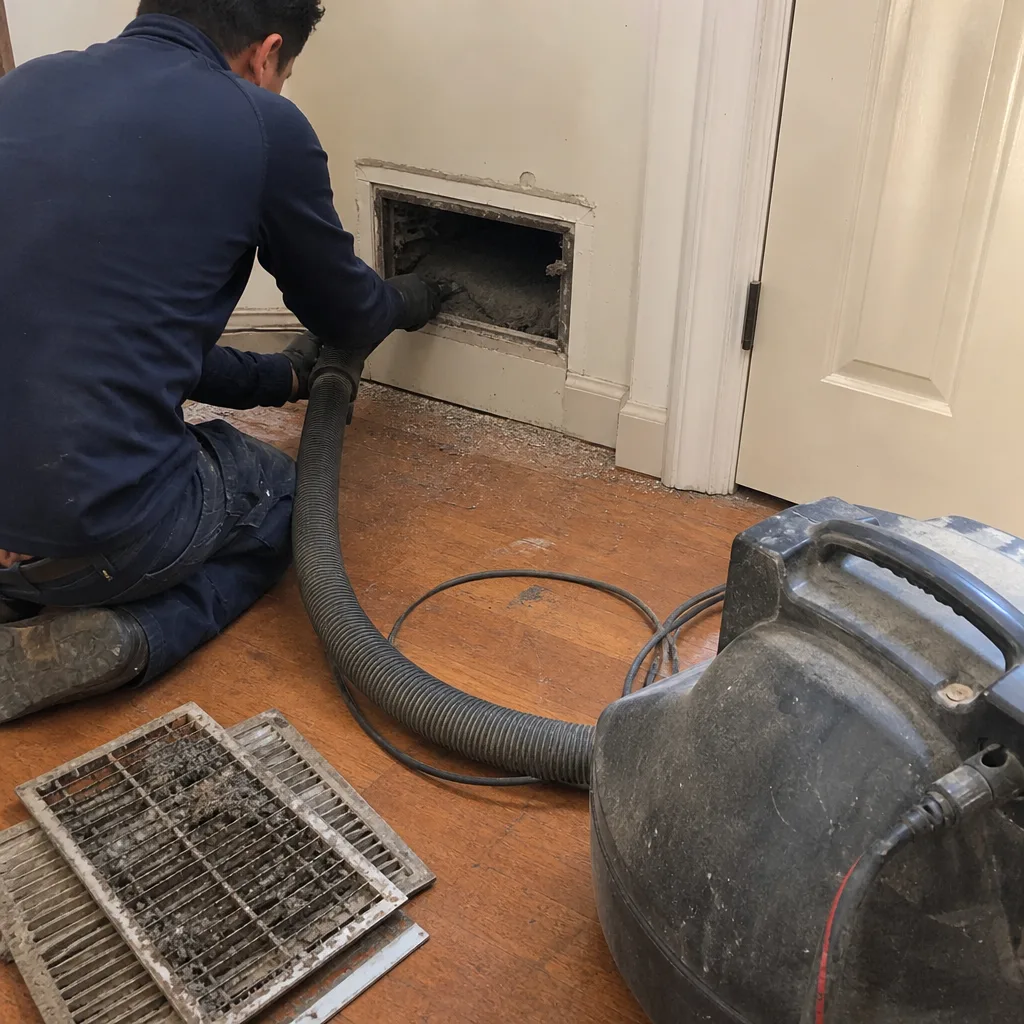 Before
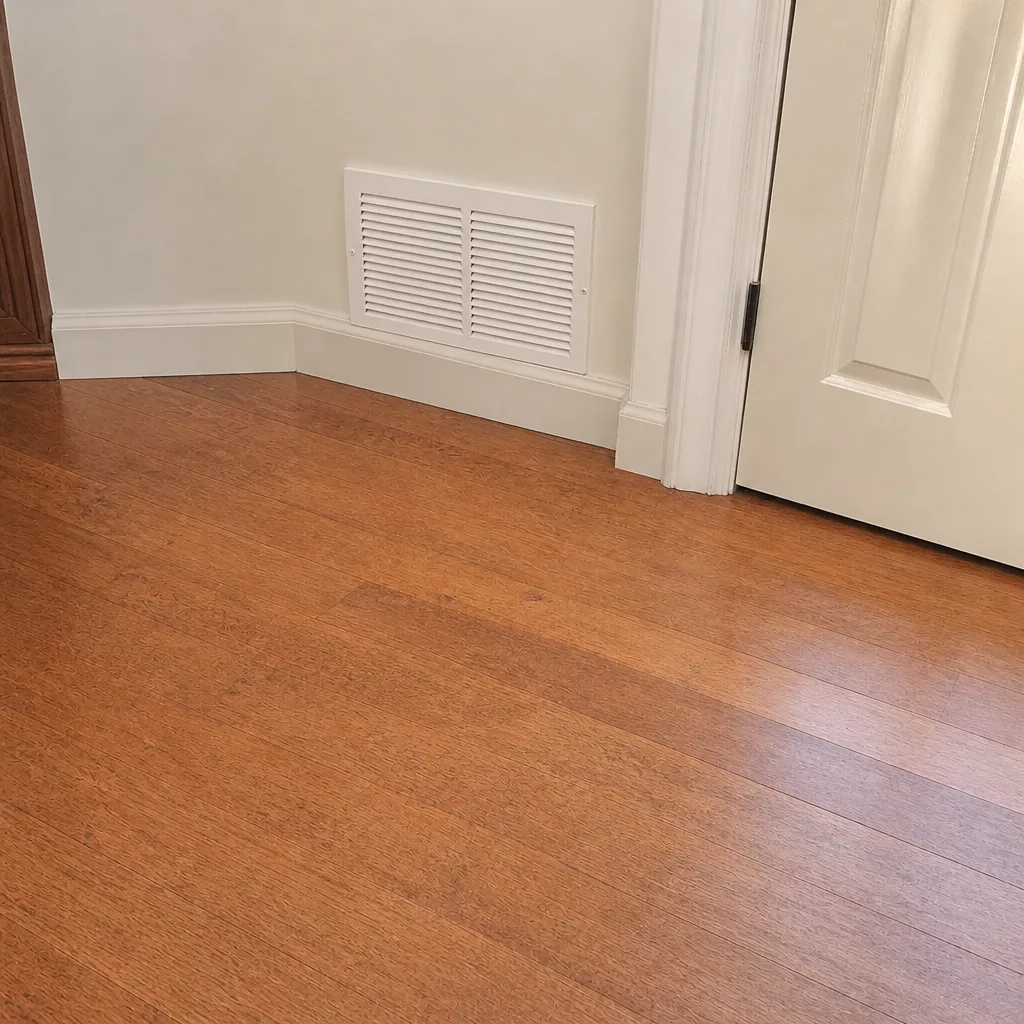 After
 Before
 After