
Last updated November 14, 2026
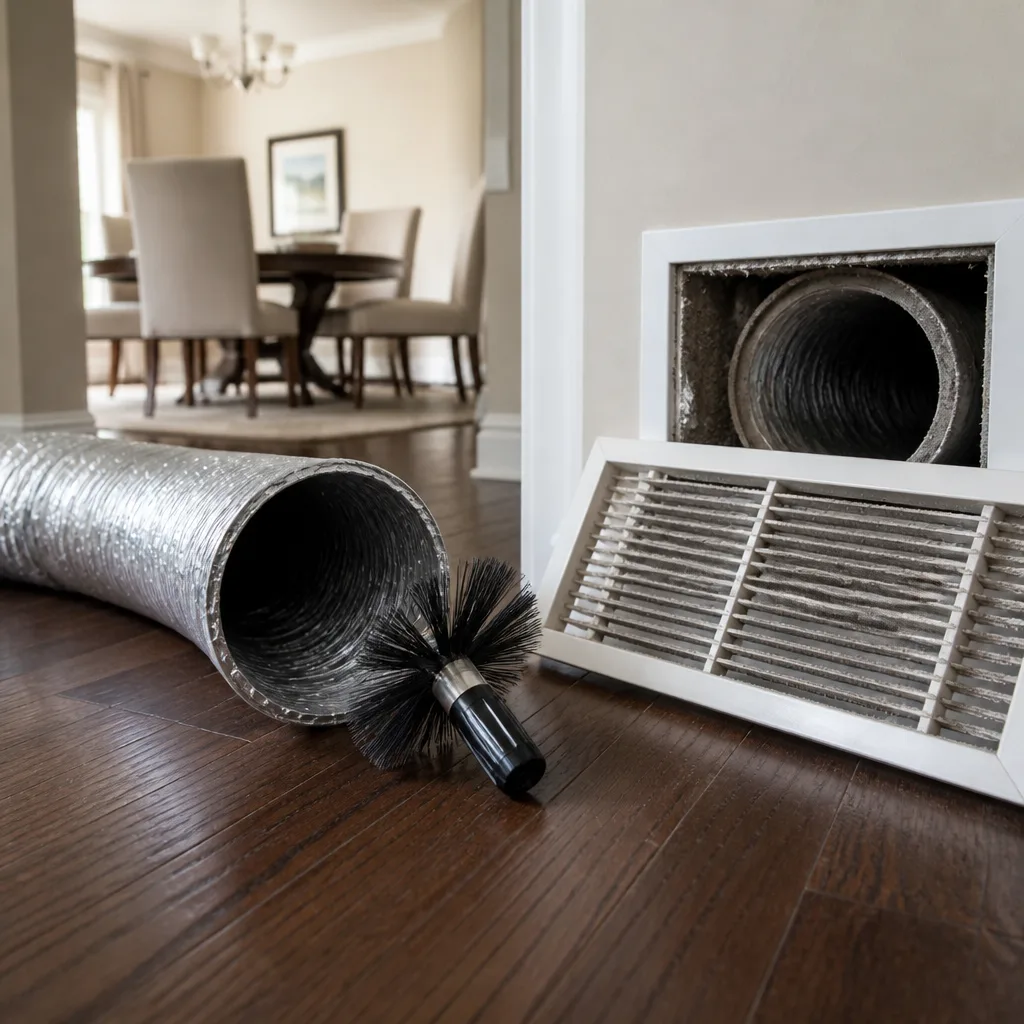 Whole-home duct cleaning
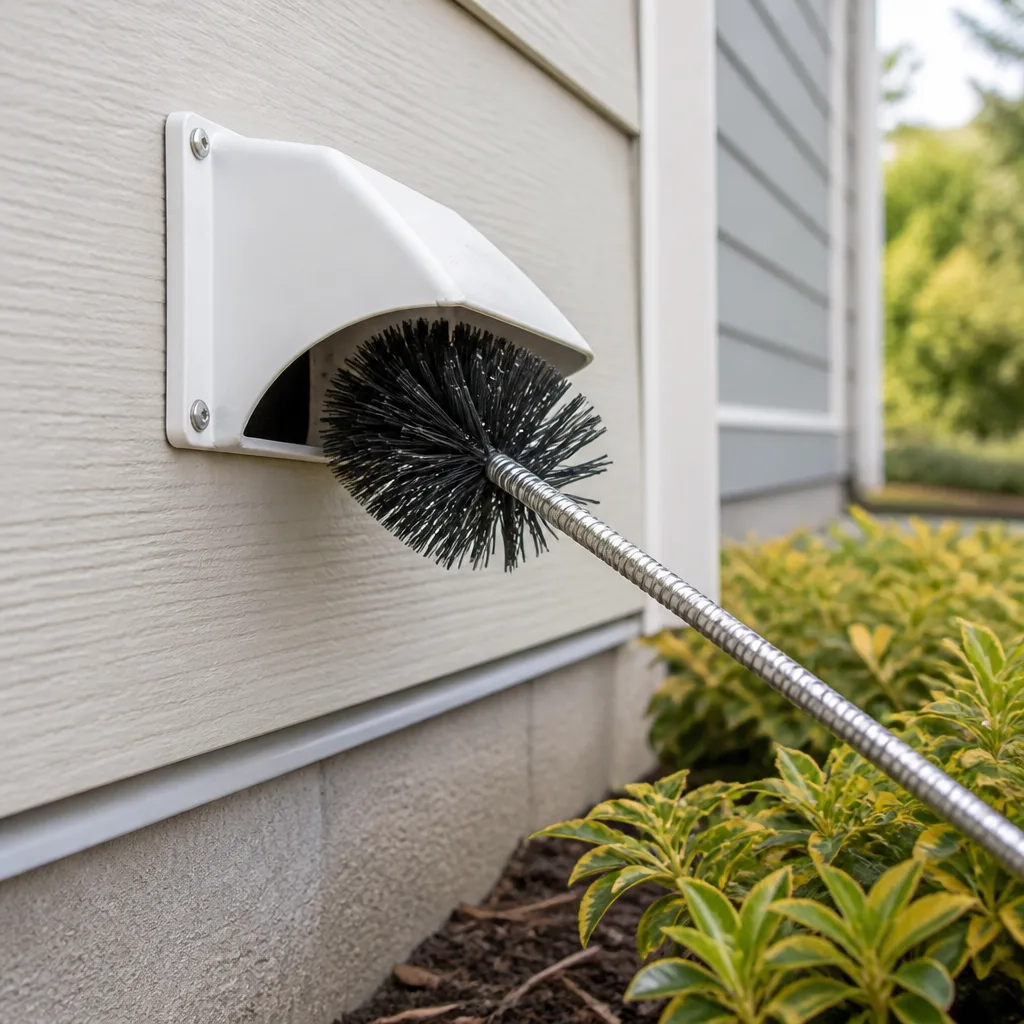 Dryer vent cleaning
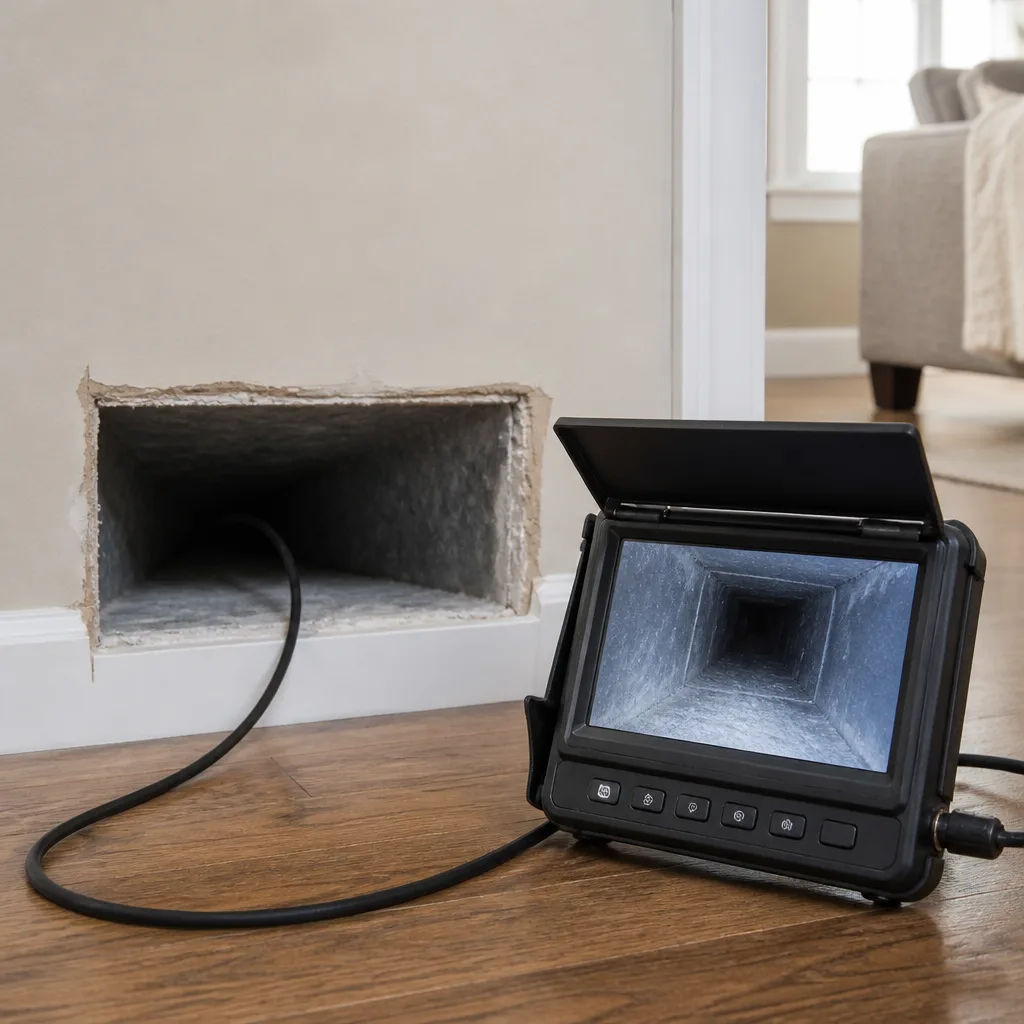 Camera inspection
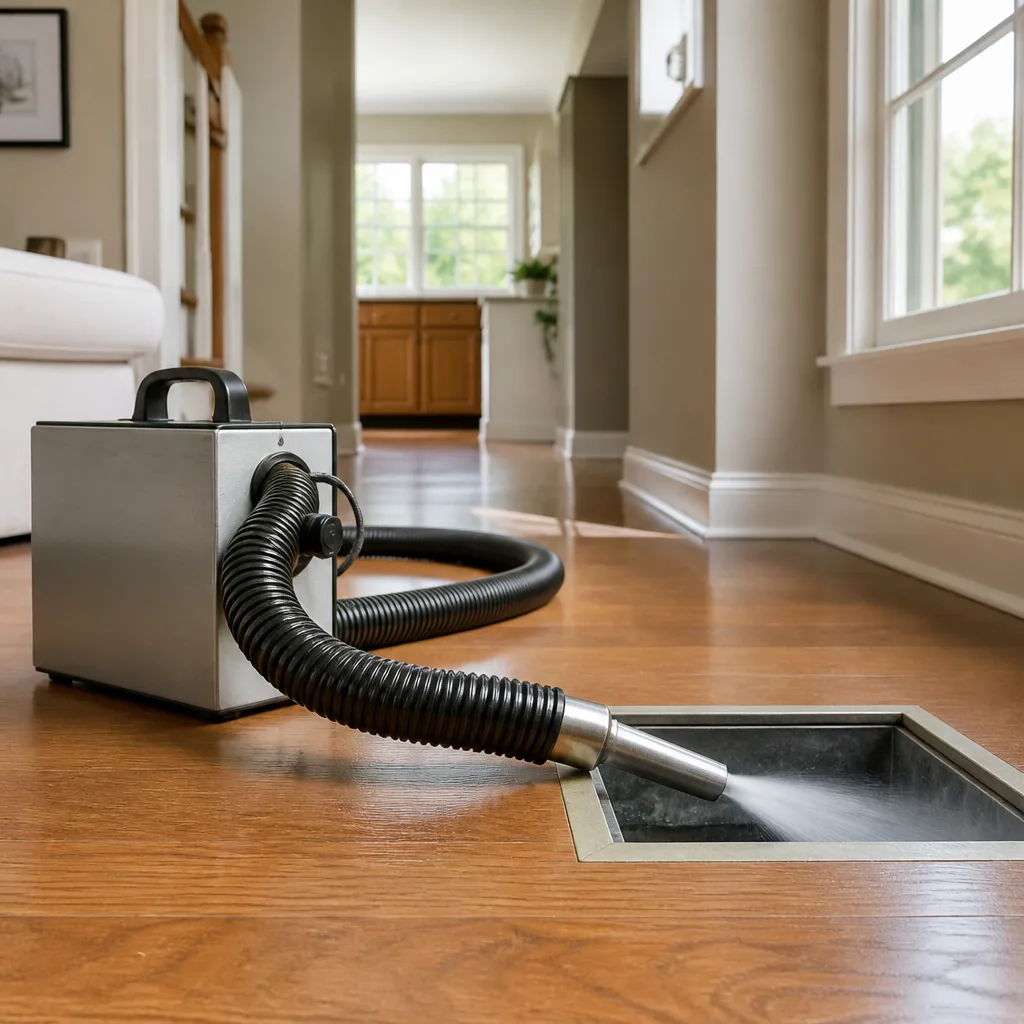 Sanitizing & deodorizing
Whole-system duct and dryer vent check with before-and-after photos - you see exactly what came out of your vents
That "$99 whole-house special" is a bait ad - the real number appears once they are in your hallway, or the "clean" is a shop-vac at the register. We photograph the inside of your ducts before and after instead.
Air Duct Cleaning Emergency Preparedness Guide for San Mateo Homes
Most homeowners think of duct cleaning as routine maintenance, something to schedule when the vents look dusty. That framing fails exactly when it matters most. During the 2020 wildfire smoke events, PM2.5 concentrations inside Bay Area homes running MERV-8 or lower filters reached levels indistinguishable from outdoor air within four hours of system operation. The duct system didn’t just hold contamination. It distributed it, room by room, until the whole house carried the same load. This guide is about the hours and days before a contractor can respond: how to isolate your ductwork during smoke, water intrusion, or renovation dust, what testing is worth paying for, and how to document contamination so an insurance claim holds up. We work on duct systems across San Mateo, and this is the protocol we’d want in your hands before the next event.
Quick Answer
If smoke, water, or construction dust has entered your home, shut the HVAC system off at the thermostat and the air handler, close the return-side dampers if you can reach them, and upgrade or at least change the filter before you run the system again. Then call for a duct assessment, not just a cleaning, because whether you need standard cleaning or containment-grade remediation depends on what testing shows. Duct Cleaning San Mateo uses Rotobrush rotary cleaning and Nikro HEPA negative-air equipment, and we can repair damaged ductwork that cleaning alone won’t fix.
Styles & brands we work with
- Whole-home duct cleaning
- Dryer vent cleaning
- Camera inspection
- Sanitizing & deodorizing
Table of Contents
- Why Ducts Are the Fastest Pathway for Contamination in San Mateo Homes
- A Three-Scenario Response Framework
- How to Shut Down and Isolate Your HVAC During a Contamination Event
- What Air Quality Testing Is Worth Doing Before You Schedule Cleaning
- Standard Cleaning vs. Containment Remediation: How to Tell Which You Need
- How to Document Duct Contamination for an Insurance Claim
- When Contamination Comes With Duct Damage
- Building a Year-Round Preparedness Habit
Why Ducts Are the Fastest Pathway for Contamination in San Mateo Homes
A duct system is not a passive tube. It’s a pressurized network that moves conditioned air through every room in the house at a volume your furnace or air handler is designed to sustain. When the air entering the return carries smoke, mold spores, or fine construction particulate, the supply side delivers that load to bedrooms, kitchens, and closets equally. Nothing else in a home distributes contamination as efficiently.
San Mateo’s housing stock makes this more acute than the general case. A large share of homes here sit on crawl spaces and have older, flexible, insulated duct runs that have been patched or reconnected over the years. A single disconnected joint or a cracked boot isn’t just an efficiency loss. It’s an uncontrolled intake pulling air from a crawl space or wall cavity and delivering it straight to the living spaces.
The filter question matters as much as the ducts. A MERV-8 filter, common in residential systems, removes a meaningful share of larger particles but passes a lot of the fine smoke particulate that drives the indoor PM2.5 problem. When outdoor air is thick with wildfire smoke and the system runs with a low-MERV filter, the house exchanges filtered fresh air for unfiltered smoke-laden air fast. We’ve walked homes after smoke events where the vents and returns were visibly soiled even though the homeowner had kept the windows closed.
Three contamination pathways matter most for San Mateo homes:
- Wildfire smoke infiltration – fine particulate pulled in through return leaks, windows, and doors, then circulated.
- Post-water-intrusion mold risk – moisture in a duct run, a wet crawl space, or a flooded air handler that seeds mold growth inside insulated flex duct.
- Post-renovation particulate – drywall dust, sawdust, and silica from remodels that find their way into returns before the contractor seals off the work area.
Each one calls for a different first response. Treating them the same is where most homeowners lose ground.
A Three-Scenario Response Framework
Your first actions before a contractor arrives determine how much contamination you’ll ultimately have to clean. Here’s how we’d walk a homeowner through each scenario over the phone. The principle is the same in all three: stop the system from pumping contamination into the house, then protect the ducts from taking on more.
Scenario One: Wildfire Smoke Infiltration
Close all windows and exterior doors. Turn the thermostat to off so the fan stops. If you have an accessible return-side damper, close it. Change the filter to the highest MERV your system’s manufacturer allows – don’t go past that rating or you risk restricting airflow – and note the filter’s condition. If the smoke event lasts for days, check the filter again; a loaded filter is doing nothing. Keep interior doors open so the house doesn’t stratify into smoky and clear zones, and run a standalone HEPA air purifier in the room where you spend the most time if you have one. Don’t run the system “just to see” how bad it is. Every cycle adds to the load in the ducts.
Scenario Two: Post-Water-Intrusion Mold Risk
If a supply leak, an overflowing appliance, or a crawl space flood has left any part of the duct system damp, stop running the system immediately. Moisture plus a warm air handler is the fastest route to mold growth inside insulated flex duct, and once mold is established in the liner, cleaning the interior surface won’t necessarily get you back to a clean system. Get the water source stopped and the affected area dried. Document everything before you move it. The critical timeline is the first 24 to 48 hours; mold risk climbs sharply after that.
Scenario Three: Post-Renovation Particulate
Renovation dust is heavier and more abrasive than smoke particulate. Drywall dust and silica settle into returns and clog filter media fast. Before the crew leaves the job site, ask them to seal the returns in the work area with plastic and tape. After they finish, change the filter, keep the system off until a cleaning crew has a chance to assess the returns, and expect at least one round of cleaning even if the visible dust looks minor. We’ve seen return boots filled to the grille after a modest kitchen remodel.
How to Shut Down and Isolate Your HVAC During a Contamination Event
This is the single most important step, and it’s the one most homeowners skip. A running HVAC system during a contamination event is a distribution mechanism. Shutting it down correctly is a sequence, not a single switch.
- Set the thermostat to Off, not Auto. Auto can trigger a fan cycle the moment temperature drifts, and it will run when you least expect it.
- Cut power at the air handler. There’s usually a service switch on or near the unit. For a furnace in a closet or garage, that switch is often on the side of the cabinet. Turning it off removes any chance the fan runs on a schedule or demand signal.
- Close return-side dampers if accessible. Many San Mateo homes don’t have accessible dampers on individual returns, but if yours do, close them. Supply dampers are less critical, but closing the returns starves the system of the contaminated air it would otherwise pull in.
- Seal the largest returns temporarily. In a smoke event, plastic sheeting taped over the return grilles in the most exposed rooms prevents smoke from settling into the return boots while you wait for a crew.
- Change the filter and save the old one. The used filter is evidence. Bag it in a zip-top bag, label it with the date, and hold onto it until you’ve decided whether to file a claim.
- Note the temperature and time. Write down when you shut the system off and what the indoor conditions were. A small paper log with times beats your memory two weeks later.
We can’t emphasize enough that this is not a job for anyone to improvise on their own if they’re not comfortable opening a service panel. If you’re unsure where the service switch is, call for a technician. High-voltage components in an air handler are genuinely dangerous, and there’s no reason to reach into one. Call (866) 894-2153. We answer 24/7. Fast dispatch from 7am to 7pm, Sunday through Friday.
What Air Quality Testing Is Worth Doing Before You Schedule Cleaning
Testing is worth doing when it changes a decision. Many homeowners pay for a broad panel when a single targeted test would tell them exactly what they need to know. Here’s how we’d match the test to the emergency.
- Particle count testing – the right choice after a wildfire smoke event. It measures fine particulate (PM2.5 and PM10) in the air and gives you a baseline you can compare against outdoor readings. If indoor particle counts are far higher than outdoor and don’t come down after the system is off and the filters are changed, the ducts are holding a load that cleaning will need to address.
- Mold spore sampling – the right choice after any water intrusion event that touched the duct system or the air handler. Airborne spore sampling (often paired with a surface sample from inside the duct or a crawl space) tells you whether spore counts are elevated indoors relative to a control sample outdoors, and whether the species present suggest an active growth site. This is the test that determines whether you need standard cleaning or containment-grade remediation.
- VOC measurement – worth including when the event involved smoke from burning materials (as opposed to vegetation), when chemical odors persist after cleaning, or when a renovation involved paint, adhesive, or finishes. VOCs aren’t measured by particle counts and aren’t addressed by dust-focused cleaning alone.
What’s usually not worth paying for before cleaning: broad “air quality” packages that bundle a dozen metrics without a clear decision rule attached. Ask the testing provider what threshold would change their recommendation. If they can’t answer, the test isn’t telling you anything you’ll act on.
One more thing. A post-cleaning verification test is often worth more than a pre-cleaning test, because it confirms whether the work was actually done to standard. We recommend one after any contamination that produced visible debris or measurable spore counts indoors.
Standard Cleaning vs. Containment Remediation: How to Tell Which You Need
Not every contaminated duct system needs the same response. Standard cleaning handles settled dust, routine particulate, and the residue of a smoke event that never reached the biological-growth stage. Containment remediation handles duct systems where mold has established inside the liner, where porous insulation has been saturated, or where contamination is measured to be at levels that require negative-pressure control during the work.
The visible criteria we look for during an assessment:
- Visible mold on the duct interior or liner. If you can see it, you’re past standard cleaning.
- Persistent musty odor from registers after a water event, even with the system off. Odor is a leading signal that biological growth is present somewhere in the system.
- Damp or saturated insulation in flex duct. Insulated flex duct that’s been wet usually needs to be replaced, not cleaned.
- Debris trails or staining in the return boots and plenum. Heavy soiling in the return side after a smoke event often points to a system that will need a more thorough response than a routine cleaning.
The testable criteria are the spore counts and the particle counts. If post-event mold spore sampling shows elevated counts indoors compared to the outdoor control, or if the species profile suggests active growth rather than settled spores, that’s a remediation job. If particle counts are elevated but spore counts are within range, that’s a cleaning job with a post-cleaning verification test.
Where this distinction shows up in the equipment. Standard cleaning uses Rotobrush rotary brush cleaning to mechanically dislodge settled debris from the duct interior, paired with Nikro HEPA negative-air equipment to capture dislodged material at the source so it doesn’t get redistributed into the room. When contamination meets the remediation threshold, we bring in Abatement Technologies containment equipment – the same grade of negative-air and HEPA filtration gear used in professional mold and contaminant remediation. The difference isn’t marketing. It’s whether the work area is held under controlled negative pressure while debris is being disturbed, and that matters a great deal when you’re talking about settled mold spores versus settled house dust.
How to Document Duct Contamination for an Insurance Claim
Standard California homeowners’ policies vary widely on what they cover for duct cleaning. Some cover duct cleaning as part of a covered peril claim (a fire, a burst pipe that damaged the system, a wind-driven rain intrusion). Others don’t cover duct cleaning as a standalone item at all, and many exclude mold remediation unless the mold is the direct result of a covered water event. We can’t tell you what your policy covers – that’s a conversation for your insurer – but we can tell you what documentation gives you the best chance of a clean claim.
- Photograph before you move or clean anything. Wide shots that show the room and the register in context, then close-ups of visible debris, staining, or mold. Date-stamped photos are better than undated ones.
- Bag the used filter and label it. The filter is a physical record of what was in the air.
- Get the air quality test results in writing. Independent lab reports, not a single-page summary from a cleaning company. The report should list the sample locations, the control sample, the measured concentrations, and the lab’s interpretation.
- Document the sequence of events with times. When the water intrusion started, when you shut the system off, when the affected area was dried. A simple timeline matters because insurance adjusters reconstruct coverage from dates and times.
- Get a written contractor assessment that separates cleaning from remediation. A single bundled quote (“clean and remediate: $X”) is harder to justify than two clear scopes with equipment and labor broken out. Ask for the assessment to name the equipment used and the containment approach.
- Keep the pre-cleaning photos and the post-cleaning photos together. The before-and-after set is what ties the documentation to the work.
We take before-and-after photos of every job as part of our own record-keeping, and we’re happy to provide copies for a claim file.
When Contamination Comes With Duct Damage
Contamination events and duct damage often arrive together. Smoke infiltration finds loose joints and disconnected boots. Water intrusion warps flex duct and can compromise duct board. Renovation dust settles into runs that were already sagging or poorly supported. Cleaning a compromised system without repairing it just means the problem returns on the next event.
What we look for during an assessment:
- Disconnected or poorly connected flex duct at boots, plenums, and takeoffs.
- Cracked or crushed sections where duct has been stepped on, bent past its bend radius, or squashed between framing members.
- Duct runs that have been rerouted poorly during a prior remodel and now short-cycle air or leak at joints.
- Missing or damaged register boots that leave air dumping into wall cavities.
- Sagging flex duct that has lost its insulation or support.
Air duct repair is a standalone service for us, not an upsell. If we’re cleaning and we find damaged ductwork, we can fix it as part of the same visit or quote it separately so you know exactly what each part costs. Most cleaning-only companies can’t do this, and the result is a system that gets recontaminated the next time the house is stressed.
Building a Year-Round Preparedness Habit
The best emergency response is preparation you do before the emergency. For San Mateo homeowners, the practical habits are simple and they take less time than most people expect.
- Know where the service switch is on your air handler. If you can’t find it in under a minute, find it today. This is the single most important thing you can do before a contamination event.
- Keep two spare filters on hand at the highest MERV your system allows. Smoke events and renovation weekends are exactly the moments when you can’t afford to wait for a delivery.
- Photograph your duct system once a year. A few shots of the main return, the air handler cabinet, and any visible flex duct give you a baseline to compare against after an event.
- Schedule a duct assessment if it’s been more than a few years since the last one, or if anyone in the house has developed new allergy symptoms. A clean system with sound joints handles a smoke event or a small water intrusion far better than a compromised one.
- Have a pro’s number in your phone before you need it. Finding a specialist mid-event, under stress, is how people hire the wrong crew.
- Pair the habit with a drying plan. If you know where the water comes in during a rainy season (San Mateo gets its share of wet winters), know which rooms to check first and have a shop vac and towels ready.
Common Mistakes to Avoid
- Running the HVAC to “clear out” the smoke. Every fan cycle pulls more contaminated air into the ducts. Shut the system off first, then deal with filtration.
- Replacing the filter but running the system on Auto. Auto triggers fan cycles you’re not watching. Set the system to Off, not Auto, until the assessment is done.
- Skipping the service switch. Turning the thermostat off leaves the air handler live. The service switch on the cabinet is the real kill switch.
- Buying the cheapest cleaning quote after a smoke event. If a quote is far below what the work actually involves, it’s usually because the crew is using a portable vacuum and no containment. That spreads settled debris into the room.
- Cleaning without testing. A post-event cleaning without a pre- and post-cleaning test leaves you guessing whether the system was actually cleaned to standard, and for an insurance claim, guessing is expensive.
- Cleaning a wet system. If any part of the duct system is still damp, cleaning it can make the mold situation worse. Dry first, test, then clean or remediate.
- Ignoring the crawl space. Many San Mateo homes have ducts routed through a crawl space. If the crawl space got wet or took in smoke, the duct system didn’t escape.
- Throwing the filter away before you document it. That filter is the clearest record of what the air carried during the event. Bag it first.
See the difference
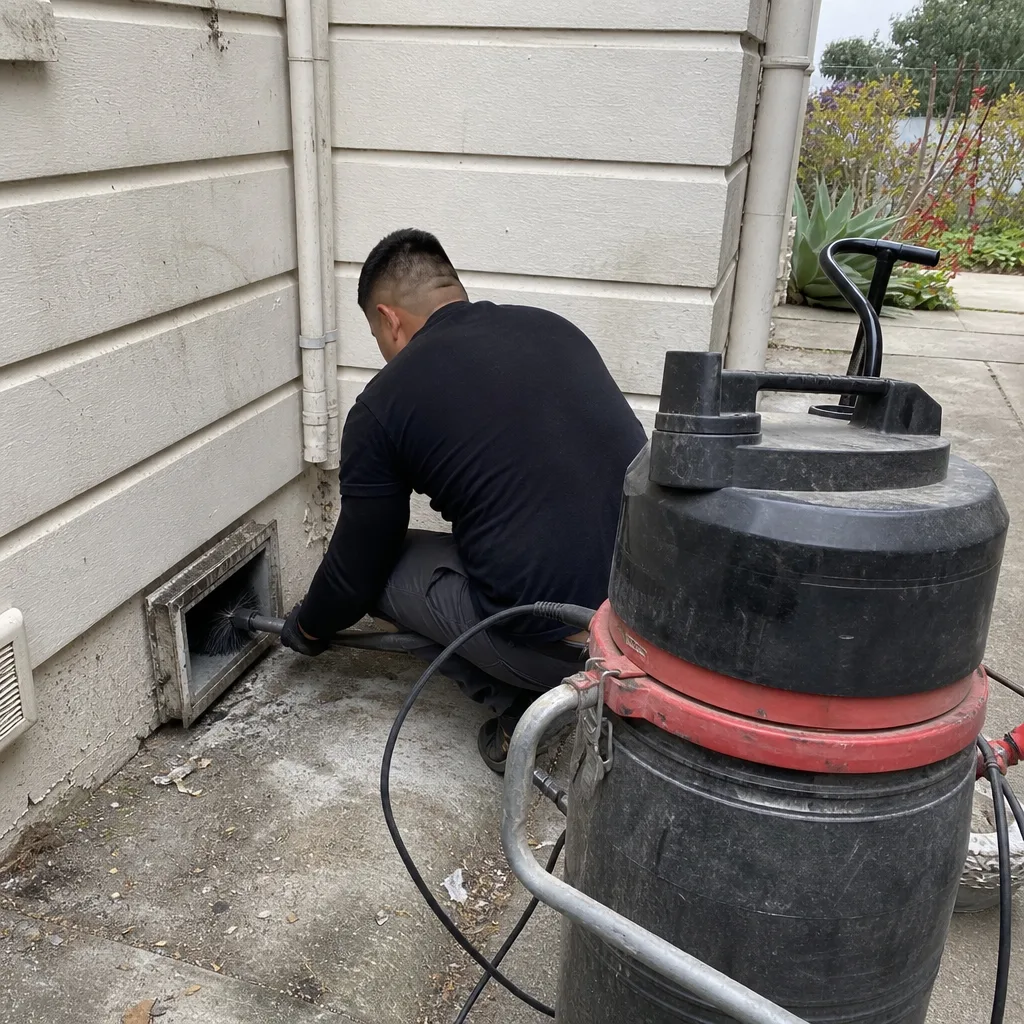 Before
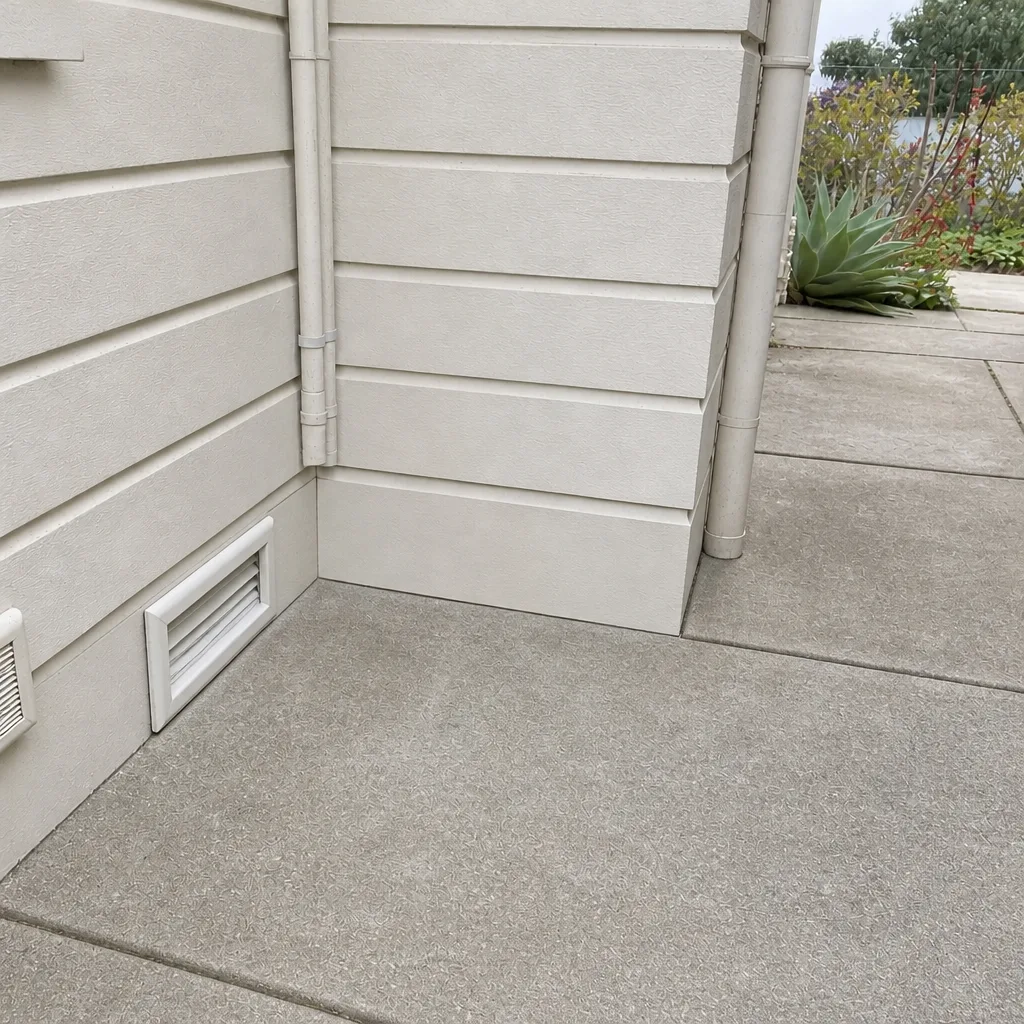 After
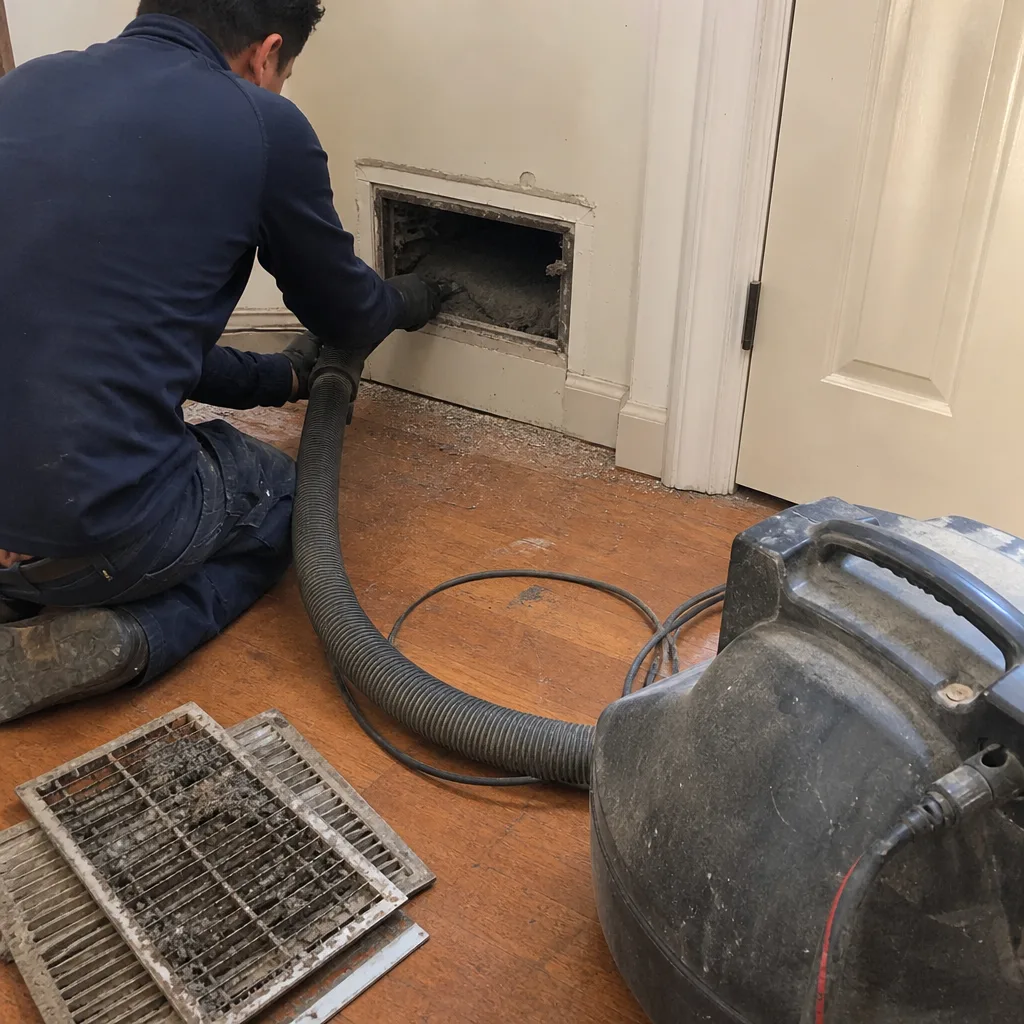 Before
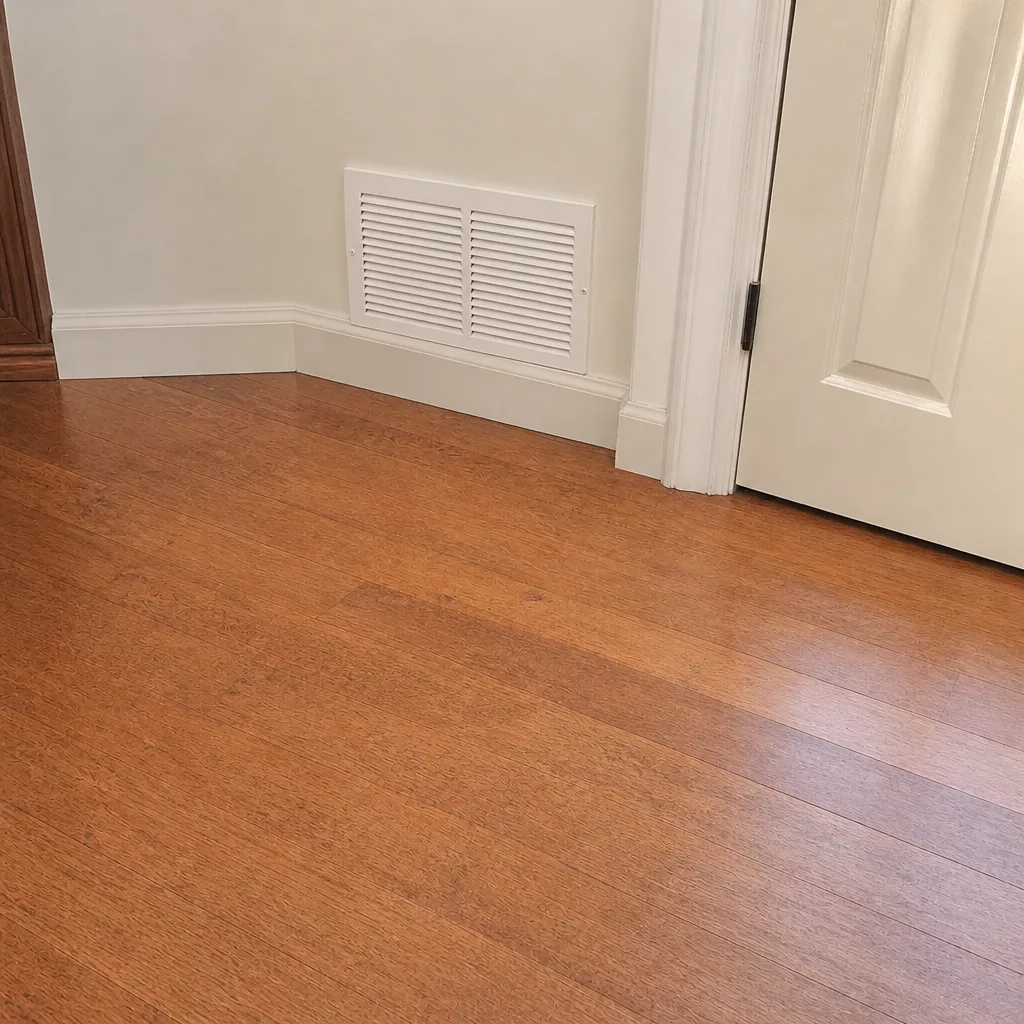 After
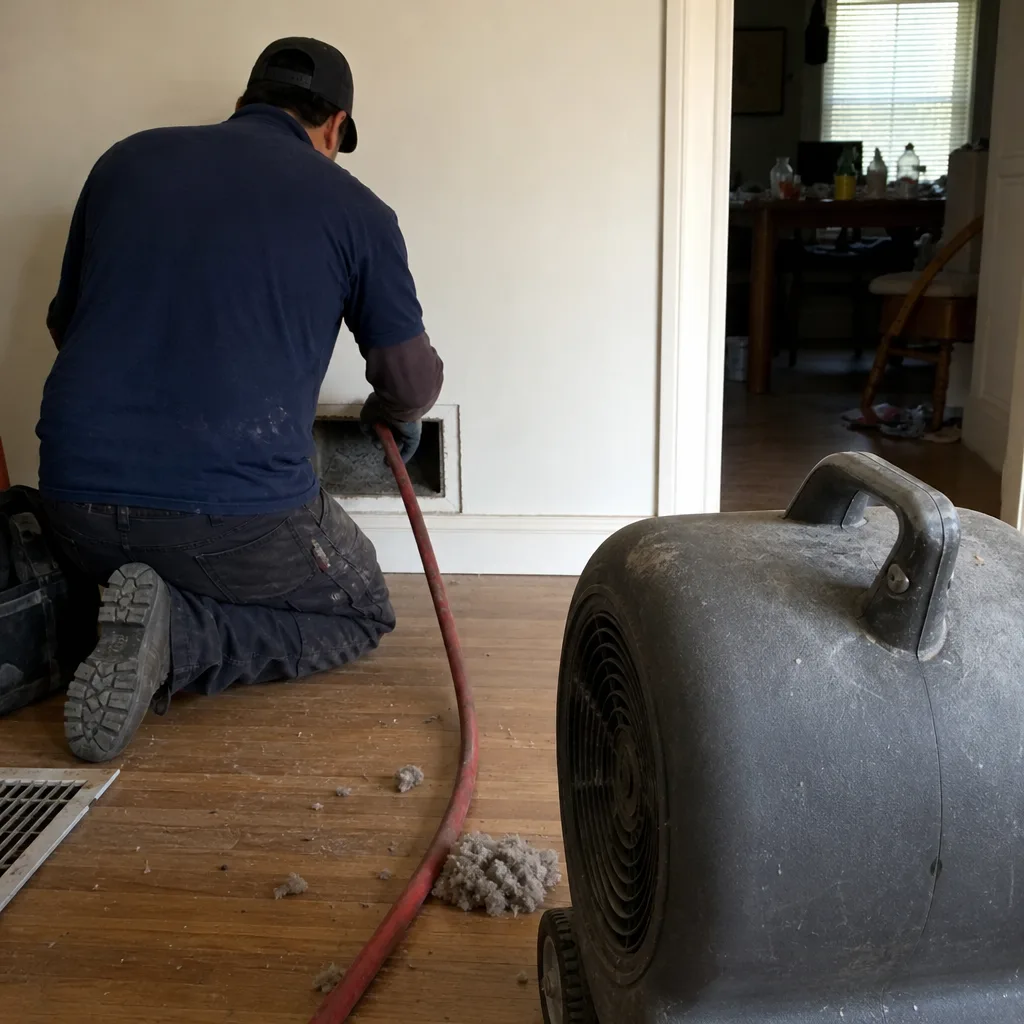 Before
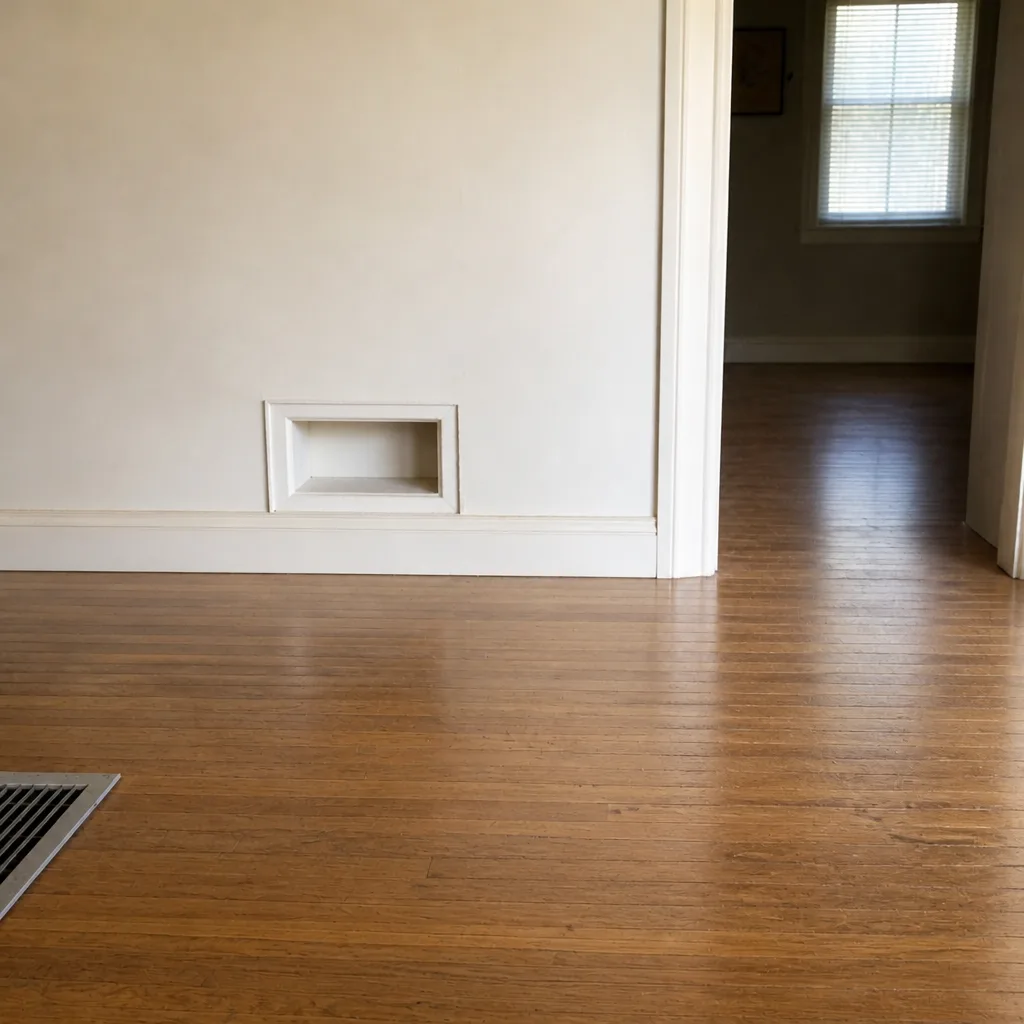 After
When to Call a Professional
Call a professional duct specialist when any of the following is true: you smell smoke or musty odor inside the ducts even after the filter has been changed, you can see visible mold or debris inside the return boots, you’ve had any water intrusion that touched the duct system or air handler, you’ve completed a renovation and the returns look soiled, or you’re preparing for an insurance claim and need a documented assessment. If you’ve never had a duct assessment on the home you bought, this is also the moment. Duct Cleaning San Mateo offers free estimates in San Mateo – call (866) 894-2153. Our technicians have up to 10 years of experience, and we use professional-grade Rotobrush and Nikro equipment on every job, with full before-and-after photos so you can see what was done.
Frequently Asked Questions
The clearest sign is particle count testing that shows elevated indoor PM2.5 or PM10 relative to outdoor air after the system has been shut off and filters changed. Visible soiling in return boots and a persistent smoke odor from registers are supporting evidence. A post-event assessment with particle count testing is the fastest way to know for certain, and we can schedule one in San Mateo with a free estimate. Call (866) 894-2153.
No. Running the system on high after a smoke event pulls more contaminated air into the return side and distributes it across every room. Set the thermostat to Off, cut power at the air handler if you can safely access it, change the filter, and keep the system off until a specialist assesses the ducts. Air duct cleaning should follow assessment, not replace it.
It’s worth it whenever the question is whether standard cleaning is enough. If you’ve had any water intrusion near the duct system or air handler, mold spore sampling tells you whether the contamination is at a level that needs containment remediation or can be handled with standard cleaning. A regular post-event cleaning without testing can mask a problem that returns within weeks. Call (866) 894-2153 for a free estimate and we’ll tell you what testing is worth doing in your case.
It depends on the policy and on the cause. Some standard California policies cover duct cleaning when it’s part of a covered peril claim (fire, water intrusion, wind damage), but duct cleaning as a standalone item is often not covered, and mold remediation is commonly excluded unless it’s the direct result of a covered water event. The best documentation you can have is dated photos, the used filter, independent lab test results, and a contractor’s written assessment that separates cleaning from remediation.
There’s no single schedule that fits every home here. Homes on crawl spaces, older homes with original flex duct, and homes with pets or recent renovations benefit from an assessment every few years. Homes in good shape with proper filtration may go longer. The best parameter isn’t time, it’s conditions: schedule an assessment after any smoke event, water intrusion, renovation, or new allergy symptoms rather than on a fixed calendar.
Sometimes they can be repaired, sometimes they need replacement, and the assessment tells you which. Disconnected joints, cracked boots, and poorly supported sections are usually repairable. Saturated flex duct and duct board with established mold growth usually need to be replaced. We offer air duct repair as a standalone service, so if the assessment finds damaged ductwork, you get a clear scope and price for the repair rather than a cleaning that leaves the underlying problem in place.
The Bottom Line
Duct contamination in San Mateo homes is a response problem first and a cleaning problem second. The protocol matters: shut the system off at the service switch, change and save the filter, document before you touch anything, and get the right test for the event – particle counts for smoke, spore sampling for water, VOCs when the source was chemical. Then match the response to what the testing shows. Standard cleaning with Rotobrush rotary equipment and Nikro HEPA negative-air containment handles routine contamination. Abatement Technologies containment handles the cases where biological growth or measured spore counts put the work in a different category. If you’re unsure which side of that line you’re on, that’s what a free estimate is for. We clean it, we repair it, we document it. Call (866) 894-2153. We answer 24/7. Fast dispatch from 7am to 7pm, Sunday through Friday.
Written by the team at Duct Cleaning San Mateo.