
Last updated November 14, 2026
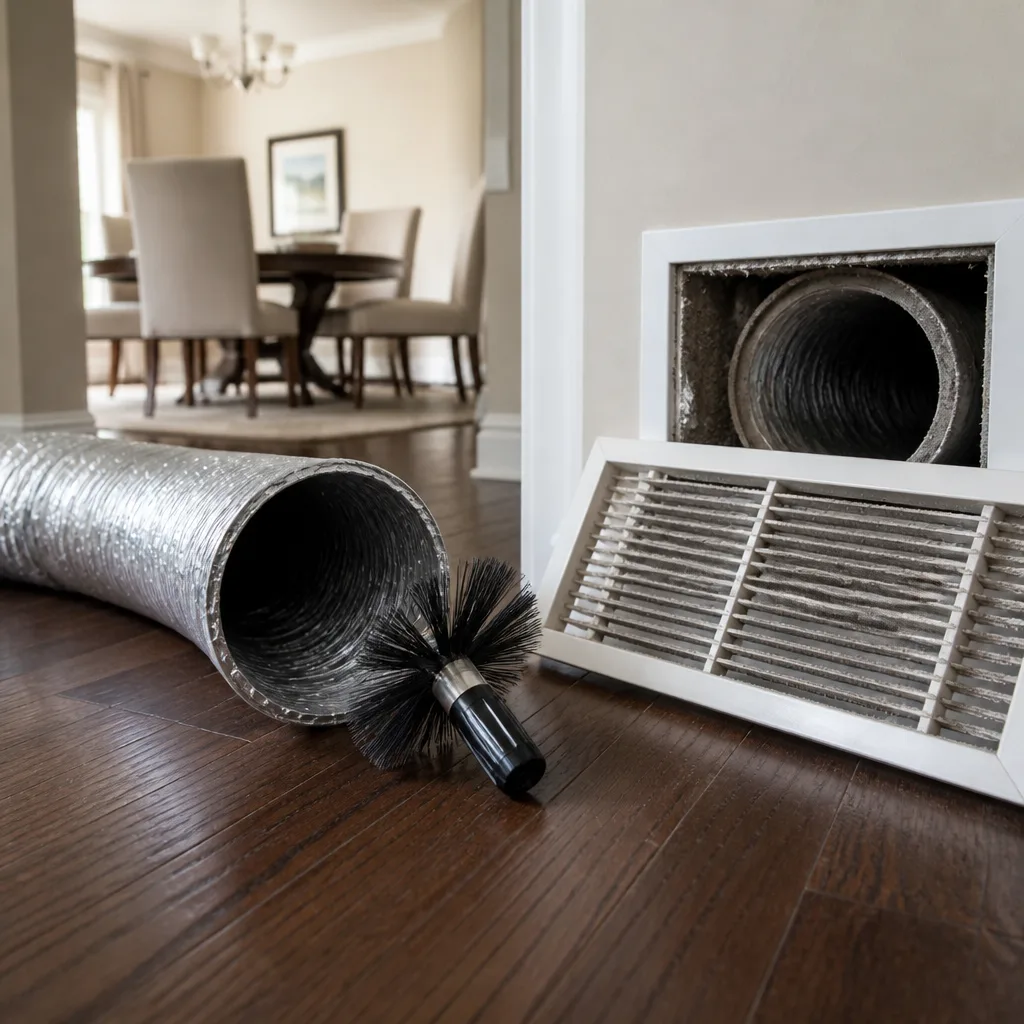 Whole-home duct cleaning
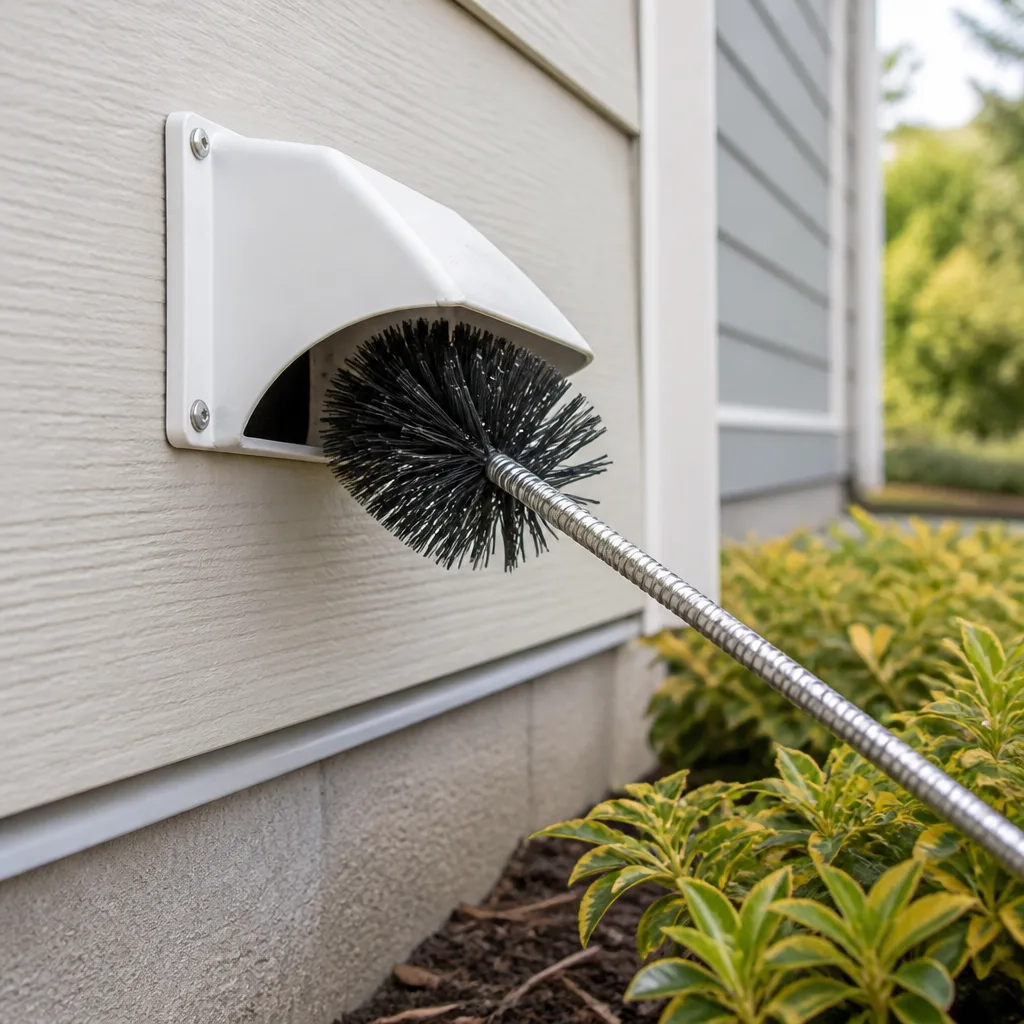 Dryer vent cleaning
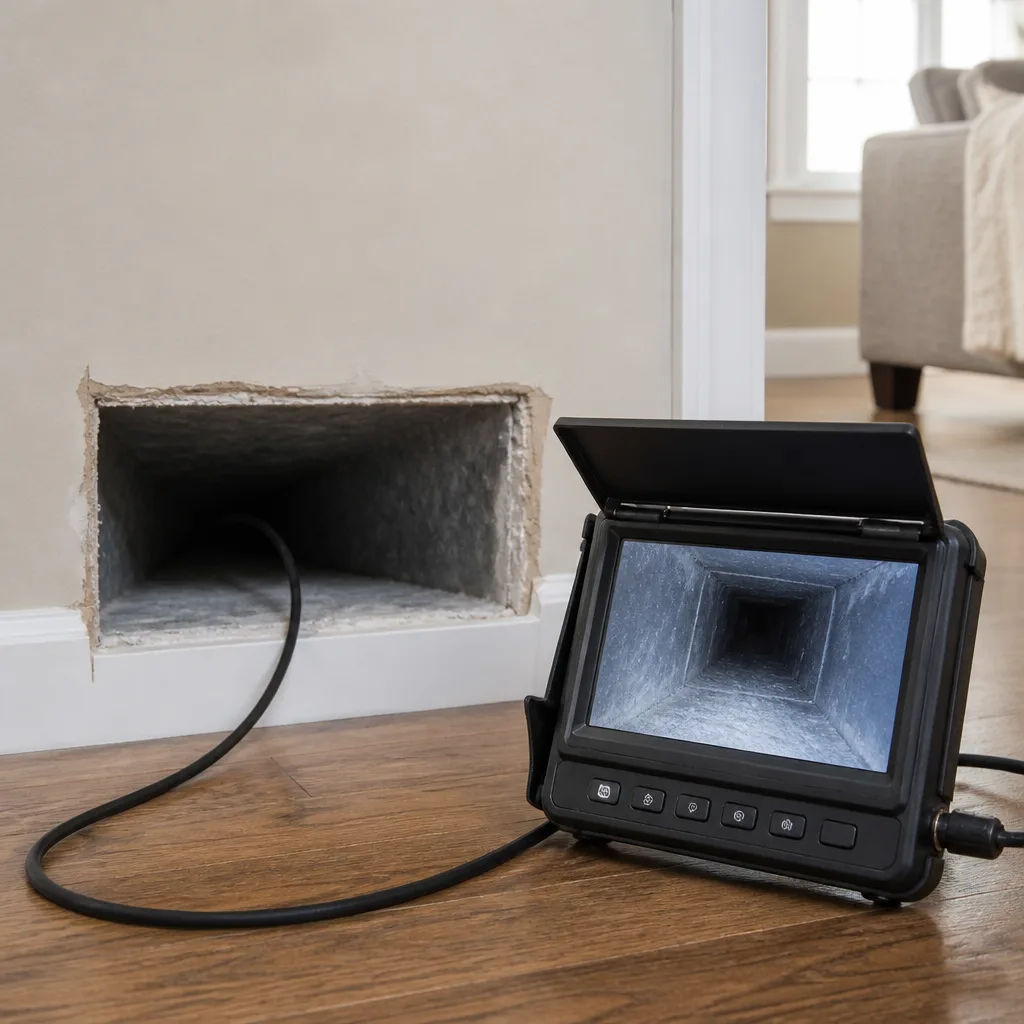 Camera inspection
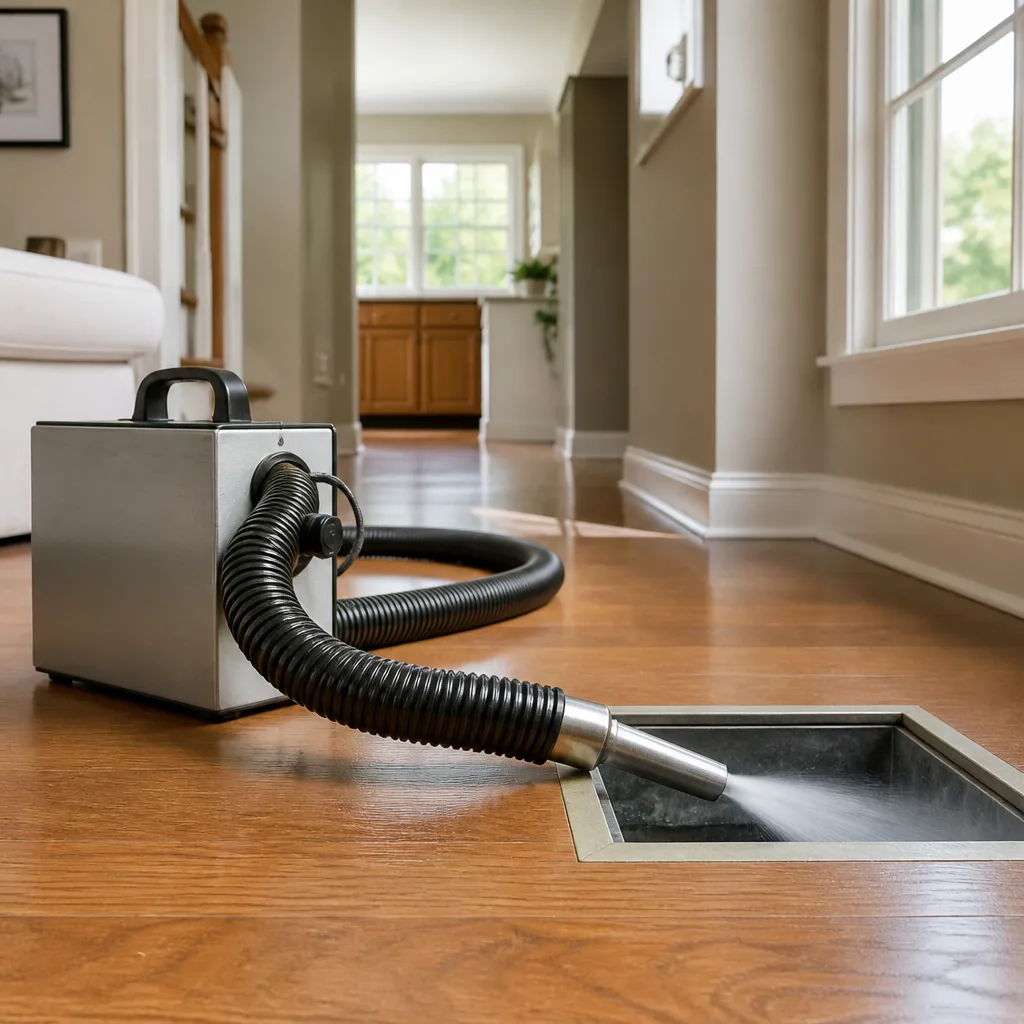 Sanitizing & deodorizing
Whole-system duct and dryer vent check with before-and-after photos - you see exactly what came out of your vents
That "$99 whole-house special" is a bait ad - the real number appears once they are in your hallway, or the "clean" is a shop-vac at the register. We photograph the inside of your ducts before and after instead.
Air Duct Cleaning Maintenance Schedule: What to Do and When
The 3-to-5-year cleaning interval most companies quote comes from a 1990s NADCA guideline written before MERV-13 filters were common, before California’s wildfire seasons became an annual event, and before anyone thought hard about how the Bay Area’s fog cycles particulates through attic ductwork. A fixed number isn’t wrong, exactly. It’s just too blunt a tool for the variables that actually drive how fast your ducts get dirty. Pet hair, drywall dust from a remodel, the MERV rating sitting in your return grille, and how many Spare the Air days your San Mateo address logged this year all shift the real interval. This guide gives you a variable framework instead of a single number, plus a month-by-month routine and a maintenance log worth keeping.
Quick Answer
There’s no single correct interval for air duct cleaning. For most San Mateo homes, a baseline of every 3 to 5 years is reasonable, adjusted down to 2 to 3 years if you have multiple pets, recent renovation work, or a low-MERV filter in use. Homes near wildfire smoke corridors or with allergy-sensitive occupants should inspect annually and clean on evidence rather than calendar. Your maintenance log and a visual register check tell you more than the calendar does.
Styles & brands we work with
- Whole-home duct cleaning
- Dryer vent cleaning
- Camera inspection
- Sanitizing & deodorizing
Table of Contents
- Why a Fixed 3-to-5-Year Rule Doesn’t Fit Every San Mateo Home
- The Four Variables That Actually Drive Duct Contamination
- Month-by-Month Homeowner Tasks That Extend the Interval
- Why a Higher MERV Filter Can Backfire if You Skip the Blower Check
- Milestones That Should Always Trigger an Inspection
- What Your Maintenance Log Should Actually Record
- What a Professional Cleaning Visit Actually Involves
- When Cleaning Isn’t Enough: Repair as a Maintenance Decision
Why a Fixed 3-to-5-Year Rule Doesn’t Fit Every San Mateo Home
The 3-to-5-year recommendation is a useful starting point, and it’s not wrong for a typical household. But “typical” doesn’t describe most homes here particularly well. San Mateo has an unusually wide mix of housing stock: 1950s ranch homes with original duct systems, mid-century apartment buildings with long shared runs, and newer infill construction with tighter envelopes and different airflow behavior. Add pets, remodels, and wildfire season, and the variation gets wide enough that a single number stops being meaningful.
The problem with a fixed calendar interval is that it treats duct contamination as a function of time alone. It isn’t. It’s a function of how much particulate enters the system, how much the filter captures, and how much the blower can move. Change any of those three and the interval changes with it.
We’ve seen duct systems in San Mateo that were genuinely due for cleaning in two years and others that were fine at six. The difference usually came down to filter maintenance and whether the home had been through a renovation. Our technicians have up to 10 years of experience, and the pattern holds across nearly every job we run.
What a variable framework does is give you a decision rule instead of a countdown. You check four things – pet load, renovation history, filter rating, and smoke exposure – and adjust your baseline accordingly. That’s the whole method. The rest of this guide walks through each variable and tells you how to apply it.
The Four Variables That Actually Drive Duct Contamination
These four factors account for most of the difference between a home that needs cleaning every two years and one that can comfortably go five. The first two are things you can count. The last two require a bit more attention but matter just as much.
1. Pet count and type
A single short-haired cat adds a moderate amount of dander and hair to the return air stream. Two dogs that shed seasonally can double or triple the particulate load. If you have multiple shedding pets, drop your baseline interval by one to two years and pay attention to return grilles in the rooms where the pets sleep.
2. Recent renovation activity
Drywall dust is the fastest duct-fouler there is. Fine gypsum particulate is light enough to stay airborne through the whole house and coarse enough to coat duct walls in a way ordinary household dust doesn’t. If you’ve had drywall work, painting with sanding, or any major remodel, treat the ducts as contaminated and clean afterwards regardless of where you were in the schedule. The same applies after flooring replacement that involved sanding or heavy demo.
3. Filter MERV rating actually in use
This is where most homeowners quietly fall behind. The filter in your return grille is your duct system’s only real defense. A cheap fiberglass filter catches almost nothing. A properly fitted MERV-11 or MERV-13 pleated filter catches a lot. What matters is what’s actually installed, not what you intended to install. Check the printed rating on the filter itself rather than trusting the packaging you remember.
4. Wildfire smoke and Spare the Air event frequency
San Mateo sits in a region where late-summer and fall smoke events have become a recurring seasonal feature rather than an unusual year. Smoke particulate is fine enough to bypass many standard filters and settle on duct walls over repeated events. Homes that logged multiple Spare the Air days in a season should treat the following spring as an inspection point, not just a filter change.
Combining these variables gives a practical interval:
- Baseline household (no pets, no recent renovation, MERV-11+ filter, low smoke exposure): 4 to 5 years.
- One or two moderate variables (single pet, one renovation, occasional smoke events): 3 to 4 years.
- Three or more variables (multiple pets, recent drywall work, frequent smoke, low-MERV filter): 2 to 3 years, with an annual visual check.
Month-by-Month Homeowner Tasks That Extend the Interval
Regular maintenance between professional cleanings stretches your interval and gives you better evidence for when cleaning actually becomes necessary. Here’s a twelve-month routine built around San Mateo’s seasonal pattern.
- January – Post-holiday filter check. Replace or clean the return filter. Check the printed MERV rating and note it in your log. Inspect visible registers for dust streaks around the edges, which signal bypass.
- February – Return grille vacuum. Vacuum the face of every return grille with a brush attachment. This is the closest thing to free duct maintenance you’ll do all year.
- March – Pre-season blower check. If you’re considering a filter upgrade, do it now, before cooling season. Have someone qualified verify your blower’s rated static pressure so you don’t accidentally choke your airflow.
- April – Register inspection. Look into the supply registers with a flashlight. Visible dust build-up on the first several inches of duct wall tells you the system needs attention sooner rather than later.
- May – Pre-summer deep filter change. Swap to a fresh pleated filter before the first warm stretch. Cooling season puts the system under load and you want the highest-capture filter you can safely support in place.
- June through August – Ongoing register checks. Every few weeks during cooling season, verify that airflow at the supply registers still feels consistent room to room. Weak airflow from one register can mean a partial blockage further back.
- September – Wildfire prep. Before peak smoke season in the fall, replace filters and, if you run a portable air cleaner, verify its filter condition. Consider closing fresh-air intakes during Spare the Air events.
- October through November – Post-smoke inspection. After any significant smoke event, inspect return filters and register interiors. If you see visible darkening inside the duct, call for an inspection rather than waiting for the calendar.
- December – Year-in-review log update. Review your maintenance log, record the number of filter changes, any odor events, and schedule next year’s professional inspection if you’re due.
None of this replaces professional cleaning. What it does is make the interval between cleanings longer, and give you a documented basis for when the next one is due. That’s a real difference in total cost over the life of the system.
Why a Higher MERV Filter Can Backfire if You Skip the Blower Check
This is one of the least understood things about duct maintenance, and it’s worth getting right.
A filter’s MERV rating measures how effectively it captures particles of different sizes. Higher is better for air quality – up to a point. The catch is that a higher-MERV filter is also denser, which means it presents more resistance to airflow. Your blower has a rated capacity for pushing air against that resistance, typically expressed as external static pressure. Put a MERV-13 in a system sized for a MERV-8 and you’ll reduce the air velocity inside the duct.
Why does lower velocity matter for duct cleanliness? Because the same physics that lets dust fall out of a slow-moving airstream in your living room applies inside the duct. Lower velocity means particles settle on duct walls rather than being carried to the filter. So the filter catches more per particle but the ducts accumulate more dirt per cubic foot of air. In a system with marginal blower capacity, the upgrade can accelerate duct wall contamination instead of slowing it.
The fix is straightforward but almost never performed by homeowners: check your blower’s rated capacity and current operating static pressure before upgrading. A qualified technician can measure this. If the blower has headroom, go ahead and upgrade. If it doesn’t, a mid-range MERV rating is a better fit for the system.
We run Rotobrush rotary brush systems and Nikro HEPA-filtered negative-air equipment on every air duct cleaning job, which means we’re seeing the inside of duct systems across San Mateo on a regular basis. The pattern is consistent: homes with over-restrictive filters but unmeasured blowers tend to accumulate more fine coating on duct walls than homes with a properly matched filter.
If you’re considering a Honeywell or Aprilaire whole-home filtration system alongside the upgrade, those are designed to work with the blower rather than against it – but the fit still needs to be verified. We can recommend a configuration that supports your system’s capacity rather than fighting it.
Milestones That Should Always Trigger an Inspection
Regardless of your calendar interval, five events should always bring a duct inspection onto the schedule. These are the situations where the underlying conditions change enough that a fixed schedule stops being a useful guide.
- New HVAC installation. When a furnace or air handler is replaced, the installers typically open the plenum and inspect the system. Ask them to inspect the supply and return duct interiors while they’re in there, and clean if needed before connecting the new equipment. Contamination in the ducts will migrate into the new unit’s blower.
- Home sale or purchase. An inspection before you close is cheap insurance. Contamination from a previous owner’s pets or a renovation is often invisible until an inspector looks. It’s also useful documentation for a buyer or seller.
- Rodent intrusion evidence. Droppings, gnaw marks at register boots, or a dead animal odor that doesn’t clear are all signs. Rodent activity inside a duct system is a contamination event that requires HEPA-rated extraction and, in most cases, repair work afterward.
- Any water intrusion event. A roof leak, an overflowing appliance, or a burst pipe that wets the attic or crawl space where ducts run is a contamination risk. Water in a duct system can support mold growth within days, and that has to be addressed with proper containment rather than a shop vac.
- Unexplained symptoms or odors. A persistent musty smell that returns every time the system runs, or a household pattern of respiratory irritation that tracks with the HVAC running, both warrant inspection. Odor events are also worth logging – they’re a useful early signal.
An inspection is not the same as a full cleaning. A good inspection tells you whether professional cleaning is actually needed, and gives you documented evidence either way. We offer duct cleaning in San Mateo with free estimates, which means you can get an honest read on whether you need work without committing to it first.
What Your Maintenance Log Should Actually Record
Most homeowners never keep a duct maintenance log. Those who do usually write down only the service dates, which is the least useful version. A log is only worth keeping if it captures the information a technician arriving years later would need to establish a baseline. Here’s what to record.
Filter records
- Date changed and filter brand and MERV rating as printed on the filter (not what you thought you bought).
- Filter dimensions – and note if the fit is snug or if you used foam tape to close gaps around the edge. Bypass around the filter is a common reason filters underperform.
- Visual condition at change – light grey, dark grey, or coated with a visible layer. This tells the next technician a lot about the system’s particulate load over a season.
Odor and event records
- Odor events – any persistent smell reported in the home, what room, and when it appeared and cleared. Odor tracking distinguishes contamination problems from unrelated household sources.
- Smoke events – a rough count of Spare the Air days or wildfire-smoke days your home experienced during the year. An occasional number is enough.
- Renovation or water events – dates and scope of any drywall work, painting with sanding, flooring replacement, or water intrusion. These are the events most likely to change the next recommended cleaning date.
System records
- HVAC install and service dates – the model and serial numbers of your air handler and any air-quality equipment (Honeywell or Aprilaire systems, for example, if installed).
- Blower motor amperage readings, if taken by a technician. Amperage logged at install and again after a few years tells you whether the blower is working harder than it should – often a sign of restricted airflow. Without a baseline, a single reading is hard to interpret.
- Professional cleaning dates and scope – what the technician cleaned, what tools were used (Rotobrush rotary brushes and Nikro negative-air extraction are standard), and whether any repairs were performed.
This is more than most people will record, and that’s fine. Even a partial log – filter changes plus odor events plus renovation dates – gives the next technician the baseline they need.
What a Professional Cleaning Visit Actually Involves
A professional duct cleaning isn’t a bigger version of what your vacuum does. It’s a distinct process, and understanding it helps you evaluate quotes and know what to expect.
The process, step by step
- Inspection and system mapping. The technician walks the system, identifies all registers and returns, and inspects accessible duct interiors. This step determines what equipment and containment are needed.
- Containment setup. Negative-air equipment is connected to capture dislodged debris as it’s removed from the ducts, rather than letting it redistribute through the house. This is where Nikro HEPA-filtered negative-air machines come in.
- Mechanical agitation. Rotobrush rotary brush systems are run through each branch and trunk to loosen adhered dust from duct walls. Airflow alone doesn’t remove this layer – the contact of the brush does.
- Debris extraction. The loosened material is pulled out through the negative-air collector. The combination of mechanical agitation and HEPA-filtered extraction is what separates professional cleaning from a shop vac.
- Register and diffuser cleaning. Supply and return grilles are removed and cleaned separately.
- Sanitizing, if requested. A light sanitizing application is sometimes used after cleaning in systems with odor issues. It’s optional and its usefulness depends on the source of the odor.
- Verification and photos. The technician verifies the system is clean and, in our case, provides before-and-after photos so you can see what was actually removed from your ducts.
- System restart and airflow check. The system is brought back online and register airflow is checked at each supply point.
Abatement Technologies equipment comes into play on systems with significant contamination or where the duct materials themselves are compromised. It’s the same class of equipment used in professional mold and contaminant remediation work, and it’s what makes it possible to handle contamination problems properly rather than just pushing debris around.
When Cleaning Isn’t Enough: Repair as a Maintenance Decision
Some duct problems aren’t cleaning problems. This is the part of duct maintenance that most cleaning-only companies leave out, and it’s worth understanding before you schedule a cleaning.
During cleaning, technicians regularly find disconnections at joints, crushed sections behind walls, torn flex duct, or disconnected boot fittings at registers. These are structural issues, not cleanliness issues. Cleaning around them doesn’t fix them, and continuing to run the system with disconnected branches wastes conditioned air into the attic or crawl space, pulls contamination in, and defeats the cleaning you just paid for.
Air duct repair is a distinct service from cleaning, and it’s the reason we offer it as a standalone. If your system shows evidence of lost airflow at specific registers, visible duct damage, or debris in unexpected places, an inspection should include a repair assessment. Addressing the repair before or alongside cleaning makes the cleaning last longer.
In our experience working across San Mateo, the homes most likely to need repair alongside cleaning are older properties with flexible duct runs in the attic, where years of heat cycles and pest pressure have loosened joints. If you’re in one of these homes, ask for a repair inspection alongside the cleaning quote.
Common Mistakes to Avoid
- Treating the cleaning interval as a single fixed number. The 3-to-5-year rule is a starting point, not a personal recommendation. Adjust it for your variables before committing to a date.
- Changing filters on a seasonal schedule without checking the printed MERV rating. The filter you thought you installed and the one actually in the grille are sometimes different. Verify from the printed label.
- Upgrading to a MERV-13 without verifying blower capacity. This is the most common self-inflicted duct maintenance problem we see. The upgrade can accelerate duct soiling if the blower is already near its pressure limit.
- Ignoring dryer vent cleaning because it isn’t technically “air duct” cleaning. Dryer vent lint is a documented fire-safety risk, and it accumulates silently. dryer vent cleaning is a maintenance task, not a luxury, and belongs on the annual list for any home with a long vent run.
- Skipping the post-renovation cleaning. Drywall dust from a remodel coats the duct system quickly. Waiting for the next scheduled cleaning means running contaminated air for months. Clean after any significant drywall sanding.
- Choosing a low quote without asking what equipment the crew brings. Portable shop-vac rigs aren’t equivalent to a Rotobrush or Nikro system. Cheap quotes are cheap for a reason, and the difference is in the equipment.
- Not documenting anything. A clean maintenance log with filter records, renovation dates, and odor events makes every future service decision better. Without one, every recommendation restarts from zero.
See the difference
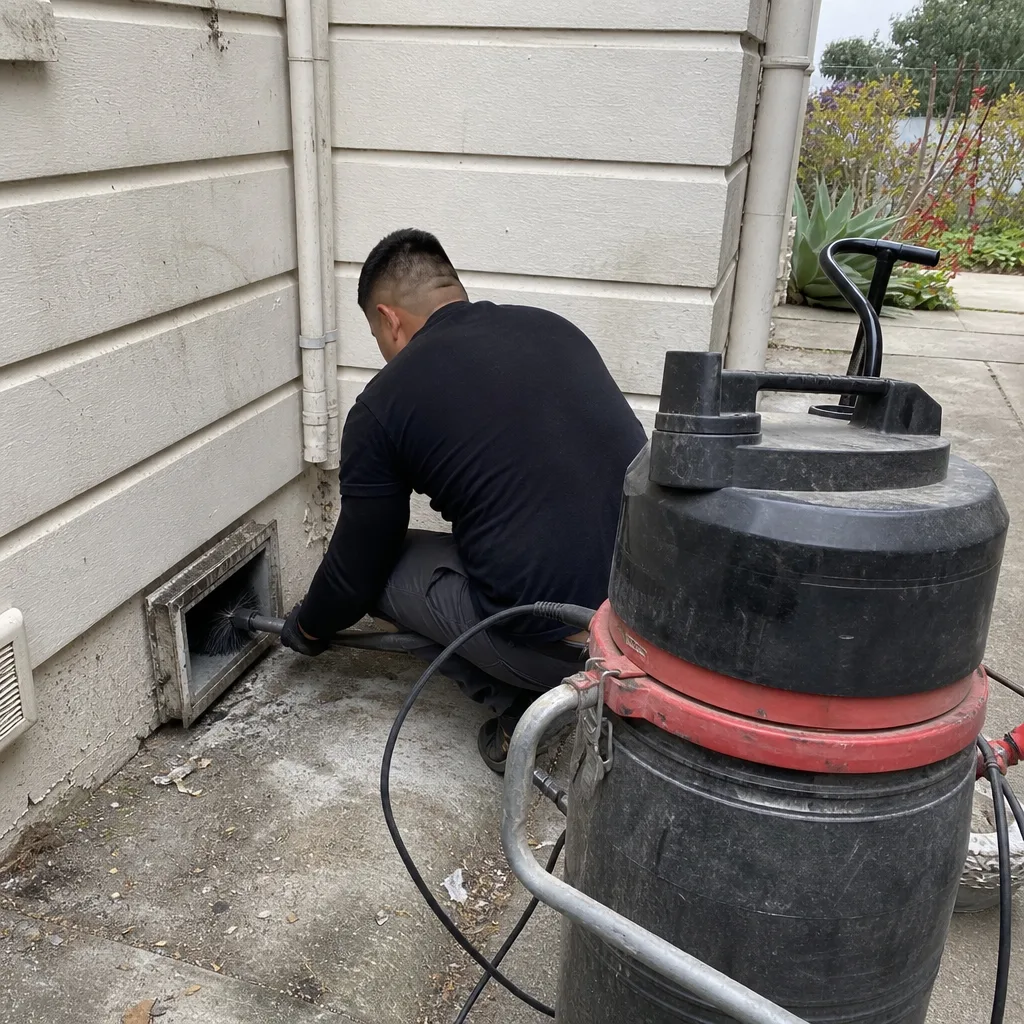 Before
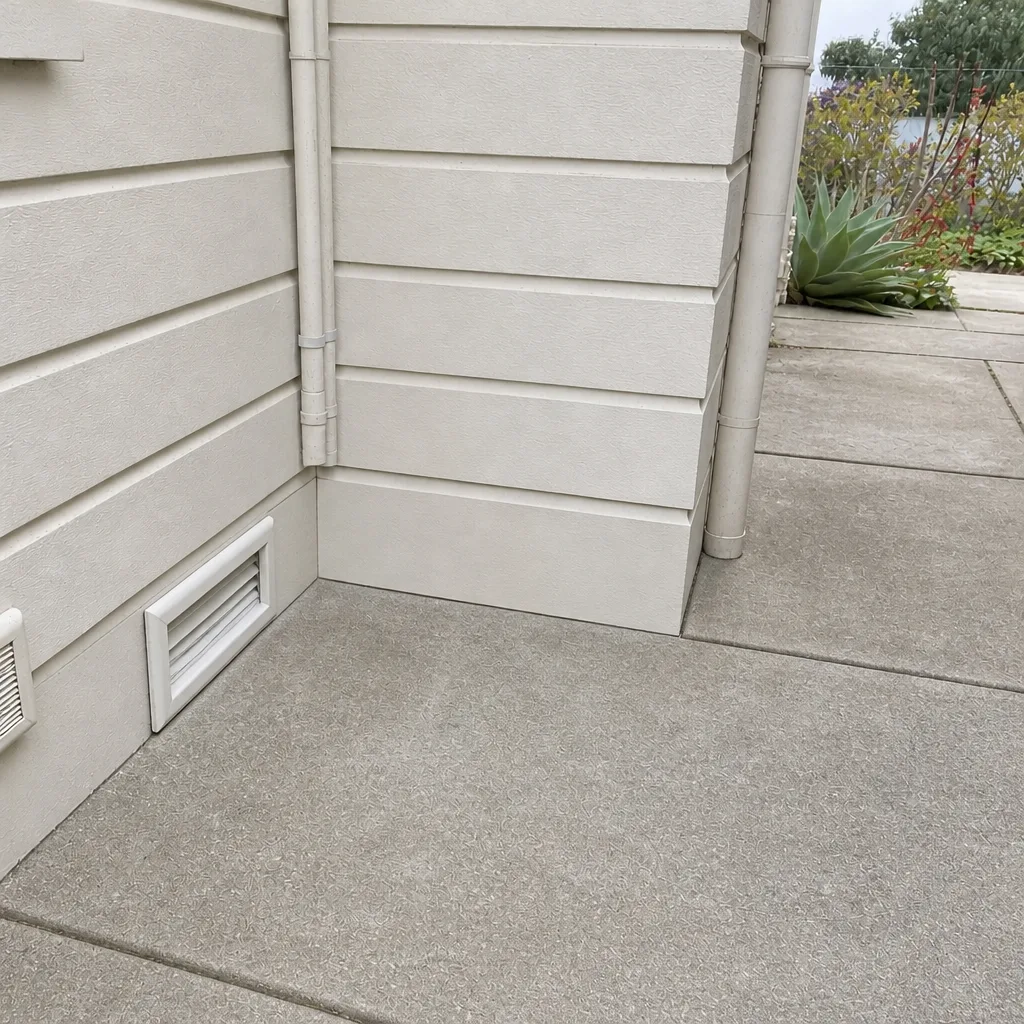 After
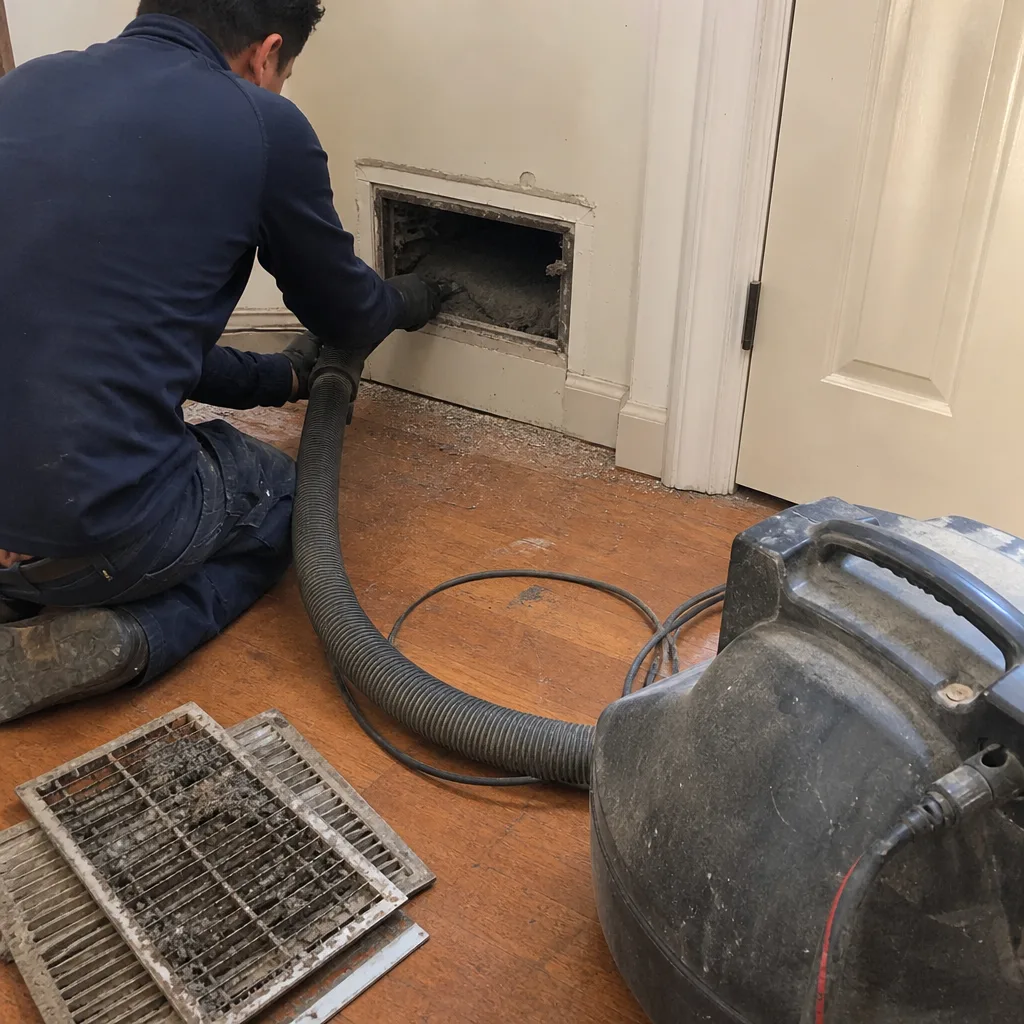 Before
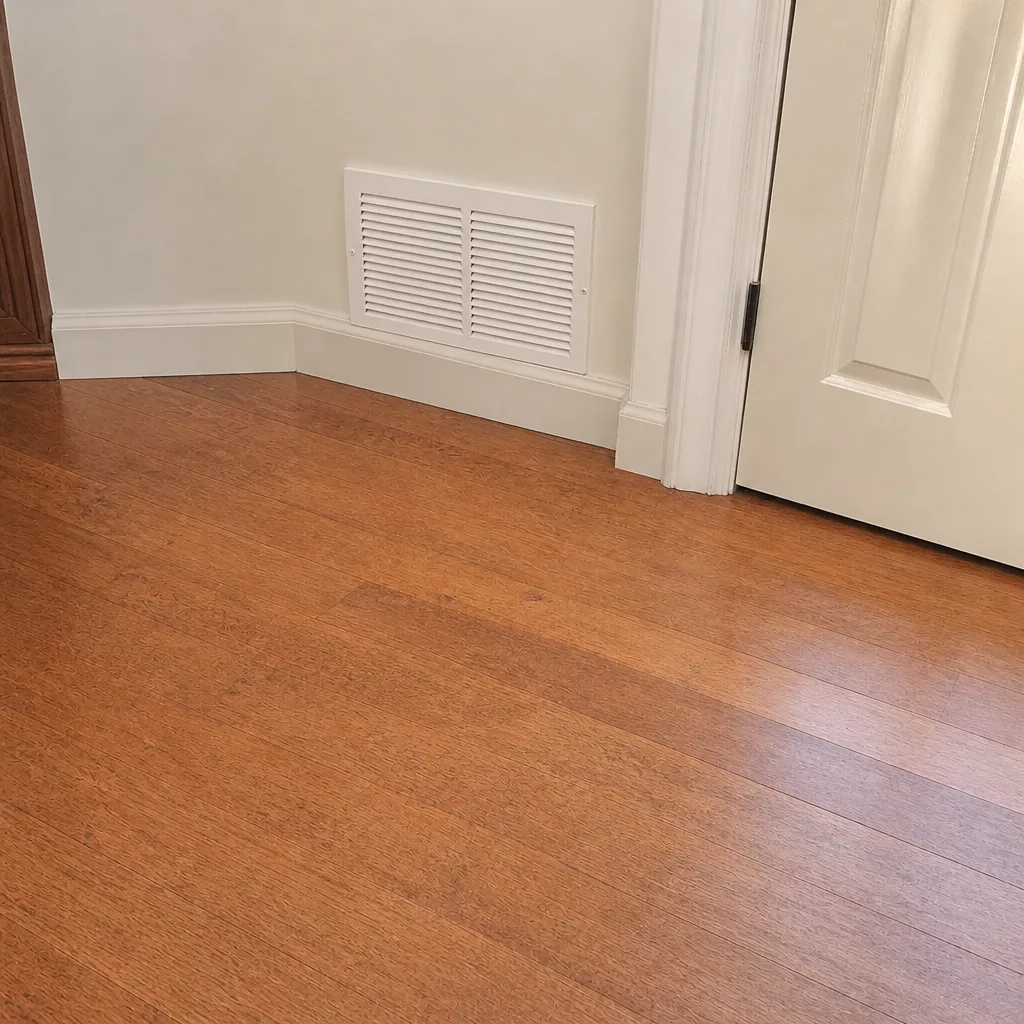 After
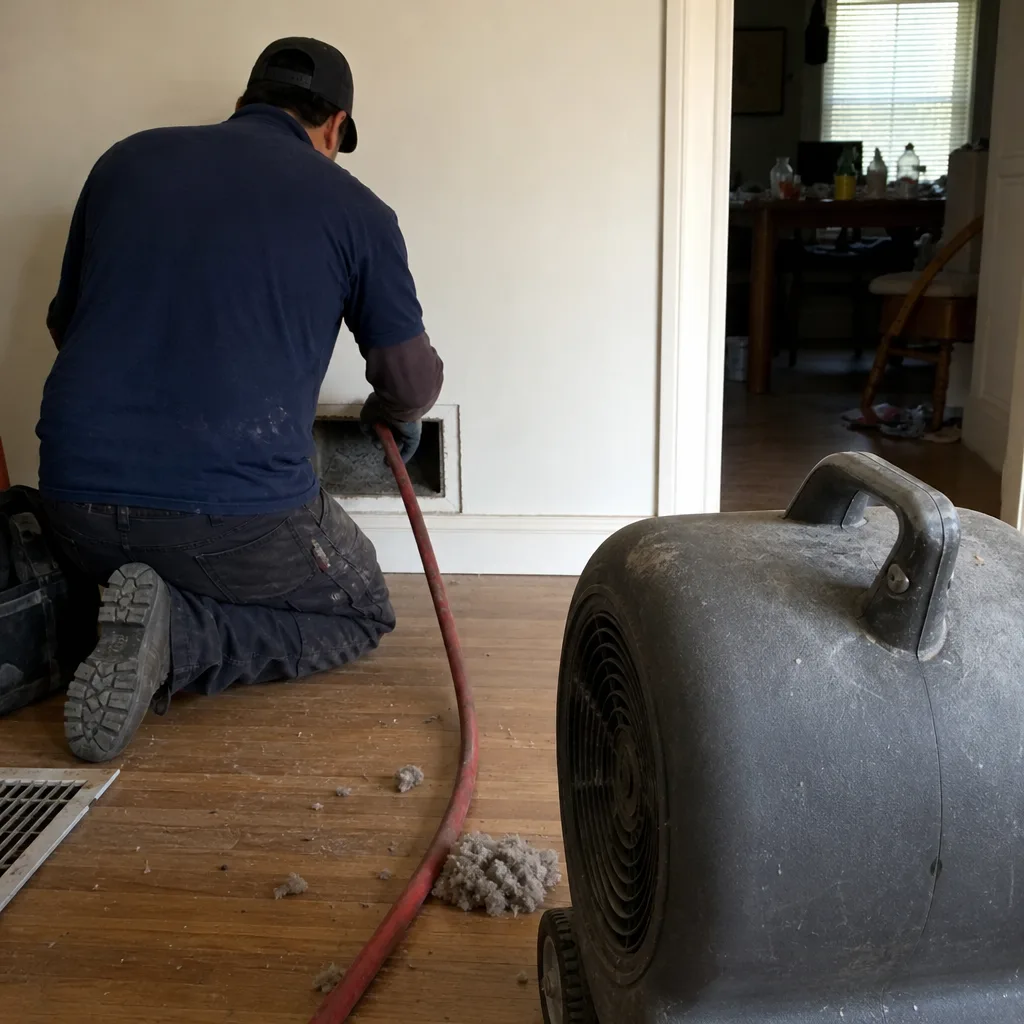 Before
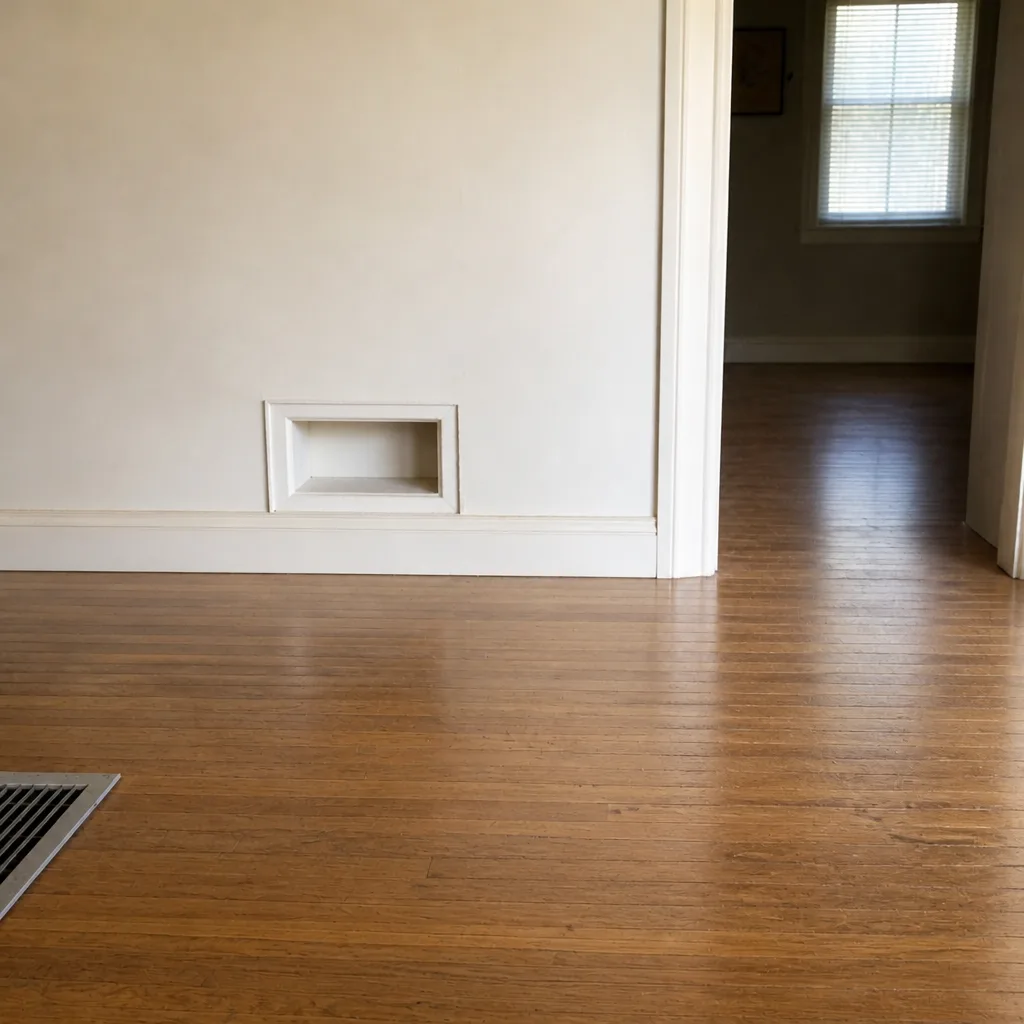 After
When to Call a Professional
Call for a professional inspection when your baseline interval is up, when any of the five trigger milestones applies, or when you’re simply not sure what condition your system is in. Moisture events, rodent evidence, and persistent odors are call-now situations rather than wait-and-see. So is any register with visibly weak airflow, since that often signals a repair issue rather than a cleaning issue. If you’re buying or selling a home in San Mateo, an inspection before closing documents the system’s condition for both sides. Duct Cleaning San Mateo offers free estimates in San Mateo – call (866) 894-2153. We answer 24/7. Fast dispatch from 7am to 7pm, Sunday through Friday. The estimate is free and the price is set per job by the written estimate.
Frequently Asked Questions
Most San Mateo homes fall in the every-3-to-5-years range, with adjustments up or down based on pets, renovation history, filter rating, and how many Spare the Air events your home experienced. Homes with multiple pets or recent drywall work should inspect annually. The trigger is evidence, not just the calendar. Call (866) 894-2153 for an exact quote – estimates are free.
Low quotes usually reflect equipment differences. A crew running portable shop-vac rigs can charge less than one running Rotobrush rotary brushes and Nikro HEPA-filtered negative-air equipment, because the equipment costs more and takes longer to operate. The visible difference after the service is significant. Ask any company what equipment they’ll bring before comparing quotes. Call (866) 894-2153 for a free estimate.
Only if the blower can support it. A higher-MERV filter captures more particles but increases airflow restriction. If your blower is already near its pressure limit, the higher-MERV filter can reduce duct velocity and let more particles settle on duct walls. Have a technician verify blower static pressure before upgrading to MERV-13. Call (866) 894-2153 to schedule an inspection.
Ask for before-and-after photos of your own duct system, not stock images. Any legitimate cleaning operation can document the duct interiors and registers they serviced. Rotobrush and Nikro equipment leave distinctive results, and reputable operators will show them. If a company can’t or won’t document the work, that’s a warning sign. Call (866) 894-2153 for a free estimate.
After a significant smoke event, replace filters and inspect the return registers and duct interiors. If you see visible darkening or smell smoke when the system runs, schedule an inspection rather than waiting for the normal interval. Repeated smoke events over a season shorten the recommended cleaning interval. Call (866) 894-2153 for an inspection quote.
You can and should vacuum visible registers between professional cleanings, which extends the interval. But the interior duct walls – where most of the contamination is – require mechanical agitation and HEPA-filtered extraction to address. A shop vac can disturb debris without capturing it. Registers are a homeowner task; duct interiors are a professional one. Call (866) 894-2153 for a free estimate.
The Bottom Line
There is no single correct interval for air duct cleaning. The 3-to-5-year guideline is a starting point that assumes nothing unusual about your household. Add pets, drywall dust, an under-matched filter, or smoke events and the interval drops. Keep the four variables in mind, run the month-by-month maintenance routine, log the filter and event details, and treat the five trigger milestones as automatic inspection points. That approach produces better decisions than a fixed calendar, and it means the money you spend on cleaning goes toward actual need rather than a repeating reminder. When you’re ready for a professional inspection, call (866) 894-2153. We answer 24/7. Fast dispatch from 7am to 7pm, Sunday through Friday.
Written by the team at Duct Cleaning San Mateo.