
Last updated November 14, 2026
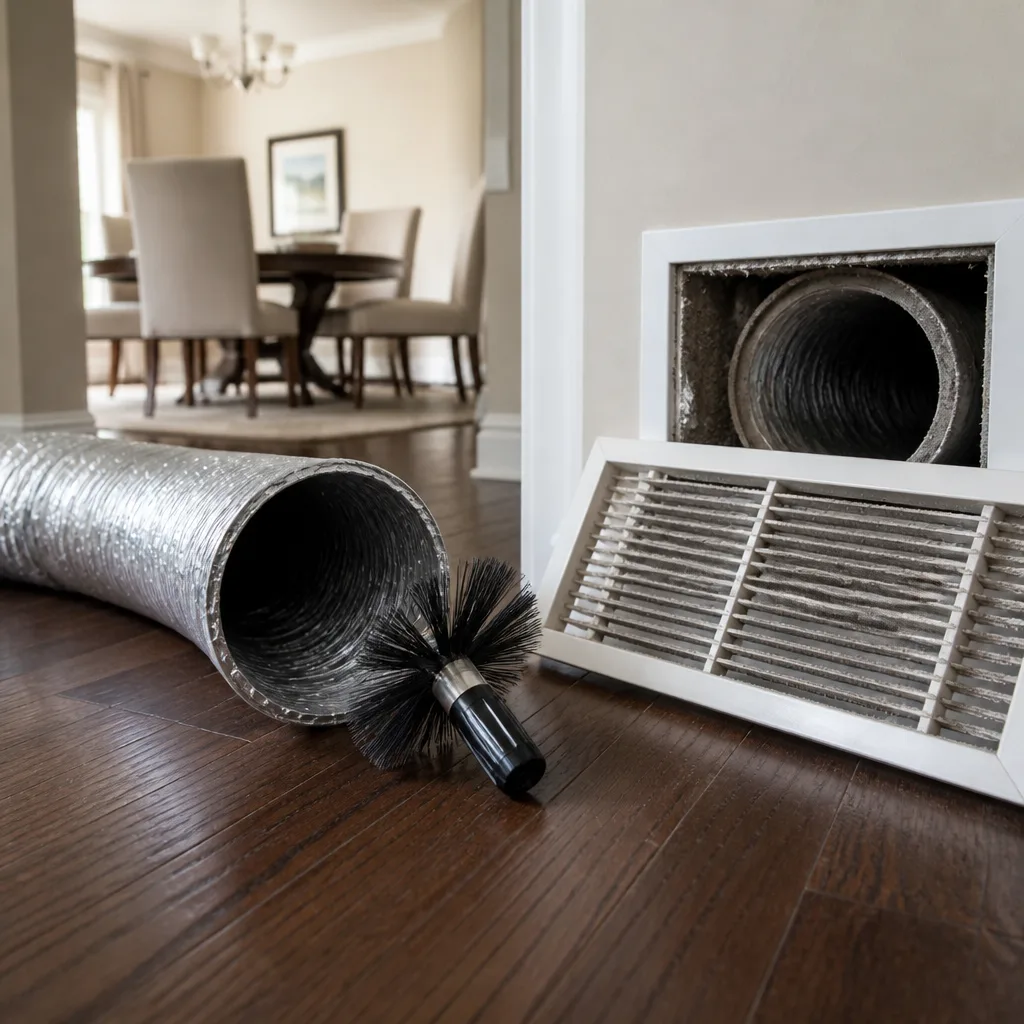 Whole-home duct cleaning
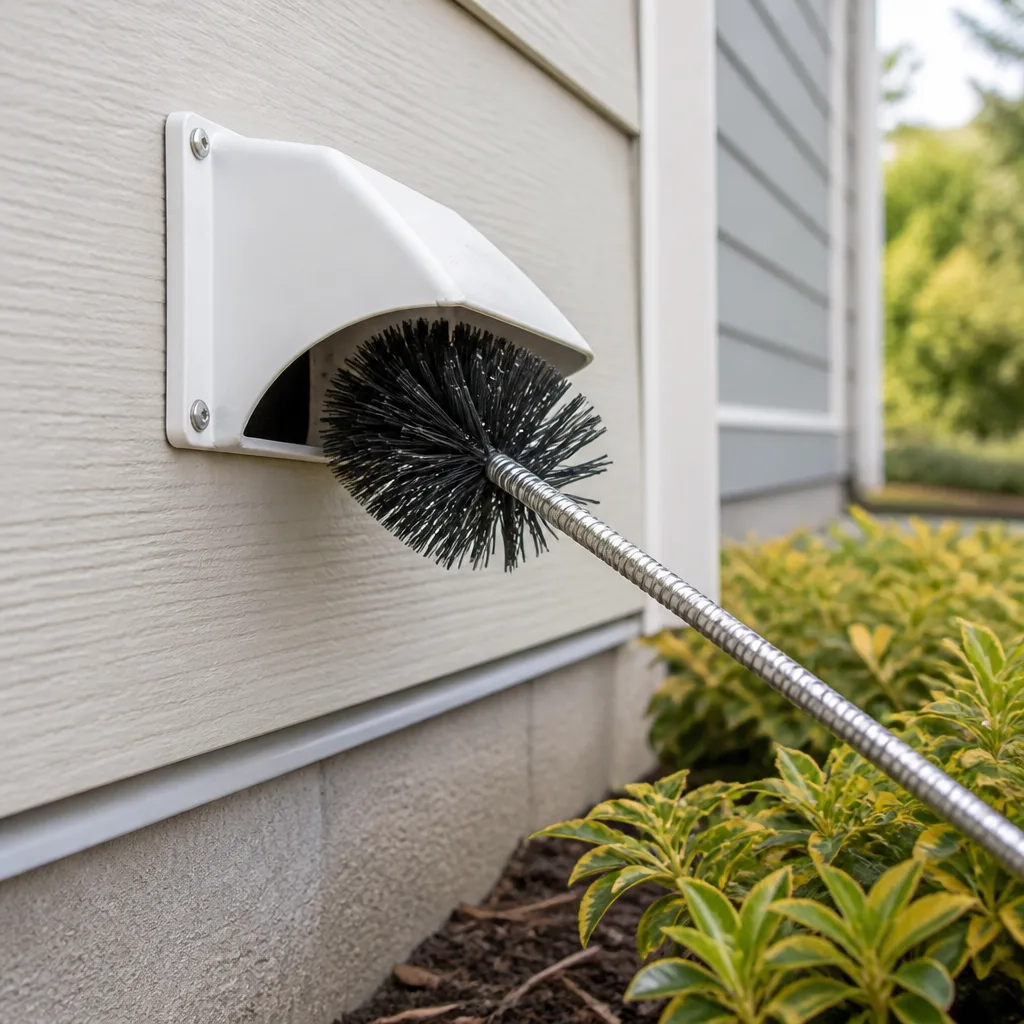 Dryer vent cleaning
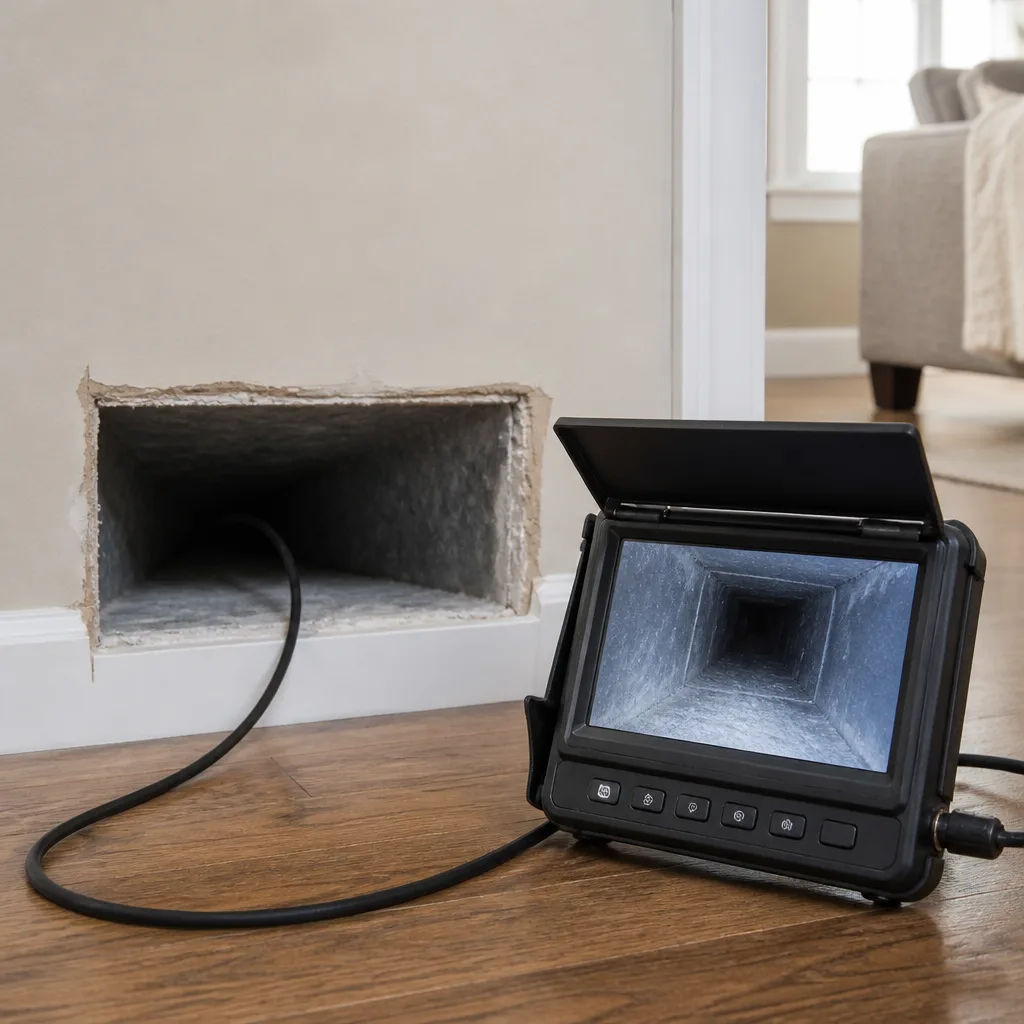 Camera inspection
 Sanitizing & deodorizing
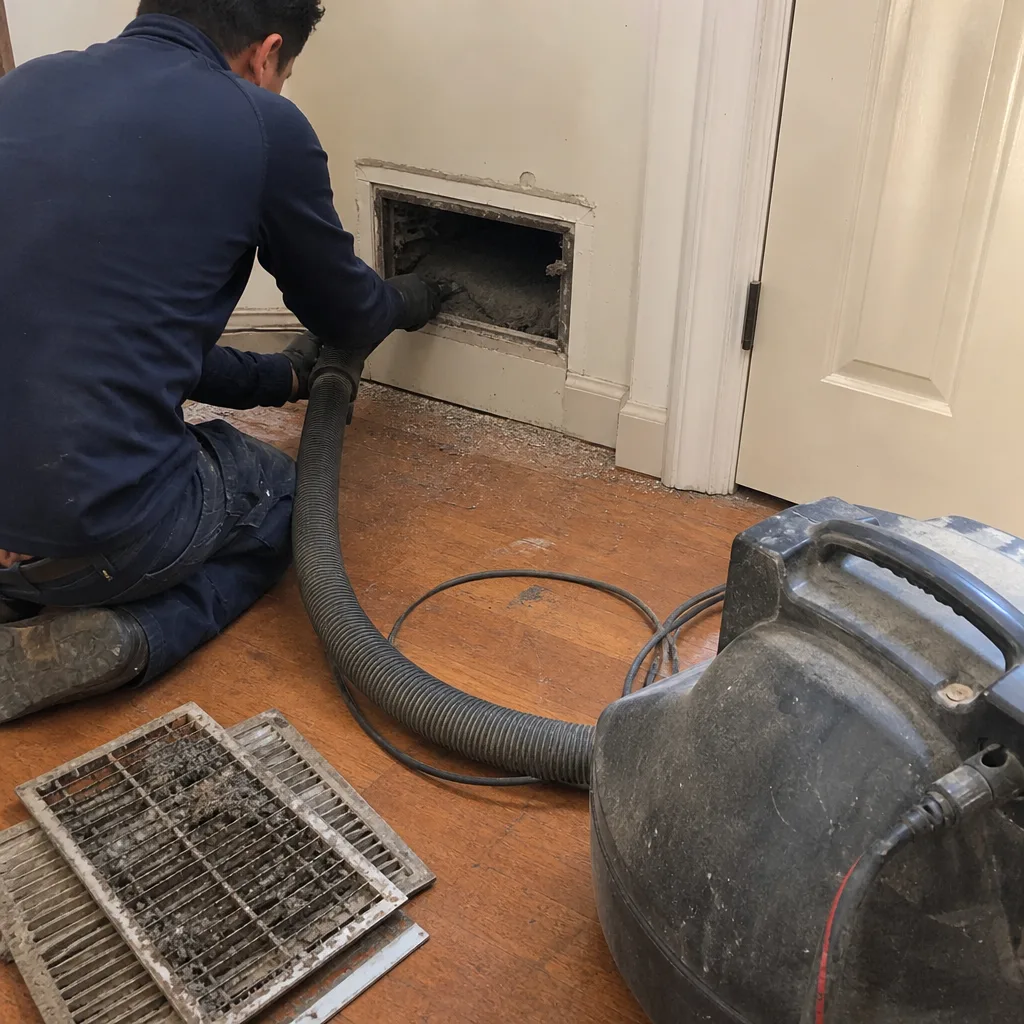
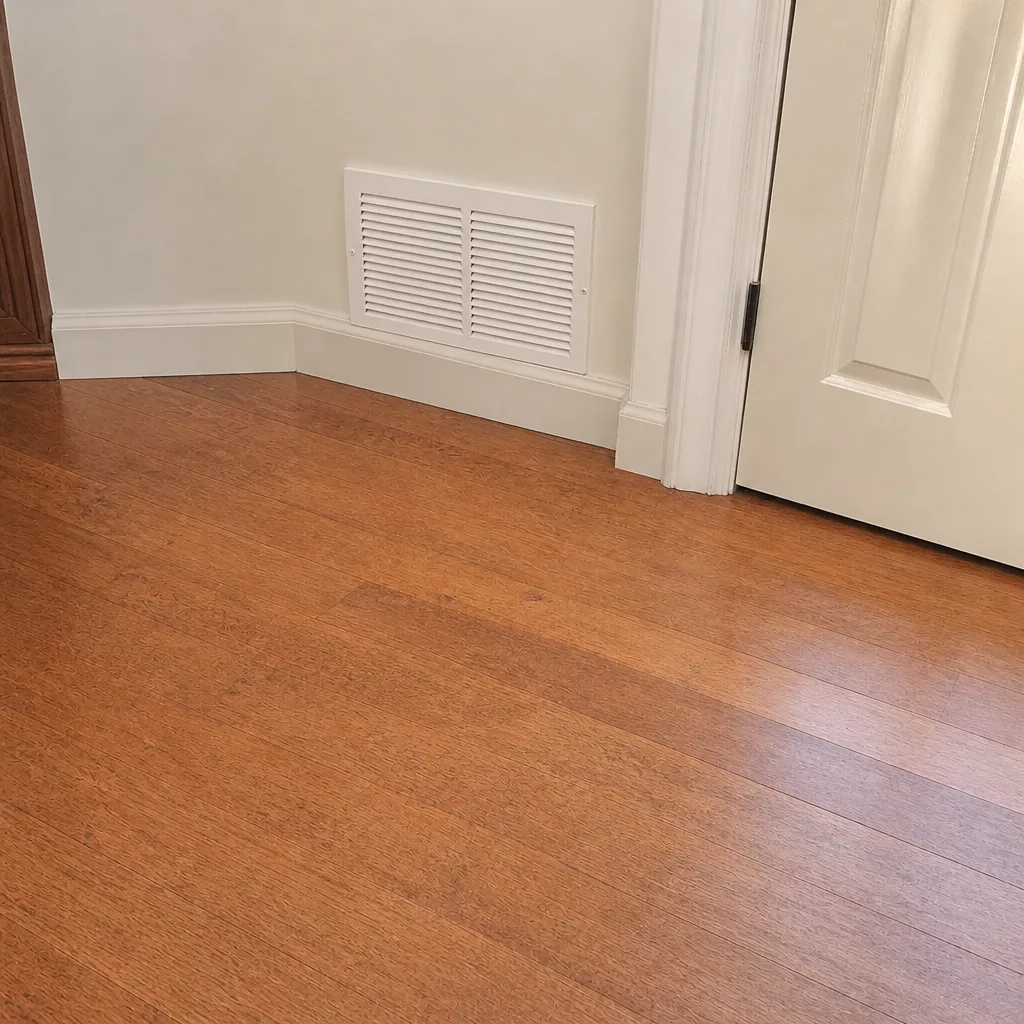
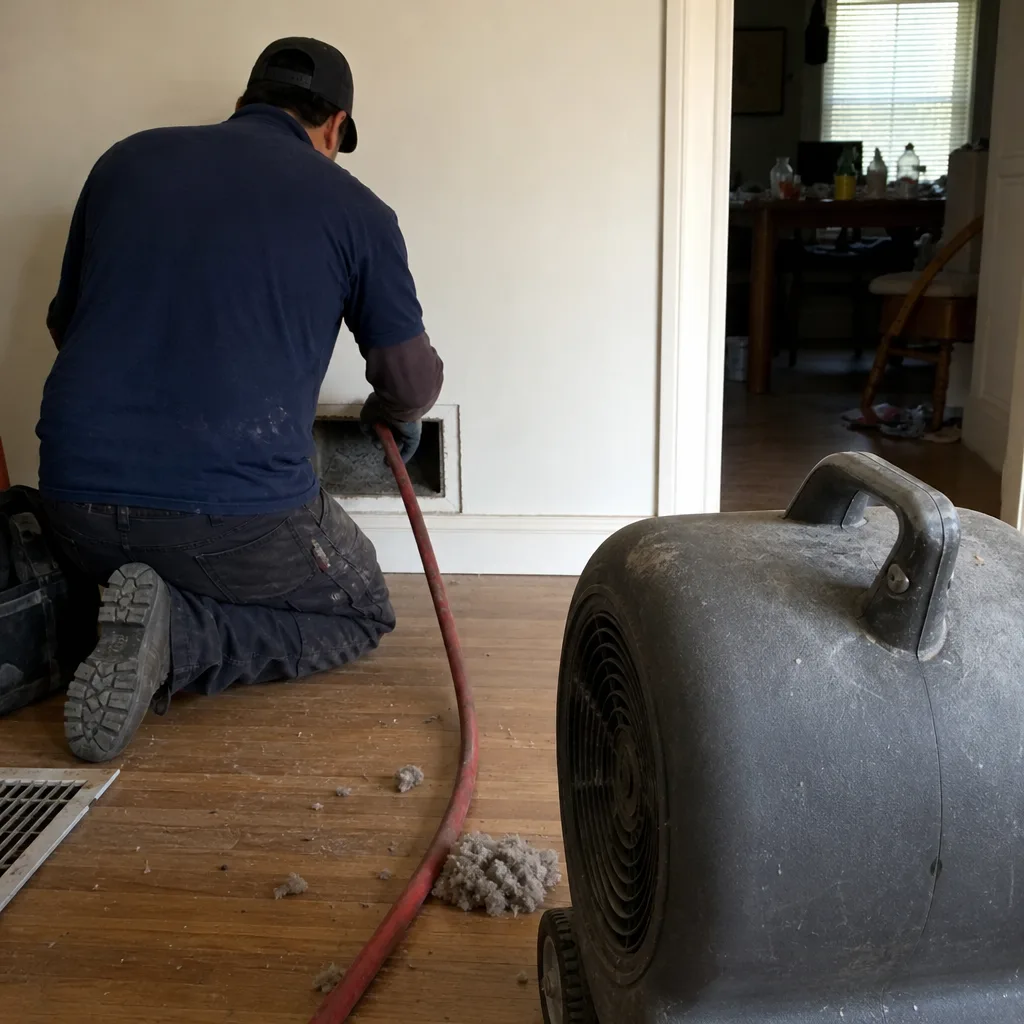
Whole-system duct and dryer vent check with before-and-after photos - you see exactly what came out of your vents
That "$99 whole-house special" is a bait ad - the real number appears once they are in your hallway, or the "clean" is a shop-vac at the register. We photograph the inside of your ducts before and after instead.
Air Duct Cleaning Warning Signs: A San Mateo Homeowner’s Reference Guide
A visible dust plume puffing out of a supply register when the system kicks on is not proof of dirty ducts. More often it’s a collapsed or disconnected section of flex duct dropping insulation fiber straight into the airstream – a repair problem, not a cleaning problem. Get those two confused and you pay for a cleaning that never touches the actual cause. This guide maps each warning sign you can observe at home to the duct condition it actually points to, so you can describe the problem accurately before anyone arrives. We’ll cover what a San Mateo home specifically tends to show, how to tell cleaning from repair, and how to document what you’re seeing.
Quick Answer
Warning signs that actually point to dirty ducts are: a musty or stale odor that appears when the system runs, uneven airflow between rooms, visible dust streaking at registers, and a rise in allergy-type symptoms indoors. Signs that point to a repair instead include a single-room dust plume, whistling at one register, or fiberglass particles in the dust. The distinction matters because cleaning and repair use different equipment and different scopes. A specialist sorts one from the other with a camera inspection before quoting a flat price per system.
Styles & brands we work with
- Whole-home duct cleaning
- Dryer vent cleaning
- Camera inspection
- Sanitizing & deodorizing
Table of Contents
- Symptom-to-Cause Map: What Each Sign Actually Indicates
- Cleaning Signals vs. Repair Signals: How to Tell Them Apart
- San Mateo-Specific Warning Signs
- Mold vs. Ordinary Dust: Two Very Different Contractor Responses
- How to Document Warning Signs Before a Contractor Visit
- Questions to Ask Before You Book Any Duct Cleaning
- What a Proper Duct Cleaning Job Actually Involves
Symptom-to-Cause Map: What Each Sign Actually Indicates
Most warning sign lists you’ll read give you symptoms with no cause attached. That leaves you unable to tell a $150 problem from a $1,500 one, and it leaves a technician guessing at what you meant. Here’s the mapping we work from, and the one we’d suggest you keep in mind when you look at your own system.
- Stale or musty odor when the system starts: Usually organic growth or accumulated debris on the duct interior or the evaporator coil, not just dust. Points toward cleaning, plus a check on the coil.
- Single-room dust plume on startup: A collapsed, disconnected, or torn flex duct section nearest that register. Points toward repair first.
- Whistling at one register: Restricted airflow from crushed duct or a partially closed damper. Points toward repair or adjustment.
- Fiberglass particles visible in dust: Deteriorated internal duct liner or exposed insulation board. Points toward repair or replacement of the affected run.
- Uneven airflow between rooms: Leaking joints, disconnected sections, or undersized duct. Points toward a leak assessment before cleaning.
- Visible dark streaking around register edges: Airborne particles being forced through a gap. Points toward cleaning and a seating check on the register boot.
- Cabinets or walls feeling warm near a duct path: Leaking hot-side ductwork. Points toward sealing work.
- Rising allergy-type symptoms indoors but not outdoors: Accumulated particulate or biological growth in the airstream. Points toward cleaning and a filtration review.
You’ll notice these divide cleanly into two groups: signs of accumulation and signs of damage. That split is the most useful thing you can take from this guide. A homeowner in San Mateo who can say “the dust only comes from one register and only on startup” has just saved an hour of diagnostic time and probably a pointless cleaning quote.
Cleaning Signals vs. Repair Signals: How to Tell Them Apart
The single most common way homeowners lose money on duct work is booking a cleaning when the system needs a repair. Cleaning removes what’s inside a duct. It cannot fix a duct that has come apart, crushed flat, or lost its internal lining. That’s why we offer air duct cleaning and repair as separate scopes – the finding decides which one applies.
Three repair conditions that a cleaning won’t touch
- Crushed flex duct. The flexible round duct in many attic and crawlspace runs can collapse under weight, kink at a tight turn, or get stepped on. A crushed section chokes airflow to one area of the house. Cleaning it changes nothing; the section needs replacing or re-routing.
- Failed duct board seams. Duct board is rigid insulation board taped and mastic-sealed at the joints. Over time, seams split and tape lifts. That’s a leak, and leaks pull unfiltered attic or crawlspace air into the supply stream. Sealing is the fix.
- Deteriorated duct liner. Older lined duct can shed its internal acoustic lining as the adhesive ages. The lining fiber then travels into rooms. Cleaning can dislodge more of it; the affected run needs to come out.
If any of those three describe what you’re seeing, ask for a camera inspection and a repair estimate, not a cleaning quote. Ask specifically whether the company does repair in-house. Cleaning-only companies will find a crushed duct and hand you a shrug. We’d rather close the gap ourselves, which is why repair is a standalone service for us.
Cleaning conditions
Ordinary accumulation – dust loading on duct walls, debris settled in the plenum, lint and particulate coating the return side – responds to proper mechanical cleaning with a rotary brush system. A Rotobrush rotary brush agitates the duct wall while a HEPA-filtered negative-air machine holds the loosened material. That combination removes what a shop-vac rig can’t reach.
San Mateo-Specific Warning Signs
San Mateo’s climate produces a couple of warning signs you won’t read about on a generic national checklist. The conditions come from the way the local air behaves through the year, and they show up on registers and in odors in patterns that are fairly consistent around here.
White mineral deposits around registers
A chalky, powdery white ring around the edge of a supply or return grille is mineral residue left behind as moisture evaporates. Around San Mateo, cooling cycles combined with humid air moving through the system can drive condensation on cold duct surfaces and register boots. The water evaporates and leaves the minerals behind. It’s a sign the system is cycling moisture, not necessarily that it’s full of dust. When you see this, look at the register edges for rust too. Moisture cycling against a metal boot is where that starts.
Musty odor that strengthens after fog events
Our fog pattern brings humid air that gets drawn into the return system. If a duct run has an undetected leak or a section of interior lining holding moisture, the odor inside the house will get stronger for a day or two after a foggy stretch, then ease off. That pattern – worse after fog, better on dry days – is a strong indicator that moisture is sitting somewhere in the system. It deserves a camera inspection. A musty smell that never changes with the weather is more likely to be ordinary accumulation or a coil issue.
Homes in San Mateo with older ductwork – particularly the rigid metal and lined duct common in mid-century construction – tend to show these two signs before they show heavy dust loading. That’s the opposite of what most national warning-sign lists assume, and it’s worth knowing before you start diagnosing your own system.
Mold vs. Ordinary Dust: Two Very Different Contractor Responses
Mold growth in a duct system requires a different scope of work, different containment equipment, and a different set of questions than ordinary dust accumulation. If you suspect growth rather than dust, say so when you call. It changes how the job is prepared and what equipment gets used.
How to tell them apart from the outside
- Odor character: Dust smells like a dry attic. Biological growth smells damp and earthy, and it tends to intensify when the system runs after a humid stretch.
- Visual evidence at the register: Dusting on the grille face that wipes off cleanly is ordinary. Dark spotting on the register face, on the boot, or on the visible duct throat is worth flagging.
- Pattern over time: Dust loading is gradual. Growth spreads from a moisture source and gets noticeably worse over weeks.
- Associated moisture: A leak above the ductwork, a sweating coil, or condensation inside a boot near a register with white mineral residue – any of these raises the odds it’s growth, not dust.
Why the equipment matters
Standard duct cleaning uses a HEPA-filtered negative-air machine – our Nikro equipment for that role – to hold loosened debris in the airstream and capture it. That’s the right tool for dust. When the finding points to contamination or biological growth, the scope shifts. Containment needs to be tighter and the capture standard higher. That’s the reason we run Abatement Technologies equipment: it’s built for the kind of contaminated systems that show up during professional remediation work, and it lets the cleaning step be handled with the right containment rather than hoping a standard vacuum covers it.
One practical note: a cleaning contractor who doesn’t carry remediation-grade containment will often clean a mold-affected system anyway and call it done. Ask directly what equipment will be used for containment if growth is found. A straight answer tells you a lot.
How to Document Warning Signs Before a Contractor Visit
Photographing what you’re seeing is the single most useful thing you can do before anyone arrives. It lets the technician correlate your observations with what the camera inspection finds inside the duct, and it gives you a before-and-after reference for the system itself. A short, systematic set of photos takes about ten minutes.
- Photograph every register face with a phone light on it, angled slightly so the surface texture shows. Get the grille, the boot edge, and about two inches of surrounding wall or ceiling.
- Photograph the white ring if you see mineral residue, with a coin or ruler in frame for scale.
- Film a startup plume. Aim the phone at the register, then have someone call for the system. Ten seconds of video is worth more than any description.
- Photograph the air handler and plenum area if it’s safely accessible – the visible duct joints and any tape or mastic around them. Don’t open panels or climb into tight spaces.
- Write down the symptoms with dates: when the odor appeared, whether it changed with weather, which rooms get less airflow. A short note on your phone is enough.
- Save the register airflow observations as a simple list – which rooms feel strong, which feel weak, which have none on startup.
Don’t pull down registers or open access panels yourself to get a better shot. It’s easy to dislodge material or reseat a boot badly. What you can see from the room side is enough for a technician to work from. A good crew will bring a duct camera and check the rest. Note also whether the system is currently running – and while the camera is out, ask for before-and-after photos of the duct interior itself. That’s the verifiable proof that the work happened inside your ducts, not just at the register.
Questions to Ask Before You Book Any Duct Cleaning
An honest duct cleaning company will answer all of these on the phone without hesitating. The answers themselves, and how readily they’re given, tell you more than any online review.
- What equipment do you use? A real answer names a rotary brush system and a HEPA-filtered negative-air machine. A vague answer (“our powerful vacuums”) usually means a shop-vac rig with a long hose.
- Will you do a camera inspection first? Any duct system with warning signs deserves to be looked at before it’s cleaned. A company that quotes without looking is quoting the wrong job half the time.
- Can you repair ductwork if you find damage? A cleaning-only company will find the crushed duct and refer you elsewhere. Confirm repair is on the table.
- Is the price per system or per register? Per-register pricing means the bill depends on how many rooms you have and will surprise you at the end. A flat price per system is easier to hold to.
- Will I get before-and-after photos? The most common complaint about this trade is that homeowners don’t know if the work was actually done. Photos of the duct interior solve that.
- What does your estimate cover? Ask for it in writing and confirm the written estimate sets the final price. Our estimates are free, and the flat price per system is agreed before any work starts.
If the company won’t answer these plainly, take that as your answer. The trade has a reputation problem for a reason: a low teaser price on the phone that turns into a much larger invoice once the crew is on site. A flat price per system, given after a camera inspection and confirmed in writing, is the structural fix for that.
What a Proper Duct Cleaning Job Actually Involves
Knowing the sequence helps you judge whether what shows up at your door matches what you booked. A professional-grade cleaning is a mechanical job with a defined process. If the crew arrives with a portable vacuum and a brush on a string, that’s not the same job.
- Walk-through and camera inspection. Before anything is opened, the technician should walk the system with you, look at the signs you’ve documented, and run a camera into the supply and return side to confirm what’s actually there.
- Seal and connect. Access openings are cut at the plenum and at the trunk, the negative-air machine is connected, and the system is closed so the machine pulls the whole duct network into negative pressure. That’s how loosened debris gets captured rather than pushed into rooms.
- Mechanical agitation. A rotary brush system runs the length of each run, breaking loose what’s stuck to the duct wall. Compressed-air whips and hand tools reach the rest.
- HEPA capture and clearing. The Nikro negative-air unit holds the loosened material and filters it. The technician confirms visual clearance at the far ends of each run before moving on.
- Repair findings. If the run turns up a crushed section, a failed seam, or deteriorated liner, those are noted with the camera footage and quoted as a separate repair – not folded silently into the cleaning bill.
- Reassembly and verification. Access openings are sealed back up properly, registers are reseated, and the system gets a test run with airflow checked room by room.
If the home also has moisture findings, the sequence gets adjusted with tighter containment and the Abatement Technologies equipment noted earlier. If filtration is worth upgrading, that’s when we’d talk about a Honeywell or Aprilaire filter setup – not as an upsell on the phone but as a follow-on recommendation once the ducts are clean and the baseline is known. And if the system has a dryer vent with a lint buildup, that’s a separate safety matter worth handling with dryer vent cleaning – lint buildup in the flex run behind the dryer is a documented fire risk, not a cosmetic issue.
Common Mistakes to Avoid
- Booking a cleaning for a single-room dust plume. That’s usually a damaged duct section, and cleaning won’t fix it. Ask for a camera inspection before agreeing to a cleaning price.
- Accepting a phone quote without a look. A flat price given sight-unseen either rises on site or was priced to a guess. Legitimate companies take a look, or quote a range and confirm on arrival.
- Ignoring the white ring around registers. Around San Mateo, mineral residue points to moisture cycling somewhere it shouldn’t. It’s a lead worth following with a camera, not a decoration to wipe off.
- Assuming a dusty house means dirty ducts. Most household dust comes from skin cells, fabric fiber, and outdoor particulates drawn in through doors and windows. Dirty ducts add to it, but the dust on your coffee table is not the diagnostic.
- Treating a musty odor with a deodorizer. Fogging the system with fragrance covers the symptom. It doesn’t address what’s growing or where the moisture is coming from. Cameras and containment do that.
- Skipping the before-and-after record. Without photos of the duct interior, you have no way to verify the work. Ask for them before the crew leaves.
- Scheduling a cleaning before a repair. If the camera shows a crushed run or a failed seam, fix that first. Cleaning behind a damaged duct leaves the same debris path in place.
See the difference
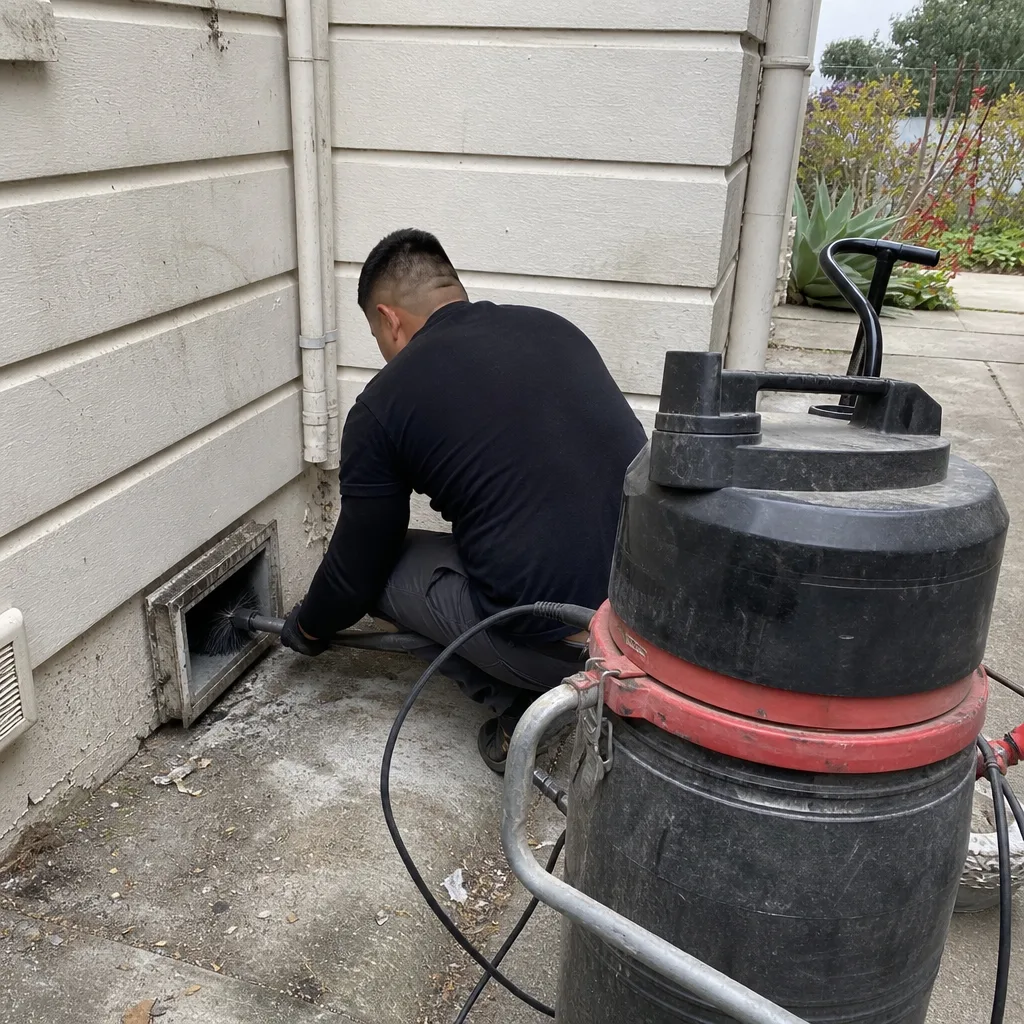 Before
 After
 Before
 After
 Before
 After
When to Call a Professional
Call a specialist when you’re seeing a warning sign you can’t attribute to something obvious. A single musty call that gets worse after fog, a plume of dust from one register only, a set of registers that have never blown strongly, or a white mineral ring that’s spread across multiple grilles – each of those justifies a camera inspection. Call sooner if anyone in the household is showing allergy-type symptoms indoors that clear when they leave the house. Don’t wait for a repair to turn into a bigger one; a crushed duct section that’s ignored can put extra strain on the air handler for months.
Our technicians have up to 10 years of experience, and the range of equipment we carry – Rotobrush for cleaning, Nikro for HEPA containment, Abatement Technologies for contaminated systems – lets us handle what the inspection actually finds. Duct Cleaning San Mateo offers free estimates in San Mateo – call (866) 894-2153.
Frequently Asked Questions
If the warning sign is a single-room dust plume, a whistling register, or fiberglass particles in the dust, that’s a repair signal. If the sign is a musty odor throughout the house, uneven but consistent airflow, or visible dust streaking at multiple registers, that’s a cleaning signal. A camera inspection settles the question definitively. Call (866) 894-2153 for a free estimate.
Pricing is per system, by estimate, not per register – which is the point. A flat price per system, agreed after a camera inspection, is what protects you from the bait-and-switch pattern this trade is known for. We give free estimates, and the written estimate sets the final price. Call (866) 894-2153 to book one.
A low teaser price on the phone usually means the crew will quote the real scope on arrival, or the equipment is a shop-vac rig rather than a rotary brush and HEPA negative-air system. Ask what equipment is used and whether the price is flat per system. A quote that survives those two questions is a real quote. Call (866) 894-2153 for an honest estimate.
Not directly – white mineral residue around registers usually indicates moisture cycling through the system and evaporating, leaving minerals behind. Around San Mateo, that pattern is common with humid air moving through cool duct surfaces. It’s worth a camera inspection rather than a cleaning quote on its own. Call (866) 894-2153 to schedule one.
Odor is the best external tell – a damp, earthy smell that strengthens after humid weather points toward biological growth, while dust smells dry. Visual spotting on the register face or duct throat is a second sign. If growth is suspected, the job needs remediation-grade containment (we use Abatement Technologies equipment) rather than a standard cleaning rig. Call (866) 894-2153 and tell us what you’re seeing.
There’s no universal calendar answer – it depends on your system, the local humidity pattern, and what’s actually accumulating. The honest approach is to inspect first, then clean only if the camera shows a genuine accumulation problem. A system with no warning signs doesn’t need a scheduled cleaning on top of that. Call (866) 894-2153 for a free estimate and an inspection.
The Bottom Line
Warning signs in a duct system divide into two groups: signs of accumulation and signs of damage. Cleaning handles the first. Repair handles the second. Get them confused and you pay for a cleaning that never fixes the actual cause. Around San Mateo, watch for the two local patterns – white mineral rings on registers and a musty odor that strengthens after fog events – as early indications of a moisture or repair issue, not just dirt. Document what you see with photos before you call, and ask for a camera inspection and a flat price per system. That combination closes the gap this trade leaves open. Call (866) 894-2153 for a free estimate. We answer 24/7. Fast dispatch from 7am to 7pm, Sunday through Friday.
Written by the team at Duct Cleaning San Mateo.