
Last updated November 14, 2026
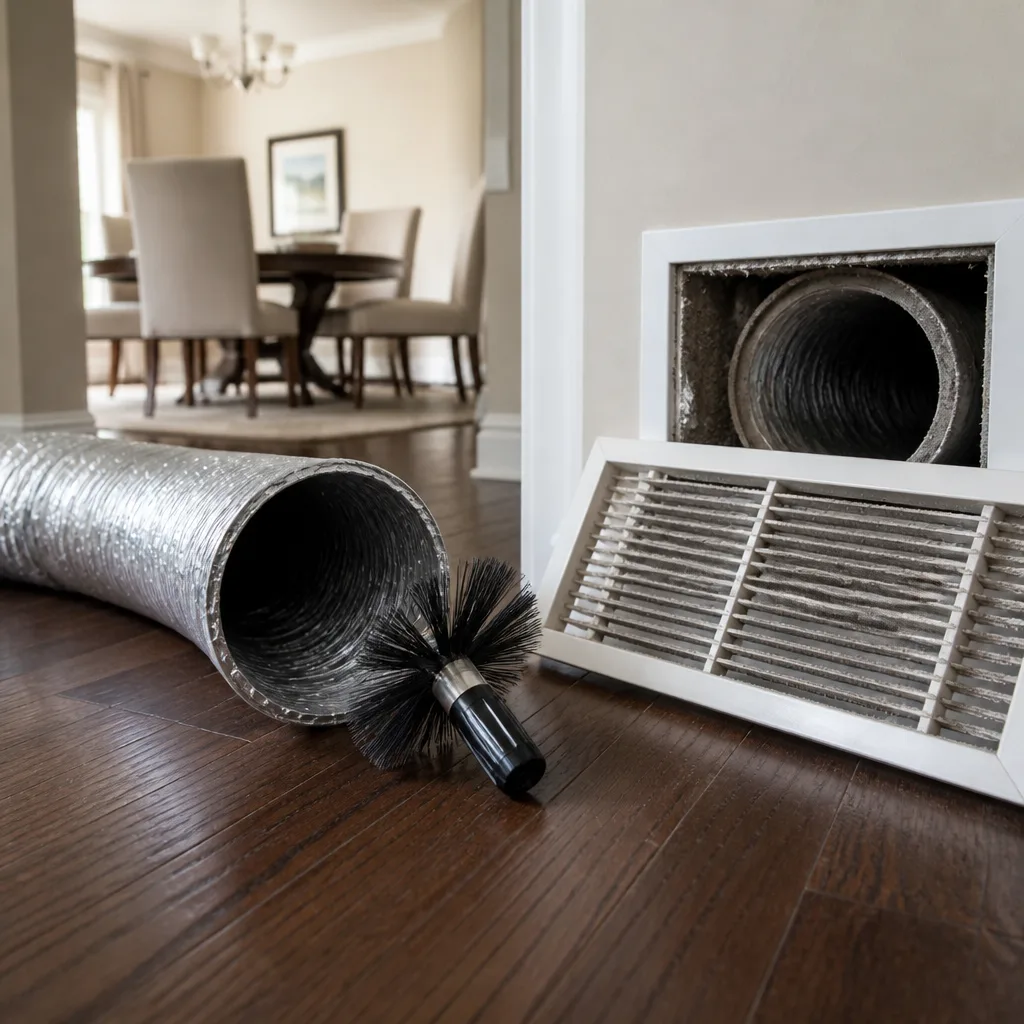 Whole-home duct cleaning
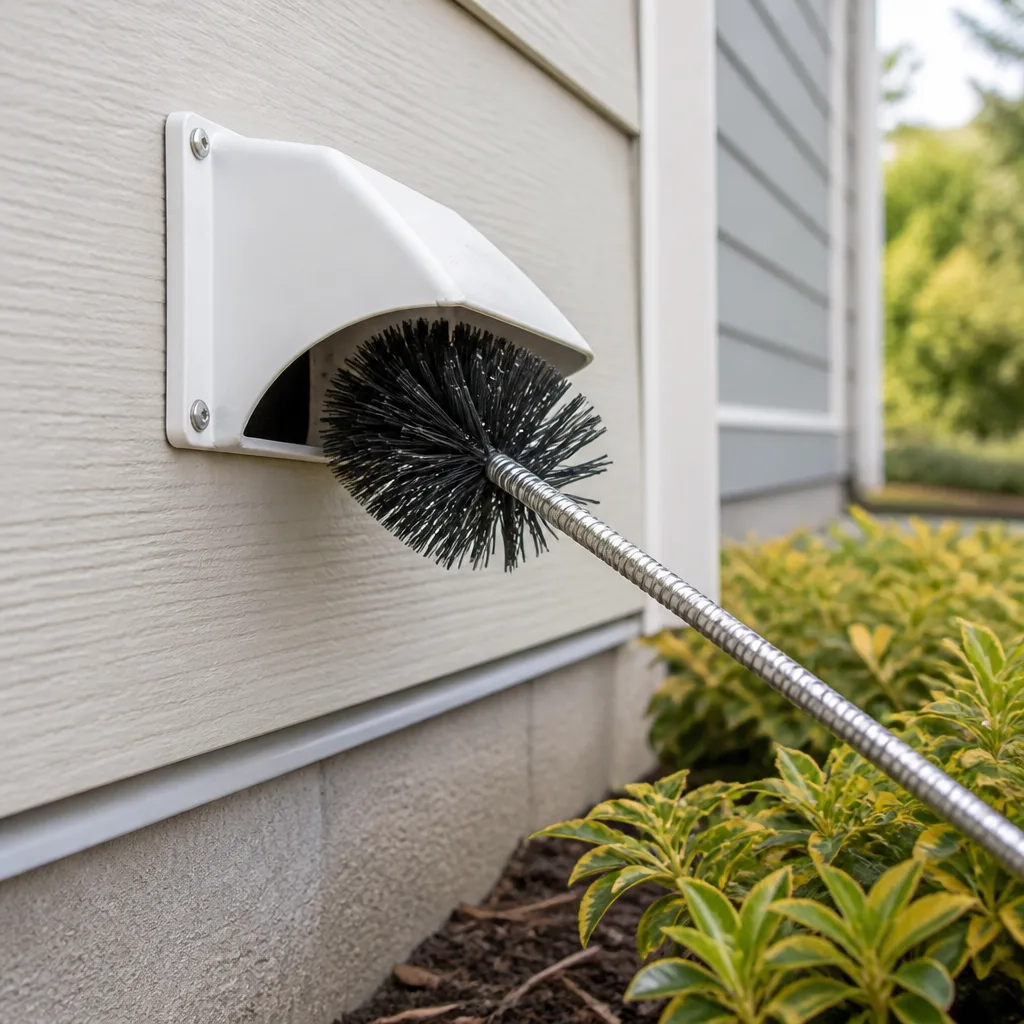 Dryer vent cleaning
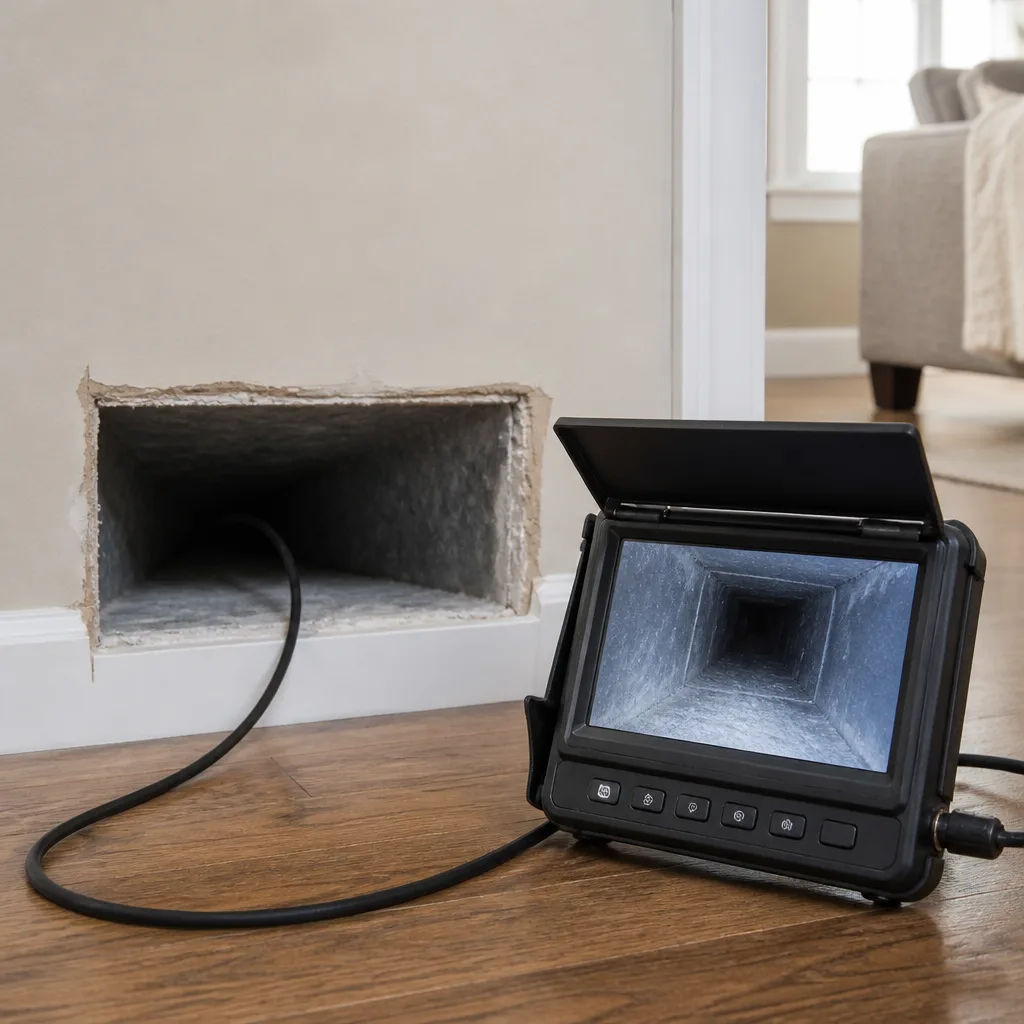 Camera inspection
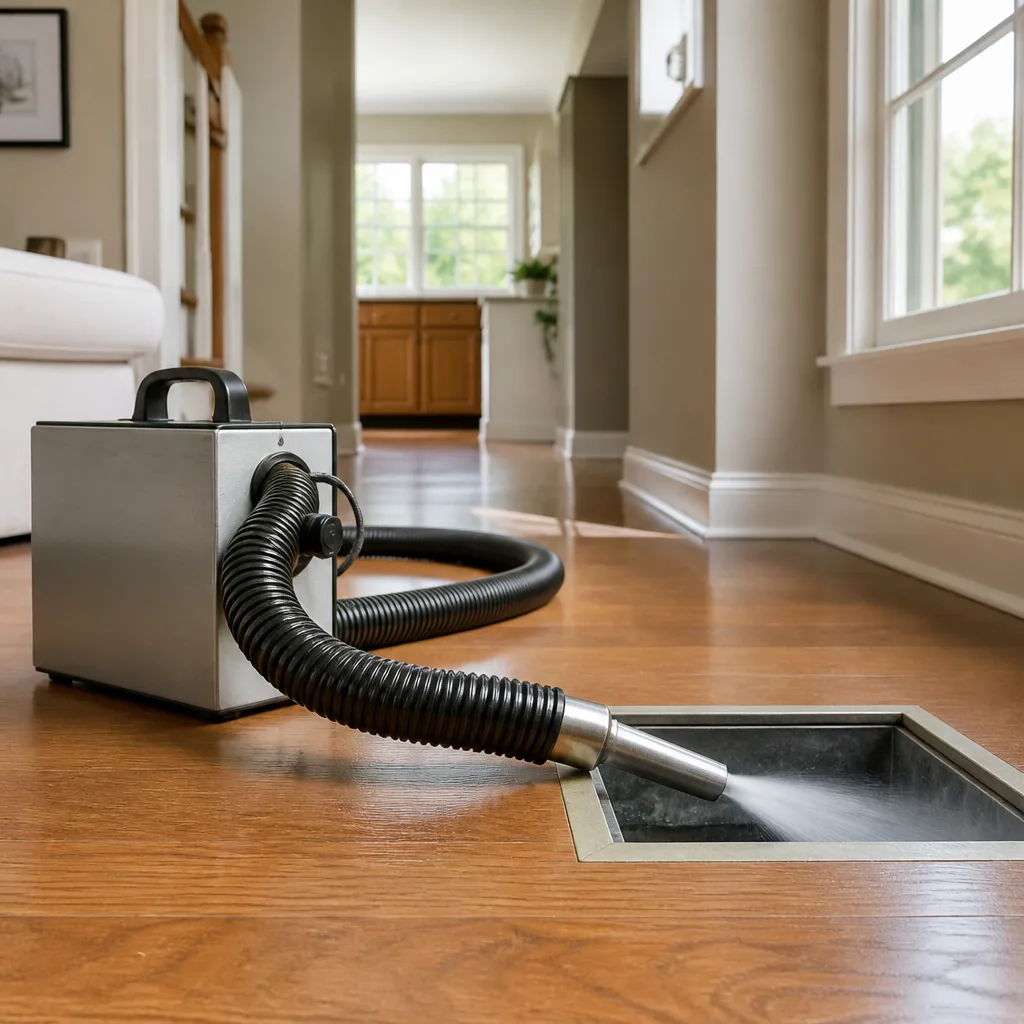 Sanitizing & deodorizing
Whole-system duct and dryer vent check with before-and-after photos - you see exactly what came out of your vents
That "$99 whole-house special" is a bait ad - the real number appears once they are in your hallway, or the "clean" is a shop-vac at the register. We photograph the inside of your ducts before and after instead.
Air Duct Cleaning Maintenance Checklist for San Mateo Homeowners
Changing your filter on the first of every month is a habit, not a strategy. In homes with loose or undersized filter racks, air slips around a poorly fitting filter and carries dust straight into the duct run, so a month of bypass can load a supply trunk faster than a normal year of filtered operation. That’s the part most checklists miss: the calendar tells you when you last looked, not when your ducts actually need attention. What follows is a condition-based checklist built for how homes in San Mateo actually age, breathe, and take on dust – what to watch, what you can handle yourself, and what genuinely needs contractor-grade negative-pressure equipment. You’ll finish with a simple log you can keep on the fridge.
Quick Answer
Duct cleaning in San Mateo should be scheduled by condition, not by the date on the calendar. Check airflow at each register, watch for dust trails at grilles, note musty smells on the first heat of the season, and log wildfire-smoke days and remodel dust – those signals tell you when a real clean is due, typically every three to five years in a typical home and sooner after smoke events or renovations. Filters you change yourself; duct interiors and anything behind a compromised seal you hand to a specialist with HEPA negative-air equipment.
Styles & brands we work with
- Whole-home duct cleaning
- Dryer vent cleaning
- Camera inspection
- Sanitizing & deodorizing
Table of Contents
- Why calendar-based duct cleaning gets it wrong
- The condition-based checklist: what to look for
- How to test register airflow room to room
- San Mateo seasonal events worth logging
- What you can maintain yourself vs. what needs a pro
- The dryer vent: a separate checklist with fire-safety stakes
- When cleaning isn’t enough: sealed, crushed, or leaking ducts
- Build a simple maintenance log
Why Calendar-Based Duct Cleaning Gets It Wrong
“Every three years” is a starting number, not a rule. Two houses on the same block can differ by a factor of five in how quickly their ducts load up, because the load comes from conditions, not from time. A house with a tight filter frame, a good MERV rating, no pets, and no nearby construction barely moves the needle in four years. A house with a loose filter slot, a dog, ongoing landscaping dust, and a bathroom exhaust that dumps into the attic can build visible debris in a single heating season.
We’ve seen the difference firsthand across San Mateo. The Peninsula’s mild winters and mostly sealed homes mean the HVAC system runs less than in hotter or colder climates, which sounds like good news for duct cleanliness – but low run hours also mean less air movement to keep fine dust from settling, and a rainy season that keeps windows closed for weeks at a time lets indoor humidity and dust mingle in a slow, quiet way. Add a few wildfire-smoke weeks and a kitchen remodel and the “three-year” clock is meaningless.
What actually predicts a needed clean:
- Visible dust trails at supply registers, especially the ones nearest the air handler
- A measurable gap in airflow between rooms
- A musty or “dirty sock” smell when the system first starts in the season
- A documented stretch of poor outdoor air quality from wildfire smoke
- Renovation dust from drywall, sanding, or flooring work
- Poorly fitting filter frames that let unfiltered air into the duct run
Each of these is observable. None of them requires a professional to spot. That’s the point of this checklist: you’re the best sensor your system has, and we’re the equipment that acts on what you find.
The Condition-Based Checklist: What to Look For
Work through this list once in the fall and once at the end of the rainy season. It takes less than 20 minutes and tells you more than any “years since last clean” reminder. Note that all of these are observations, not repairs – when you find a problem, the next step is a call, not a tool.
- Look at each supply register. A faint dark ring or dusty streak radiating from the louvers is the first visual sign that debris is escaping the duct into the room. Wipe it and check again in two weeks. If the streak returns, the ducts are shedding.
- Run the fan and listen. Whistling or a scratchy rattle at a register can mean a partially blocked, loose, or crushed branch line. Note which register and when the sound happens (heating vs. cooling vs. fan only).
- Do the light test. Shine a flashlight into the register boot with the fan off. You should see clean metal or flex duct. Visible matted dust, lint clumps, or a dust “fur” on the duct interior means the surfaces are loaded enough to warrant a professional look.
- Smell the first ten minutes of heat. A dry musty odor that fades after the system runs is normal burn-off. A persistent damp or animal smell that doesn’t fade is not – it signals moisture or debris in the duct run.
- Check the filter frame, not just the filter. Gaps around the filter edges let air bypass the media, which is the single biggest cause of fast duct loading. If you can see daylight around the filter, the frame needs attention.
- Look at the return grille. The large return (often in a hallway or ceiling) collects dust on its face before anywhere else. A return that’s caked in gray dust is a strong signal that interiors need a look.
If two or more of these come back “yes,” plan a cleaning. If none do, you’re in good shape and can move to the log section. For a deeper walk-through of what a proper clean involves mechanically, see our air duct cleaning service page.
How to Test Register Airflow Room to Room
Half-blocked ducts rarely announce themselves. Airflow comparison is the quietest, cheapest diagnostic a homeowner can run, and it catches partial obstructions long before they become full ones. You don’t need a manometer for a basic check – a strip of tissue or a cheap hand-held anemometer gets you most of the way there.
The tissue test (free, no tools)
- Turn the system fan to “on” so the blower runs continuously.
- Hold a 6-inch strip of tissue in front of each supply register, one at a time, at the same distance.
- Watch the angle and flutter. A healthy register holds the tissue at a consistent 45 – 60 degrees. A weak one lets it droop.
- Write down each room and whether it felt strong, average, or weak. Do this every season and compare.
The anemometer test (a step up)
A basic hand-held anemometer costs less than a specialty tool and gives you a number in feet per minute. Measure the same register the same way every time and record the reading. You’re not looking for an absolute value – you’re looking for a change. A room that read 300 feet per minute in October and 150 in April has a developing obstruction worth investigating. Do not try to correct an obstruction yourself; a partially blocked duct that you can’t see may be crushed behind a wall or disconnected at a joint.
If a whole half of the house reads weak while the other half is strong, suspect a main trunk issue or a failing damper. That’s a professional diagnosis and often overlaps with repair work – which is why we offer duct repair as its own service rather than as an afterthought. For location-specific help around the area, our San Mateo page covers how we approach local homes.
San Mateo Seasonal Events Worth Logging
Southern San Mateo County has a distinctive rhythm. The rainy season brings weeks of closed-window, elevated-humidity living. Summer and early fall bring wildfire-smoke events that can push outdoor air quality indexes past 150 for days at a time. And the housing stock is old enough that renovation dust is a recurring theme – a kitchen remodel in a 1950s ranch house stirs up dust that settles into return ducts within a day. Log these, because each one resets your cleaning clock:
- Smoke days above AQI 150. When the air outside is that bad, your system pulls a heavy load of fine particulates through the filter – and whatever the filter doesn’t capture settles in the ducts. Log the date and the number of days. If you had more than a few such days in a season, plan a professional check with HEPA-filtered negative-air containment so the debris is captured rather than redistributed into the room.
- Condensation on supply registers during the rainy season. A cold supply register in a humid room sweats, and that dampness feeds dust into clumps that cling to the duct interior. If you see moisture on registers during the wet months, note it – a dryer vent cleaning-style humidity audit is worth asking about when you call.
- Post-remodel dust. Note the remodel start and end. In our experience, a full duct clean within a few weeks of finishing drywall and sanding work is one of the highest-value maintenance dollars you’ll spend, because the alternative is breathing the fine fraction for months.
- New pets, new carpet, new insulation. Each is a debris source. If one of these enters the house, note the date and add six months to your next inspection.
Wildfire-smoke seasons are here to stay, and they’re the biggest single reason a San Mateo homeowner’s duct cleaning schedule may run faster than the “every three to five years” guideline. The filter in your system is your first line, but on multi-day smoke events, some fraction of fine particles always bypasses the media and settles on duct walls. That’s not a scare tactic – it’s just what happens when air passes through a system for weeks under load.
What You Can Maintain Yourself vs. What Needs a Pro
The line is not about effort. It’s about equipment and safety. Some maintenance is entirely within reach for a careful homeowner. The rest requires negative-pressure containment, HEPA filtration, and rotary agitation tools you won’t find in a hardware store. Here’s the split we use when explaining it to a homeowner.
You can do this yourself
- Filter changes and frame sealing. Every one to three months for standard filters, longer for high-capacity media. Fix gaps around the frame with a bead of weatherstripping or a fitted gasket.
- Register and grille cleaning. Pop off each grille, vacuum or wash it, and wipe the boot edge. Do this seasonally.
- Return grille face cleaning. The return collects on its face; a quick monthly wipe stops it shedding back into the airstream.
- Dryer vent lint trap and exterior flapper inspection. Look monthly. This is the safe, high-frequency part of dryer vent care.
- Visual inspection and logging. The tissue test, the flashlight check, and the log itself.
Leave this to a specialist
- Any work inside the duct runs. Rotary brushing, agitating flex duct interiors, and removing surface debris require negative-pressure containment so dislodged material is captured, not blown around the home. On-site we use Nikro HEPA-filtered negative-air units for exactly this reason.
- Contaminated or compromised systems. If a duct has visible moisture, mold, rodent activity, or debris caked onto insulation, it’s a containment job, not a vacuum job. We carry Abatement Technologies equipment for this reason.
- Electrical or gas components. Anything involving the air handler’s electrical connections or a gas-fired furnace’s combustion path is not a homeowner task. That’s for a trained and licensed trade professional – not us, and not you. We’ll flag it so you can call the right person.
- Duct repair and sealing. A crushed flex run, a disconnected joint behind drywall, or a leaking plenum seal needs repair, not just a clean. This is why we keep repair as a separate service rather than a cleaning upsell.
Two of the highest-credibility reasons to bring in a real contractor are also the least exciting: the equipment and the containment. Portable shop-vac rigs common among generalist crews can agitate a duct and pull some debris, but they don’t reliably capture the fine fraction. The result is that you “feel” a clean because you see work happening, then notice a settled haze on the furniture the next day. HEPA negative-air containment is the difference between a clean and a redistribute.
The Dryer Vent: A Separate Checklist With Fire-Safety Stakes
Air ducts and dryer vents are usually lumped together under one “cleaning” label, but they carry different risks and different schedules. The dryer vent is a fire-safety system more than a comfort system. Lint that packs against the duct wall limits airflow, the dryer runs hotter, and the heat has nowhere to go. This is not a cosmetic issue, and we build a fire-prevention mindset into every dryer vent visit.
The homeowner part is simple and takes seconds:
- Clean the lint trap every load – every load, no exceptions.
- Check the exterior flapper monthly to make sure it opens freely and there’s no visible lint mass at the outlet.
- Watch for slower dry times. If a full load used to take one cycle and now needs two, that’s your signal.
The professional part matters because the hidden stretch matters. The flexible duct between the dryer and the termination is where lint packs, and it’s also where a crushed or kinked run limits airflow. We clean that run with rotary tools and containment so lint and dust are captured, not blown into the laundry room. If you want to see the full scope, our dryer vent cleaning page covers the process in detail. Our technicians have up to 10 years of experience, and dryer vent work is one place that experience shows up – you notice the difference between a quick brush-out and a proper full-run clean.
Homeowners often ask how often the vent needs a professional pass. For a typical San Mateo household, once a year is a reasonable default, and more often in larger households or if the run is long. Whatever you decide, log the date you last had it done so the next call is easy.
When Cleaning Isn’t Enough: Sealed, Crushed, or Leaking Ducts
Here’s the gap most cleaning-only companies leave: not every problem is a cleanliness problem. If a joint has come loose behind drywall, a flex run is crushed by a remodel, or a return plenum seal has opened, cleaning the interior doesn’t fix the underlying issue – and it won’t fix the airflow loss. This is why we separate duct repair from duct cleaning. A cleaning resolves debris; a repair resolves the reason the airflow was low in the first place.
Signals that a repair may be needed alongside a clean:
- One room consistently cold or hot, season after season, even after a clean.
- A register that reads far weaker than neighbors on the same trunk.
- Visible dust puffs at a ceiling joint when the system starts.
- Whistling or a hollow wind sound at a register the rest of the house doesn’t share.
- Odor that returns weeks after a clean.
If any of these are true, ask whoever you hire whether repair work is in their scope. If the answer is “no,” that’s useful information, and it tells you whether they can actually close the loop. When you do call, mention the airflow test results from your log – that’s exactly the kind of specific data that makes a technician’s site visit faster and more accurate.
On the air-quality side, if your duct system has a media filter cabinet or a high-capacity filtration setup, it’s worth confirming the filter model is the right match for the housing. We’re familiar with Honeywell and Aprilaire filtration systems and can tell you whether your current filter matches the cabinet, or whether a MERV-rated upgrade is a sensible next step. That’s a homeowner decision, but knowing the difference between a filter that’s rated for the housing and one that just fits loosely is a big part of why ducts load up too fast.
Build a Simple Maintenance Log
Five minutes of logging turns a future service call from a guess into a diagnosis. Keep this on a single sheet or a note on your phone. It doesn’t need to be fancy – it just needs to be consistent. Fill in these columns:
- Date – one line per entry.
- Event – filter change, register wipe, tissue test, AQI event, remodel start/end, professional clean, dryer vent clean, repair.
- Observation – “return grille heavy dust,” “3 smoke days above 150,” “north bedroom register weak,” “musty smell at start-up.”
- Reading – the anemometer number if you have one; otherwise strong, average, or weak.
- Next action – “check frame seal,” “call for a clean,” “inspect dryer vent exterior.”
Two rules make the log worthwhile. First, log the observation even when you don’t act – a small change over two seasons is exactly what tells you something is developing. Second, log the professional visits too: date, what was done, and what equipment was used. If you’re comparing estimates, a log that shows the last professional visit and its date lets you compare apples to apples. When a technician arrives with the log in hand, the conversation changes from “How much for a clean?” to “Here’s what I’ve seen, what would you check first?”
We’ve seen enough of these logs over the years to know that homeowners who keep them tend to need fewer cleaning visits, not more – because they catch loading early and know when a visit isn’t needed. That’s the whole game. If you’d like to talk through your log and what it might point to, we’re glad to help. Call (866) 894-2153 for a free estimate. We answer 24/7, and fast dispatch runs from 7am to 7pm, Sunday through Friday.
Common Mistakes to Avoid
- Relying on the calendar alone. “Every three years” is a starting point, not a rule. Two San Mateo homes on the same street can differ by years in how fast their ducts load up – the observation-based checklist is what actually tells you.
- Ignoring the filter frame. A loose filter that lets air bypass the media is the single most common cause of fast duct fouling, and it’s the cheapest thing to fix.
- Treating a shop-vac as duct cleaning. A portable rig agitates debris but doesn’t reliably capture the fine fraction. HEPA negative-air containment is what keeps debris out of the room instead of on your furniture.
- Cleaning before diagnosing airflow. If the flow loss is caused by a crushed run or a disconnected joint, a clean won’t restore it – a repair will. Ask anyone you hire whether repair is in their scope.
- Skipping the dryer vent until the dryer underperforms. The dryer vent is fire-safety infrastructure. Slow dry times are the last warning, not the first.
- Forgetting to log smoke events. Wildfire-smoke days above AQI 150 load the system faster than normal operation. If you don’t log them, you can’t reset the cleaning clock for them.
- Chasing the lowest coupon price. A teaser rate that turns into a much larger invoice once the technician is on-site is a common industry pattern. One flat price per system, agreed before work starts, with before-and-after photos of your own ducts, is the fair structure.
See the difference
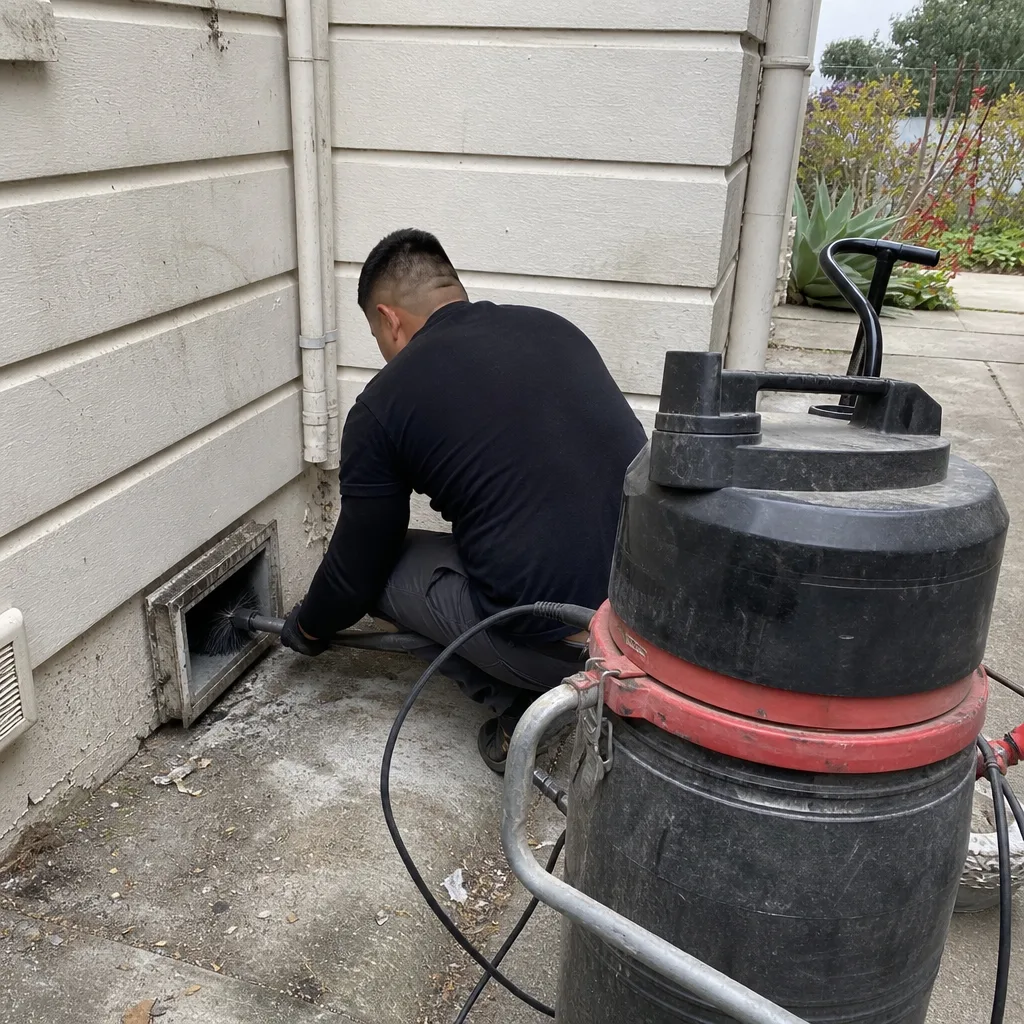 Before
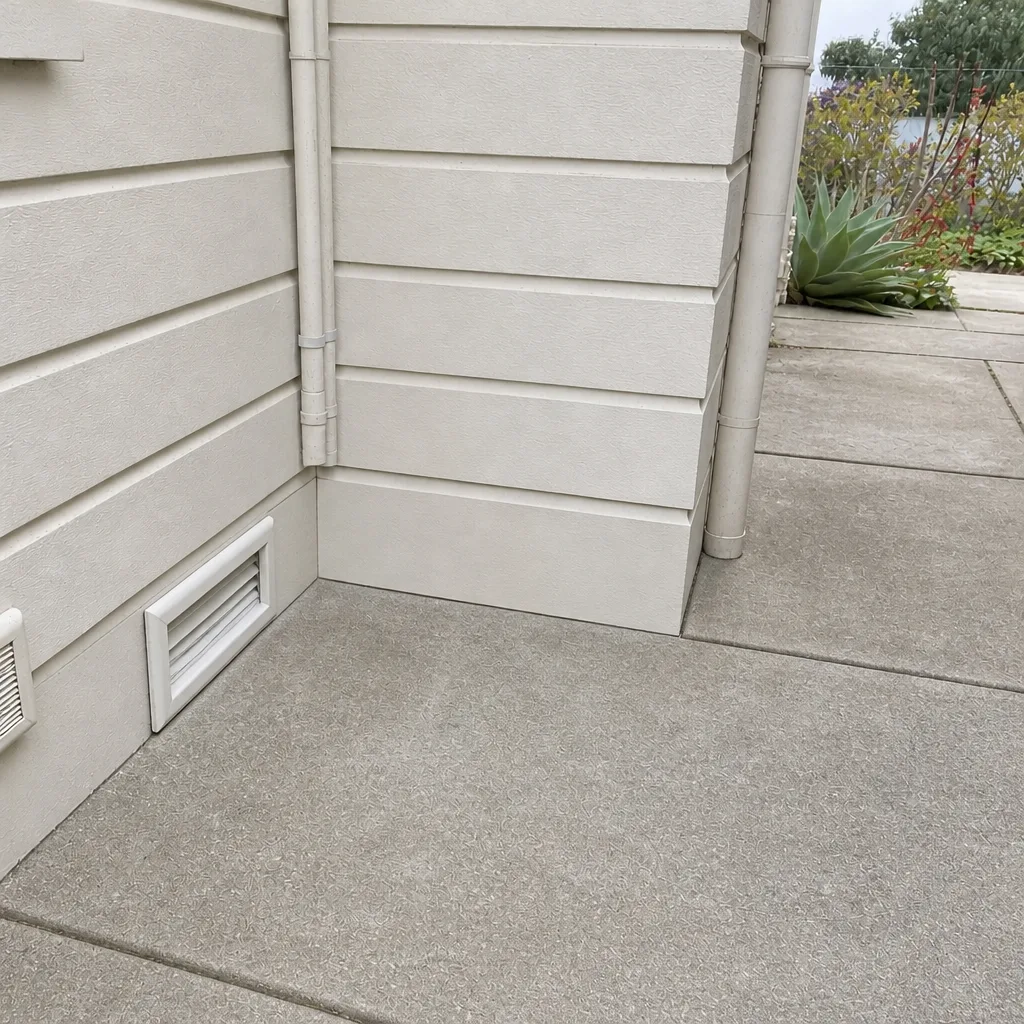 After
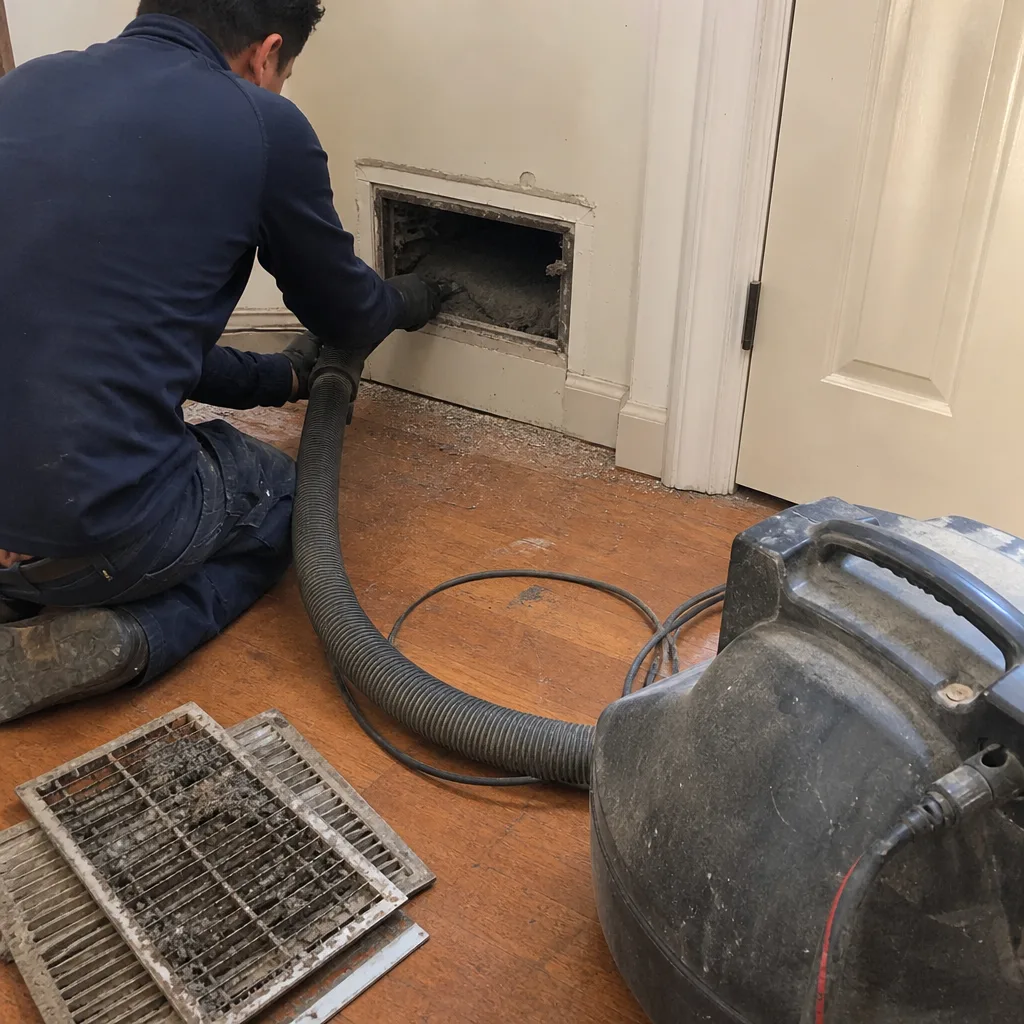 Before
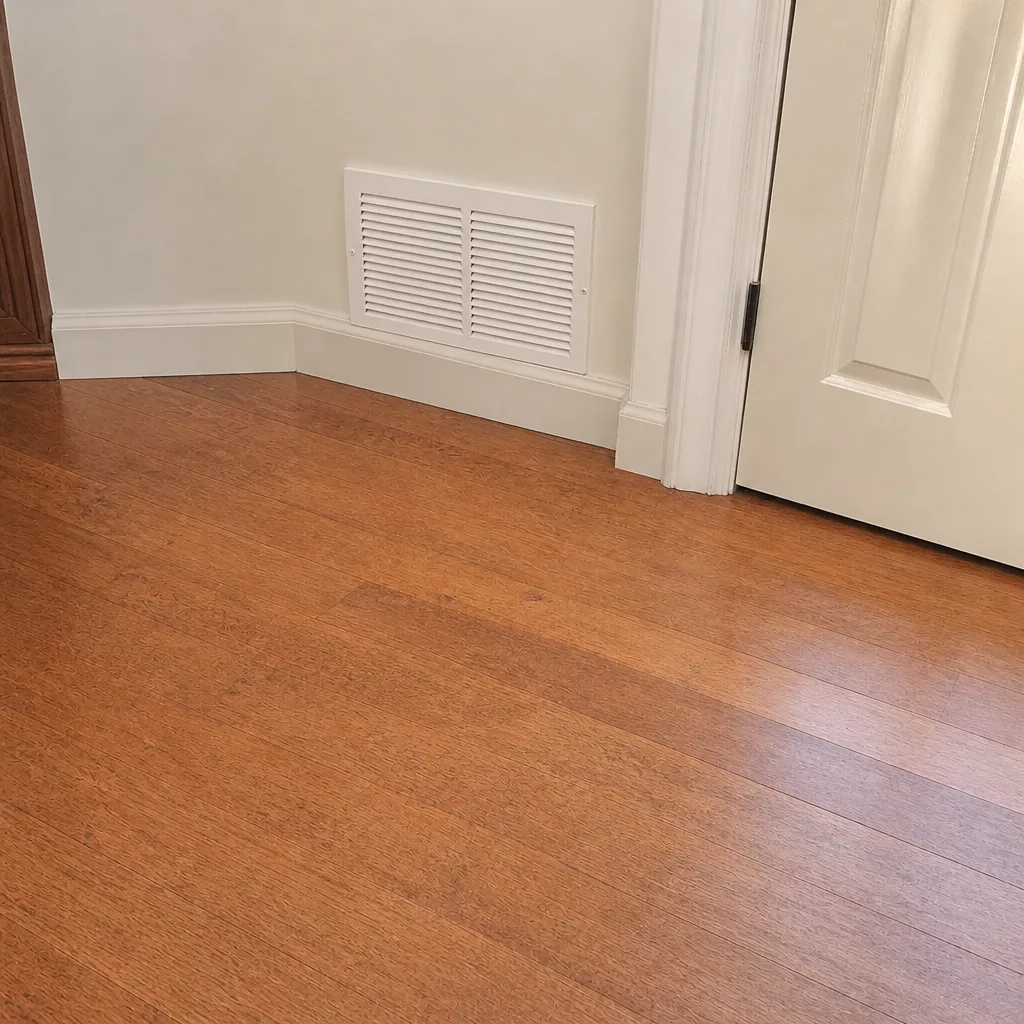 After
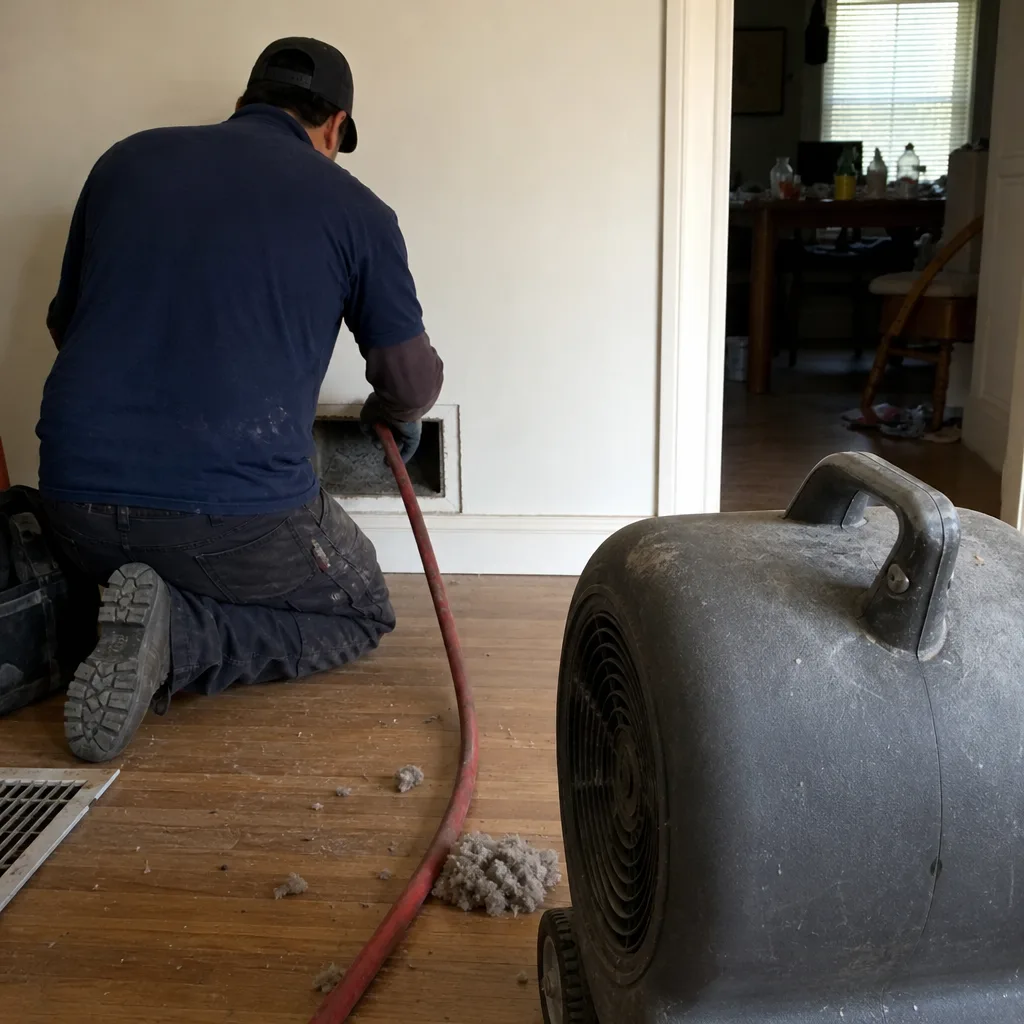 Before
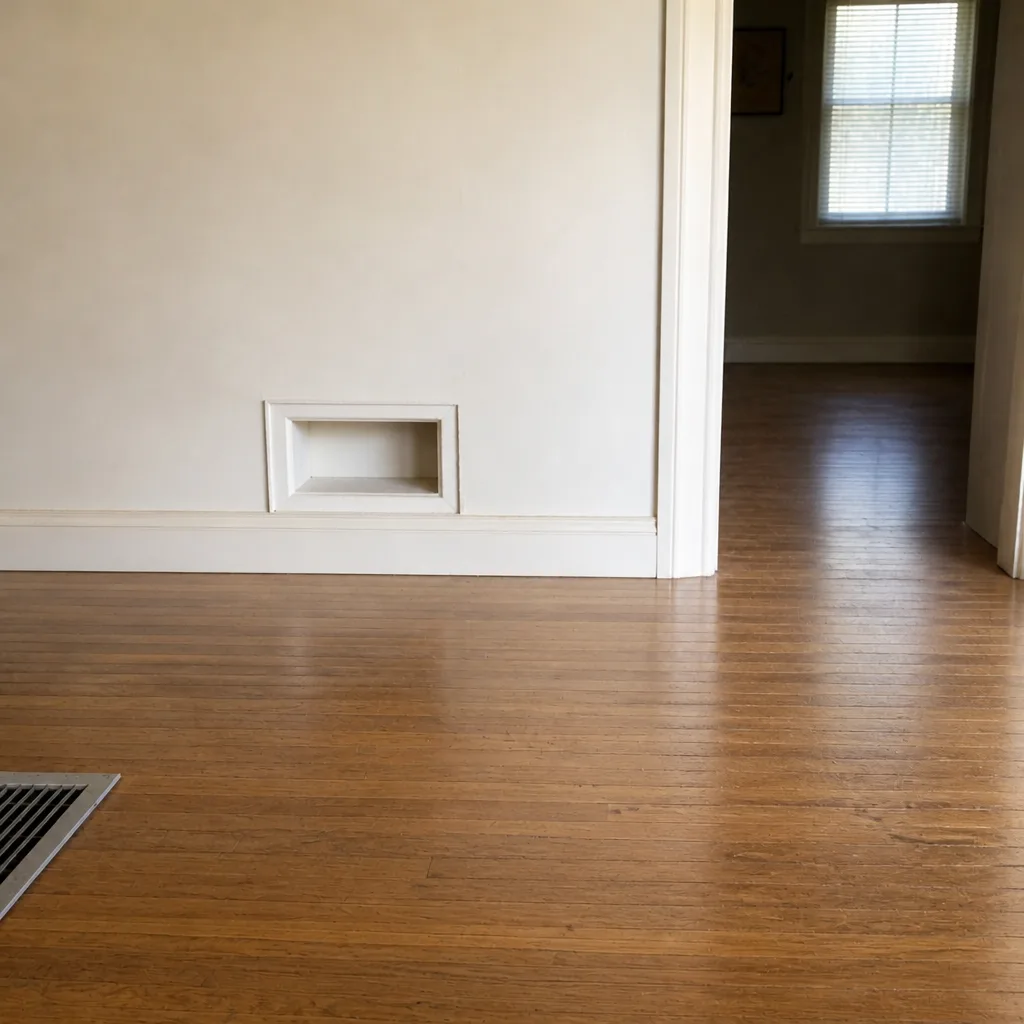 After
When to Call a Professional
Call when two or more condition signals line up, when airflow drops measurably between seasons, when you smelled musty air for more than a week after the first heat, when you’ve logged a stretch of smoke days above AQI 150, or when you’re finishing a remodel. Call when your dryer takes two cycles for a load it used to dry in one. Call when a register whistles or a room stays cold after every other suspect has been ruled out – that’s often a repair signal, not a cleaning signal. In all of these cases, the right first step is a professional look, not a purchase decision.
Duct Cleaning San Mateo offers free estimates in San Mateo – call (866) 894-2153. A specialist will come out, run a proper assessment, and give you one flat price per system so you know the number before any work starts. We’re licensed and insured, and we use contractor-grade equipment every time so the clean is real, not a vacuum job that looks like work. Call (866) 894-2153. We answer 24/7. Fast dispatch from 7am to 7pm, Sunday through Friday.
Frequently Asked Questions
Most San Mateo homes need a professional clean every three to five years, but the honest answer is that your home’s condition sets the schedule, not the calendar. If you’ve had wildfire-smoke weeks above AQI 150, a remodel, or a new pet, the interval shortens; if your filter frame is tight and your load light, it lengthens. Check the condition signals first, then decide. Call (866) 894-2153 for an exact quote – estimates are free.
A whole-home duct clean in San Mateo typically runs a few hundred dollars per system depending on the number of registers, the length of the runs, and whether repair is needed alongside the clean. We don’t quote per-vent prices or teaser rates – we give one flat price per system in a written estimate before work starts. That protects you from the coupon-then-upsell pattern that gives this trade a bad name. Call (866) 894-2153 for an exact quote – estimates are free.
Cheap quotes usually mean portable shop-vac rigs, no negative-pressure containment, and pricing that changes once a technician is in the door. A real clean uses HEPA-filtered negative-air equipment so dislodged debris is captured rather than redistributed, and a professional rotary brush that actually agitates the duct walls. If a quote is dramatically below the others, ask what equipment and containment they use – the answer tells you what you’re buying. Call (866) 894-2153 for an exact quote – estimates are free.
Before-and-after photos of your own ducts, not stock images. Ask to see the register boots removed and inspected, the containment system in place, and a photo of the return before and after. The filter frame should be inspected and any gaps flagged. A company that can’t show you your own ducts didn’t clean them. Call (866) 894-2153 for an exact quote – estimates are free.
Not inside the duct runs, no. The airflow, the fine-particle capture, and the containment are what make a clean, and a shop-vac agitates dust that then settles around the house. The safe homeowner tasks are filter changes, register wiping, dryer lint trap checks, and diagnosis. Anything behind a register, especially with moisture or pest signs, should be a professional job. Call (866) 894-2153 for an exact quote – estimates are free.
Yes, in two specific ways. The mild rainy season keeps homes sealed up for weeks with higher indoor humidity, which produces condensation on cold supply registers and can clump debris against the duct interior. And the summer and fall wildfire-smoke events push outdoor AQI past 150, loading the system with fine particles that partially bypass the filter. Both are worth logging, and both can shorten the interval between professional cleans. Call (866) 894-2153 for an exact quote – estimates are free.
The Bottom Line
The right duct cleaning schedule is driven by condition, not calendar. Watch register airflow, note dust trails and musty smells, log smoke days and remodel dust, and check the filter frame every time you change the filter. Handle the homeowner tasks – filter changes, register wiping, dryer lint trap inspection, and the log itself – and leave the interior duct work and anything involving a compromised seal to a specialist with real containment equipment. When two or more signals line up, that’s the moment to call, because the log you keep makes the visit faster and the estimate more accurate. If you want the specialized version of this checklist run on your own home, read our approach at Duct Cleaning San Mateo, or reach out for an estimate and a walk-through. Our technicians have up to 10 years of experience, and we’ll tell you honestly if a clean isn’t due yet.
Written by the team at Duct Cleaning San Mateo.